| | France faces violent unrest, US President Donald Trump endorses Benjamin Netanyahu before pivotal el͏ ͏ ͏ ͏ ͏ ͏ |
The World Today | 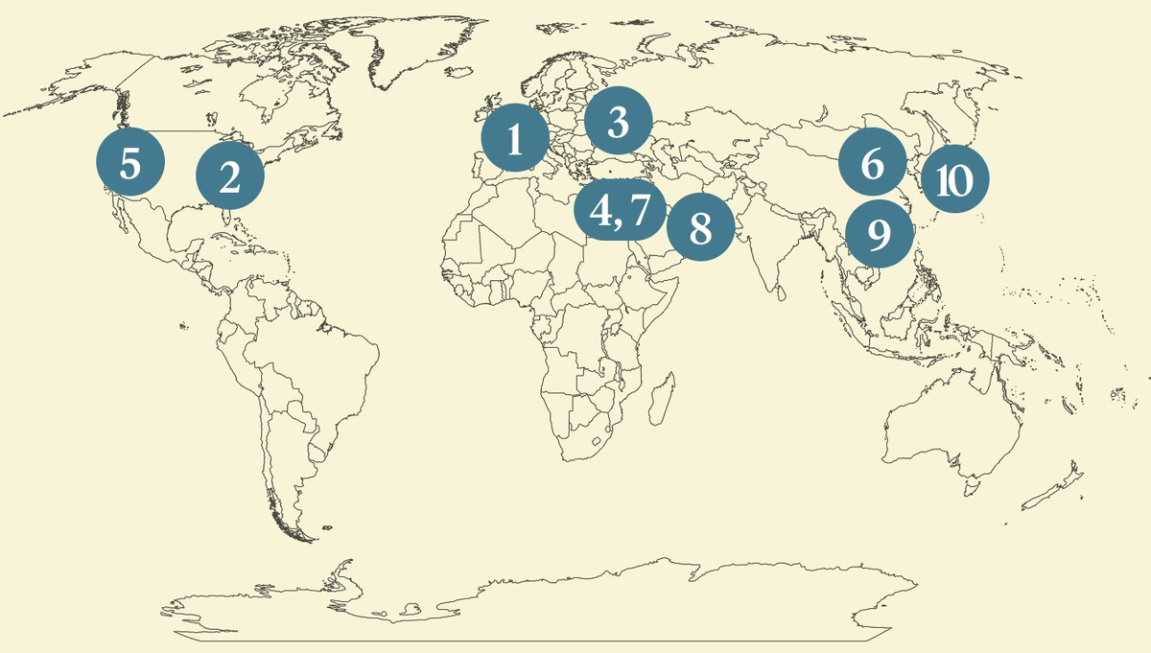 - Violent protests rock France
- WH waives Russia sanctions
- Europe has a Starlink problem
- Bibi gets Trump endorsement
- AI bubble fears mount in US
- China mulls AI export controls
- Egypt to support Saudi in war
- UAE looks to ‘Zero Hormuz’
- China’s scientific ascent
- Japan’s favorite penguin
 A book profiles seven women on death row in Texas and the nuns praying for them. Plus, a look at the week ahead. |
|
Violent unrest roils France |
 Nearly 2,400 people were arrested in France on Saturday after long-simmering protests exploded into some of the country’s most disruptive unrest in years. French President Emmanuel Macron said that the violence was cause for “anger and shame,” after rioters ransacked hundreds of shops following mass demonstrations in Paris. Government buildings were vandalized in multiple cities, contributing to a sense of national crisis that could boost leading far-right presidential candidate Marine Le Pen six months before elections. The unrest renders an unfavorable verdict on Macron, Le Monde wrote, who once promised “social emancipation” but has been deserted by young voters amid “deteriorating public finances, slower economic growth, and rising unemployment.” The protests mark “the twilight of Macronism,” the left-wing economist Thomas Piketty argued. |
|
Trump waives new Russia sanctions |
 Sputnik/Mikhail Metzel via Reuters US President Donald Trump waived new sanctions on Russia days before they were set to take effect, reversing a bipartisan congressional push and raising fresh questions about Washington’s commitment to Ukraine. Trump’s energy secretary defended the decision as a “carrot” to encourage peace, while Ukrainian President Volodymyr Zelenskyy said he was meeting Trump’s envoys to arrange a new round of peace talks. But as Washington eases up on Moscow and clamps down on Kyiv, Europe faces growing pressure to step up its own support: “Trump’s deal with Putin undermines Ukraine, but it will not fundamentally change the war,” wrote a Chatham House analyst. “What will be decisive is ensuring Ukraine’s economy gets through a difficult winter.” |
|
Europe has few Starlink alternatives |
 Stringer/Reuters An escalating fight between the US and Ukraine over Starlink underlined Europe’s dependence on the Elon Musk-owned technology. Ukraine’s leader said that SpaceX was throttling Starlink speeds in a “planned operation,” which the White House rejected. Washington’s ambassador told the Financial Times that the EU would face “devastating” retaliation if Brussels pursues plans to curtail SpaceX’s market reach. Europe has few options: An EU project won’t launch satellites until 2029, and the bloc’s “next best hope” is Amazon Leo, an American Enterprise Institute expert told Politico. The saga has prompted others to probe their dependencies: ASEAN must “recognize that digital sovereignty is becoming inseparable from strategic sovereignty,” experts argued in Malay Mail, while Canada’s leader said recently that Ottawa was exploring Starlink alternatives. |
|
Netanyahu gets Trump election boost |
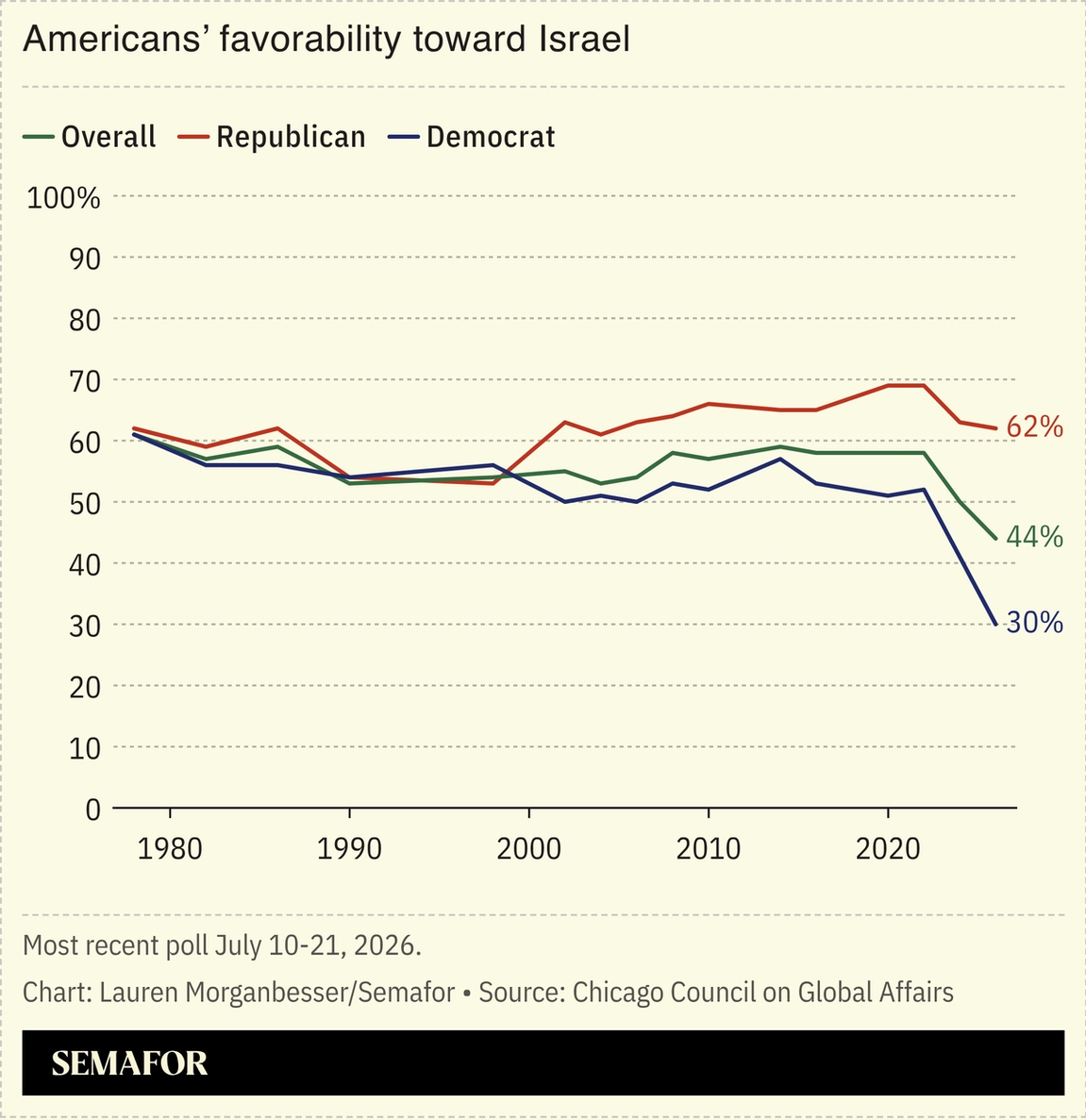 US President Donald Trump gave Israeli Prime Minister Benjamin Netanyahu his “complete and total endorsement” Sunday, boosting the leader nine days before Israel’s pivotal election. The endorsement comes as the embattled prime minister faces a tough reelection and Israel’s isolation deepens, particularly amid mounting West Bank violence. Masked settlers allegedly attacked European diplomats Saturday, a day after reports that settlers beat a Washington Post photographer, drawing European condemnation and prompting the US’ top diplomat to urge Israel to “crack down.” The prime minister’s office decried a “coordinated campaign to smear Israel.” The election stakes “could hardly be higher,” two experts wrote for The Washington Institute, warning that souring US attitudes toward Israel risk an “irreversible reality with grave strategic consequences.” |
|
Data center buildout shows cracks |
 Jonathan Ernst/Reuters At least 47 large data center projects in the US have been delayed, canceled, or blocked in 2026, the Financial Times reported, as signs mounted that the headlong AI boom could be slowing. More than 1,000 communities have tried to restrict AI infrastructure this year, according to the FT, while Bernstein analysts estimated this month that only about 35% of the planned US data center pipeline was credible, suggesting that the AI buildout powering US growth could be slowing down. But for evidence that fears of an AI bubble are overblown, look no further than the 85% gross margins Anthropic touted to its investors last week, Semafor’s Tech editor Reed Albergotti wrote: “They’ll service their debt obligations, in other words.” |
|
China mulls AI export rules |
 Florence Lo/Reuters China is considering export controls that could check the global spread of its AI models and chips, as Beijing increases oversight of its burgeoning tech sector. The new rules “could shape the evolution of the Chinese AI ecosystem,” a former Biden administration adviser wrote, though questions remain over compliance and whether the rules would increase Beijing’s leverage without slowing the tech’s global adoption. In contrast to the White House’s laissez-faire approach, conservative group Humans First is calling for export controls on US tech as part of an “America First AI Policy” platform shared first with Semafor. The group’s prescriptions “could have more sway going forward if Republicans perform poorly in the midterms and AI anxiety is a factor,” Semafor’s Ashley Gold wrote. |
|
Egypt pledges support to Saudi Arabia |
 Egyptian President Abdel Fattah el-Sisi meets Saudi Crown Prince Mohammed bin Salman in Cairo on September 15. Bandar Algaloud/Courtesy of Saudi Royal Court/Handout via Reuters Egypt pledged “all necessary and possible forms of support” to Saudi Arabia as intensifying Houthi attacks risk a widening regional conflict. Following the announcement, Egyptian President Abdel Fattah el-Sisi requested an urgent parliamentary session to authorize military action, bringing the Arab world’s largest army a step closer to direct involvement and marking a shift in Cairo’s posture. Egypt stopped short of joining a mutual defense agreement between Saudi Arabia, Türkiye, and Pakistan, but is losing billions annually from Houthi strikes. Cairo’s pledge also signals closer alignment with Riyadh, a major financial backer that has provided billions in aid and investment. “Cairo, whether it likes it or not, has become a party to the war,” a Saudi columnist wrote in Asharq Al-Awsat. |
|
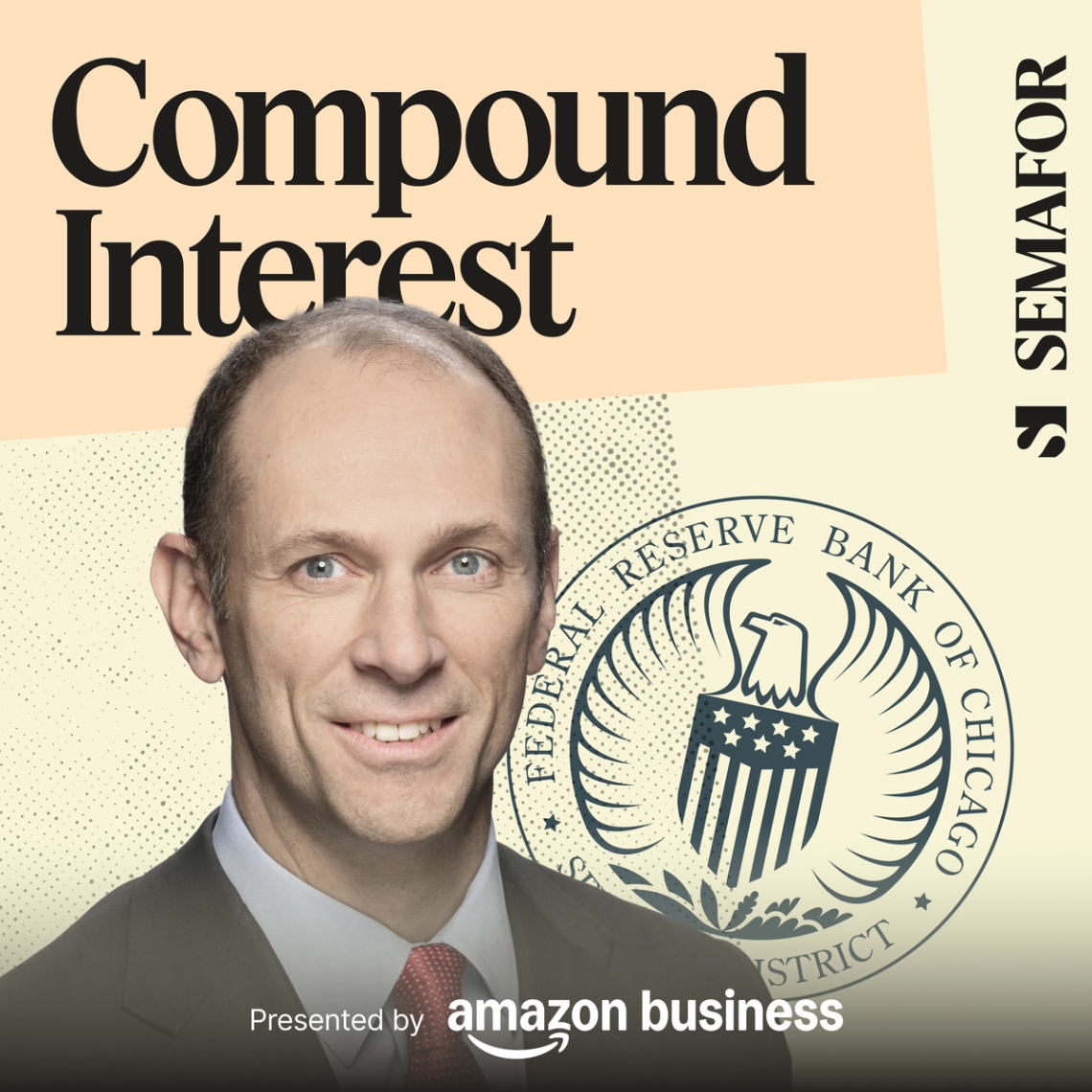 Austan Goolsbee is worried about inflation. On this week’s episode of Compound Interest, presented by Amazon Business, the president of the Federal Reserve Bank of Chicago warns that the AI data center boom is driving up the cost of land, power, construction equipment, and labor, with rising prices threatening to spill over into the broader economy. Liz and Rohan sit down with Goolsbee to discuss those risks, whether hyperscalers even care about interest rates, and what a world where robots do all the jobs would mean for the Fed. |
|
‘Zero Hormuz’ runs through Fujairah |
 Kevin Zweerink/Semafor One of the UAE’s poorer emirates is at the center of a regional push to reduce Iran’s leverage over Gulf trade through the Strait of Hormuz. The race to “Zero Hormuz” runs through mountainous Fujairah, one of the prime beneficiaries of disruption in the strait along with Kuwait and Oman, which are in talks to build pipelines to ferry trapped crude out of the Gulf. For Fujairah, the war could lead to a new LNG plant, a refinery, and “a much bigger port,” creating for Fujairah a “once-in-a-lifetime opportunity,” FGE NexantECA’s chairman emeritus told Semafor. The question, as Iran targets Fujairah’s infrastructure, too, is whether Gulf states “may also need alternatives to their alternatives,” Semafor’s Mohammed Sergie wrote. |
|
|


