A fresh take on culture, fashion, cities and the way we live – from the desks of Monocle’s editors and bureaux chiefs.
|
Saturday 19/9/26
|

|
|
London
Paris
Zürich
Milan
Bangkok
Tokyo
Toronto
|
|
|
|

Something up your sleeve
We step into this week’s fashion special in a rare pair of made-in-Tokyo shoes, before following Princess Diana’s ‘revenge dress’ to auction. We then warmly embrace country hues with Forét’s new autumn/winter collection and take a tour through ‘The Burberry Trench’ exhibition at London’s Victoria and Albert Museum. Up first, in the glow of CVs that shine beyond their years, is Monocle’s editor in chief, Andrew Tuck.
|
|
Twenty-somethings’ CVs have to sparkle more than ever before. Would mine have made the star pile?
By Andrew Tuck
|

|
I marvel at the CVs that land on my desk. People in their twenties who have had more life experiences than Scott of the Antarctic, speak more languages than Duolingo can muster and who, in their summer holidays, have saved large chunks of the planet – or at least fostered a gibbon for a few weeks (“gave me a greater appreciation of the challenges of having very long arms”). And I’m not just talking about people whose names feature more barrels than a bank robber’s shotgun or whose home address mentions the words Schloss or The Manor.
I went to a very rare gathering of my entirely normal – well, sort of – family the other day and met lots of distant teenage relatives whom, like the older people I used to loathe, I quizzed in detail about their lives. One, aged 16 and something of a mathematics prodigy, is already attached to a prestigious university where he’s looking at new ways of generating energy from wave power (no smoking behind the bike shed). Another was using his gap year to do a business diploma and I quote, “for fun”. I asked him whether he might be able to find the time for an ayahuasca trip in Colombia or at least start sleeping around with some unsuitable partners? Despite him looking a little rock’n’roll, he said that he preferred to use his spare time to prepare himself for the world of work.

|
Then I had dinner with friends in Hampstead, where their youngest son was preparing to start at a new sixth-form college (the final two years in the UK before university) that encourages students to take time off each week to assist on community projects. I imagine that senior citizens in their part of north London must fear leaving their homes in case yet another teenager insists on carrying their shopping bags or giving them a fireman’s lift up the steep incline of Hampstead High Street.
Often, after I have read a pile of these extraordinary CVs, I am left with one worry. Today, right now, would I interview my younger self? If my CV when I was 21 slipped into the pile, would I scrawl “must see” on the covering letter?
I certainly lacked any hobbies that would catch a recruiter’s attention today, let alone some AI-powered CV scraper (nowadays you need a few eye-catchers: Ethiopian cinema, putting on West End shows, the electronic lute – ideally all three). And there was no second language to boast about (my German being barely proficient enough to secure a bratwurst in an emergency). And as for volunteering? I was too busy playing records.
But I did have a lot of work experience. How about that summer job washing dishes (only, problem: I was fired after one day for being too chatty). I had another holiday job in a toy factory where my friend Nick and I had to sort through returned products to discover the problem – “Bucking Bronco refuses to buck” being our go-to explanation with that particular game. I had also been a barman in a theatre, which was mostly fun, though being in a fairly Irish part of the city, there were endless unhelpful commentaries on my Guinness-pouring skills. And I was a waiter, which I loved, especially when we would finish off the wine that guests had left in their bottles after service. Then I hit my stride and, for several university holidays, worked in Liberty’s fabric department where I became a little over-confident at assessing how much fabric, say, a stout lady might need for a knee-length summer smock. But none of it was quite the stuff of a recruiter’s dreams.
And yet, while CVs are, of course, powerful tools, I still think it’s hard to beat a good cover letter. It’s here that you can shine, allow your personality a chance to do the heavy lifting. Be enthusiastic. Not sound too much like the Pope but sound kind. I must have written a couple of persuasive ones along the way because occasionally people called me in for an interview.
But when I look at the CVs of young people today and I see the slog that people have put into preparing themselves for a hard-to-enter job market, I return to that question: would I have interviewed me at 21? Or would I be destined for a life of trying to determine what ails the Bucking Bronco?
To read more of Andrew’s columns, click here.
|
|
house news: monocle x stone island
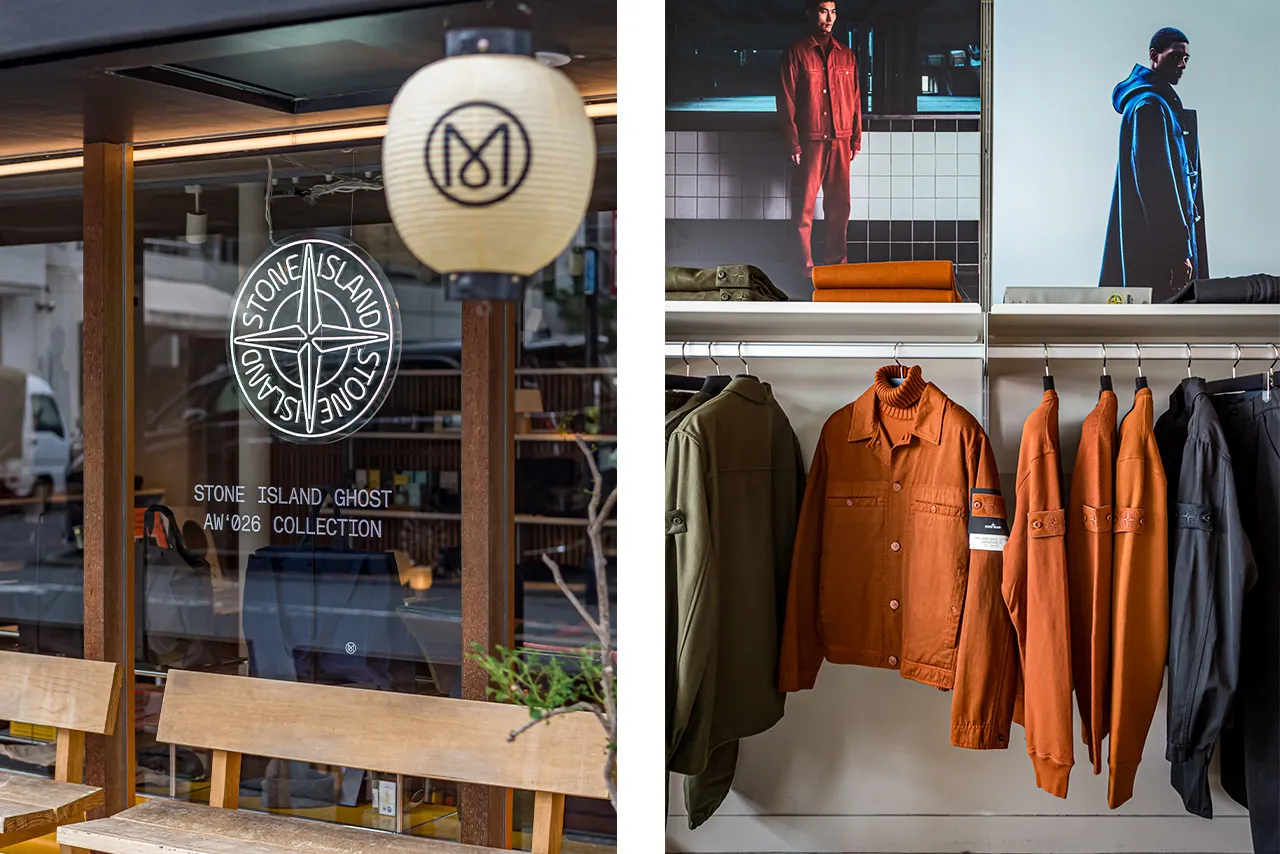
Ghost in the machine: Stone Island lands at The Monocle Shop in Tokyo
Stone Island has begun a two-week residency at The Monocle Shop in Tokyo. Our Shibuya outpost will announce the collaboration via a custom window installation, with an edit of the Italian brand’s new Ghost autumn/winter sub-collection available inside.
The line draws on decades of fabric research, combining technical precision with designs fit for modern life. Visit the shop to see the premium, engineered materials in person or browse the pieces in our upcoming October issue.
The Monocle Shop, Luna Rossa 1F, 1-19-2 Tomigaya, Shibuya-ku, Tokyo, 151-0063
|
|
Abu Dhabi: A Celebration of Beauty
|
WHAT AM I BID? The ‘revenge dress’
The garment that altered British royal history goes under the hammer
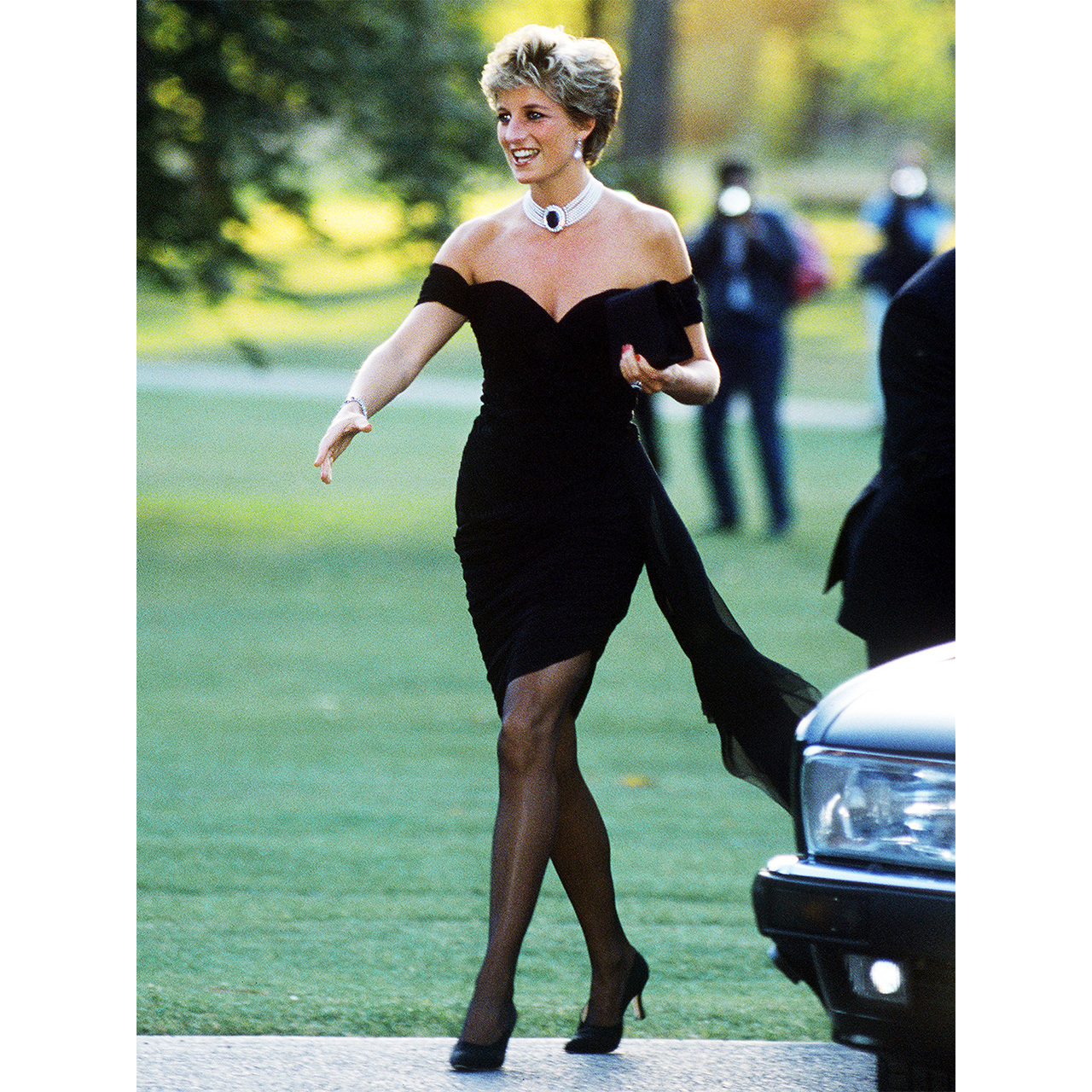
We all harbour a dream of how we would like to appear if we were to bump into an ex (writes Sophie Monaghan-Coombs). Wearing something fabulous, obviously, with great hair and accompanied by an aura of insouciance. In short, it’s the outfit and the outlook that screams “look what you’re missing out on”. This is a fantasy never better realised than by Princess Diana in 1994. To a party at London’s Serpentine Gallery, she wore a black, silk, off-the-shoulder dress designed by Christina Stambolian – on the same night that a documentary aired on British TV in which Prince Charles admitted that he had been unfaithful during their marriage, which had ended two years previously.
|
That garment, which has since been labelled the “revenge dress”, is now heading to auction at Sotheby’s. After a period of being exhibited in London, Hong Kong and Geneva, it will arrive in New York where it will go under the hammer in December. The estimated sale price is $150,000 to $300,000 (€129,984 to €259,968) but the role that it played in helping rupture the public imagination of the British royal family makes it priceless.
|
|
WARDROBE UPDATE 01: Japanese footwear
Step up your style this autumn with made-in-Tokyo shoes
Western-style shoemaking in Tokyo began in the late-1800s, when the government of Meiji Japan established a military-boot plant in the city’s Asakusa district. To support the operation, the area soon became host to leather suppliers, tanneries, toolmakers and specialised outworkers, transforming into a hub for Japanese cobblers.
However, as workshops began shifting their production to places further afield, the “Made in Tokyo” label has become increasingly difficult to come by. Today, only a handful of shoe ateliers continue to manufacture in the city. Nonetheless, a small community of leather shoemakers remain, crafting designs that reflect the unwavering attention to detail that defines Japan-made quality. Here we list four of Monocle’s favourites in Tokyo. For now, here’s one.
|
Rendo
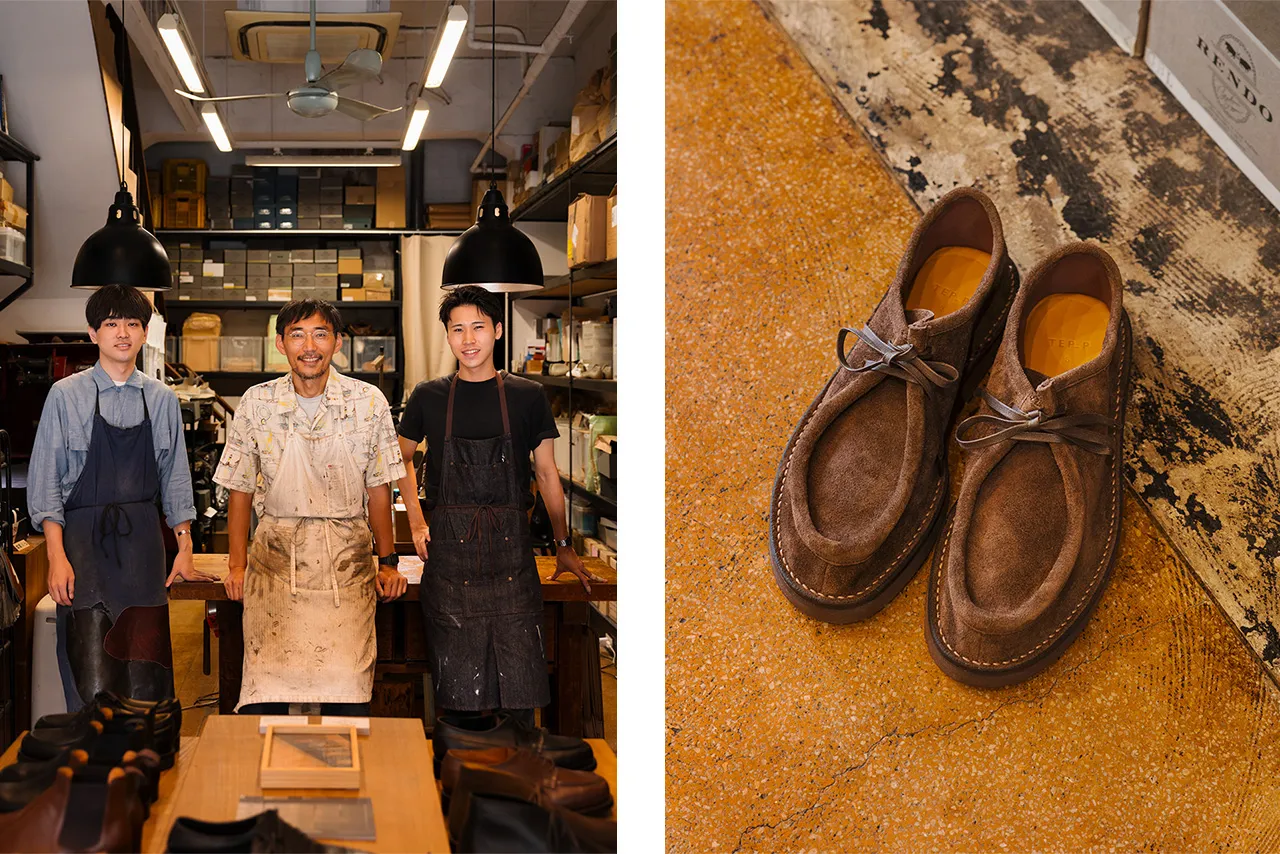
Doubling as a workshop and boutique, visitors to Rendo in Tokyo’s Asakusa are met with the scent of leather upon entering. Inside, boxes of shoes line the walls while a couple of large tables serve as workbenches and displays for finished products.
Rendo was founded by Teppei Yoshimi, who studied at London’s Cordwainers Technical College and worked as a pattern-maker for several shoe labels. Yoshimi began repairing leather footwear before branching into shoemaking, with a focus on Oxfords, loafers and monk straps. His background in pattern-making is central to his designs, which pairs classic British silhouettes with Japanese technical precision.
Yoshimi believes that building a relationship with his client base is just as important as making the shoes themselves. “Many of our customers have been coming here for years,” he says. “Some come in for repairs, others for a new pair of shoes.” As buyers began looking for more comfortable shoes in the wake of the coronavirus pandemic, Yoshimi launched the Tep_P collection. The casual line includes the Tyrolean leather shoe – a Monocle favourite that has also found an enthusiastic following among Rendo’s international visitors. “I wanted to develop a more relaxed option: something for casual outings that maintain an elegance,” says Yoshimi.
rendo-shoes.jp
|
|
WARDROBE UPDATE 02: Forét’s new autumn/winter collection
Look sharp in classic, warm-toned pieces from Forét
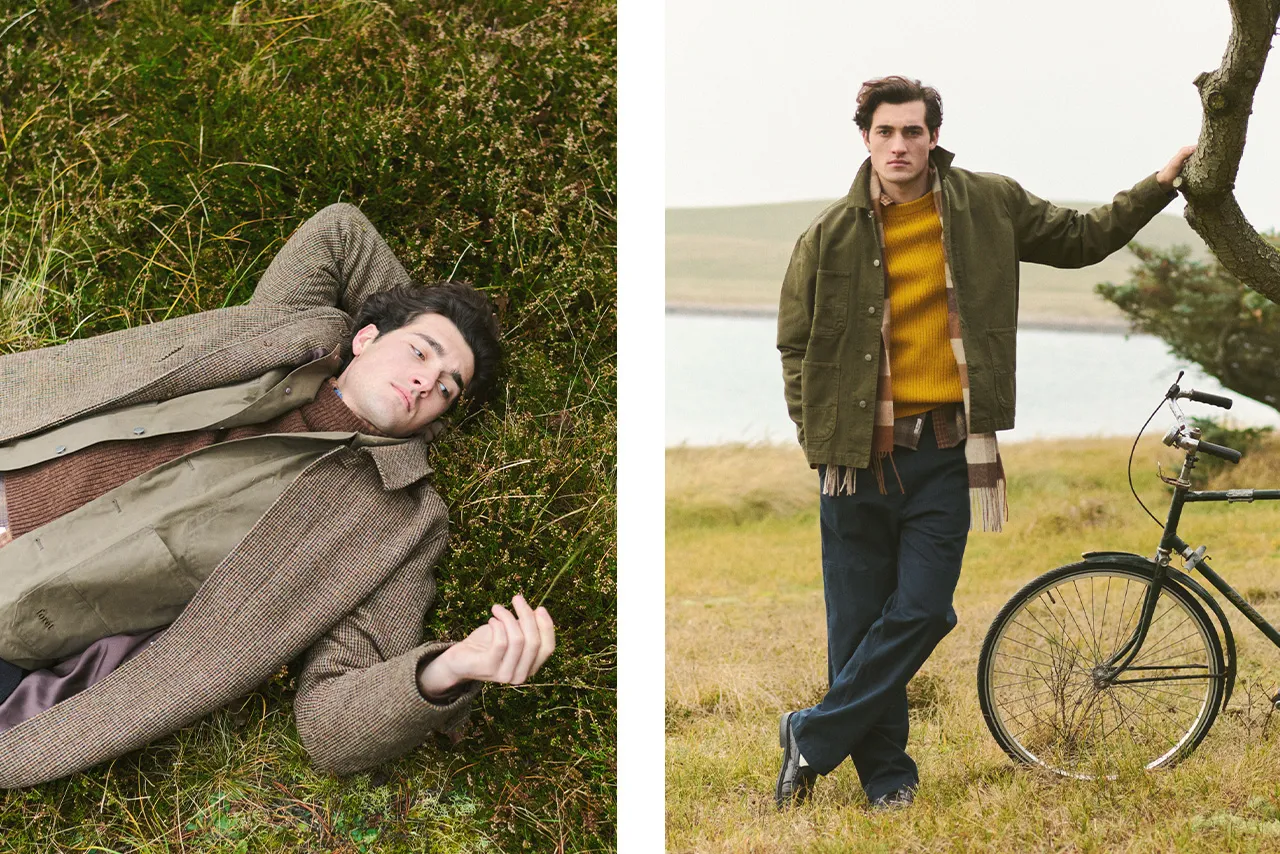
Without wishing away the ease of summer styling, we’re now getting to the sartorial “good bit” (writes Jack Simpson). The part of the year when layered pieces form pleasing depths and contrasts in outfits. Wardrobe staples form new affinities: that old woolen jumper pairs rather well with that new, popped checkered collar. But few celebrate the changing of seasons better than Copenhagen-based clothier Forét.
Its autumn collection picks a perfect country colour palette of cumin, sage and wooded hues to complement city silhouettes and styling. Outerwear ranges from Harris Tweed macs to lighter twill and herringbone jackets made in Portugal. And we particularly like Forét’s high-necked, ribbed knit in thyme and flannel shirting in navy and rust.
foretstudio.dk
|
|
CULTURE CUTS: ‘The Burberry Trench’
London’s Victoria and Albert Museum bundles up in Burberry ahead of its latest exhibition
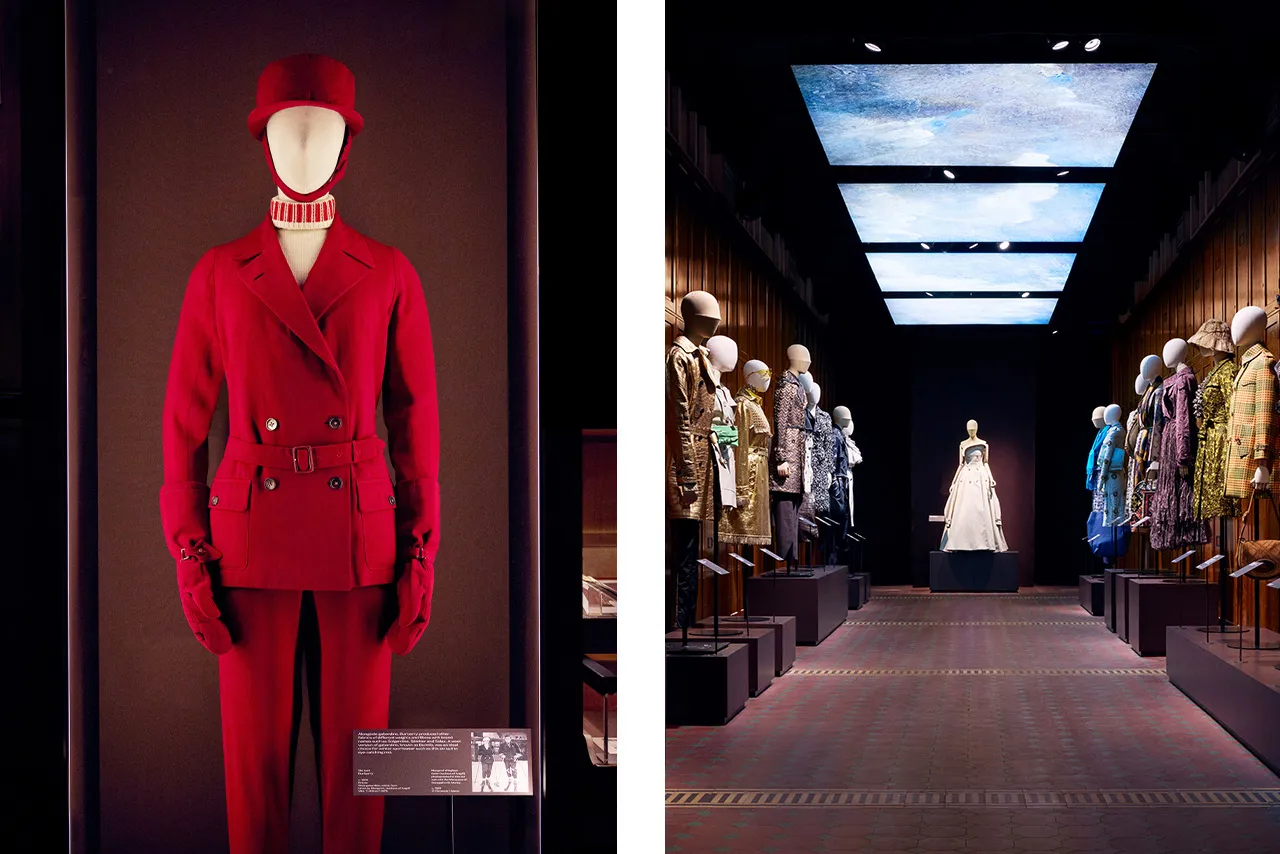
Coinciding with London Fashion Week on its 170th birthday, Britain’s flagship luxury label has debuted The Burberry Trench: Crafting an Icon, a free exhibition charting the evolution of its famous gabardine outerwear, from military attire to universal wardrobe staple (writes Natalie Theodosi). The show is held inside the dimly lit Prince Consort Gallery, with archival trench coats – including a piece owned by British tailor Hardy Amies – alongside old labels, fabric swatches and magazine cutouts displayed inside its mahogany cabinets.
|
The exhibition also emphasises the founder’s forward-thinking spirit: Thomas Burberry invented the waterproof fabric in 1879 and, though the luxury fashion house eventually lost its exclusive trademark, it has remained synonymous with all things gabardine ever since. Another section of the showcase is dedicated to contemporary interpretations of the trench, from former chief creative officer Christopher Bailey’s studded styles, which transport you back to the 2010s, to more recent designs by Daniel Lee. The ceiling is also illuminated with clouds: a nod to a John Constable oil painting of Hampstead Heath and Britain’s perennial rainy weather, which Burberry knows how to embrace so well.
|
|
| | |