| | In this edition, Nvidia makes a case for taming AI agents, and how fear about nuclear energy paralle͏ ͏ ͏ ͏ ͏ ͏ |
| |  | Technology |  |
| |
|
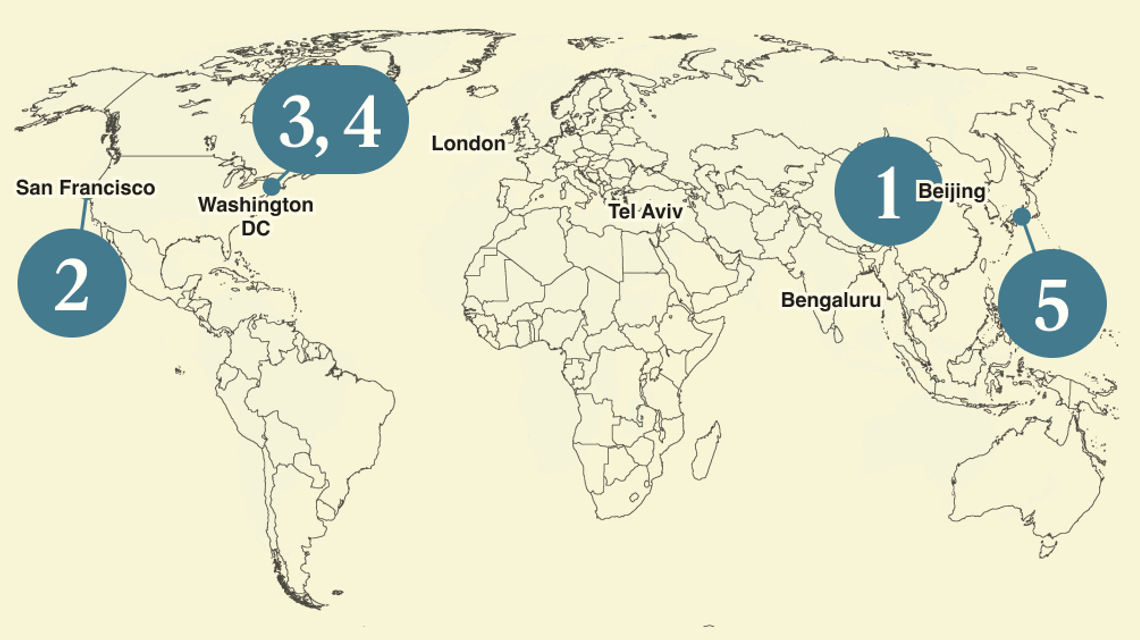 - Kai-Fu Lee on AI’s future
- Agents aren’t the problem
- AI titans head to DC
- EA memefest
- Postcard from the atomic past
 Why AI labs are so eager to enter the public markets, and a new tool helps speed up the generation of good-quality AI video. |
|
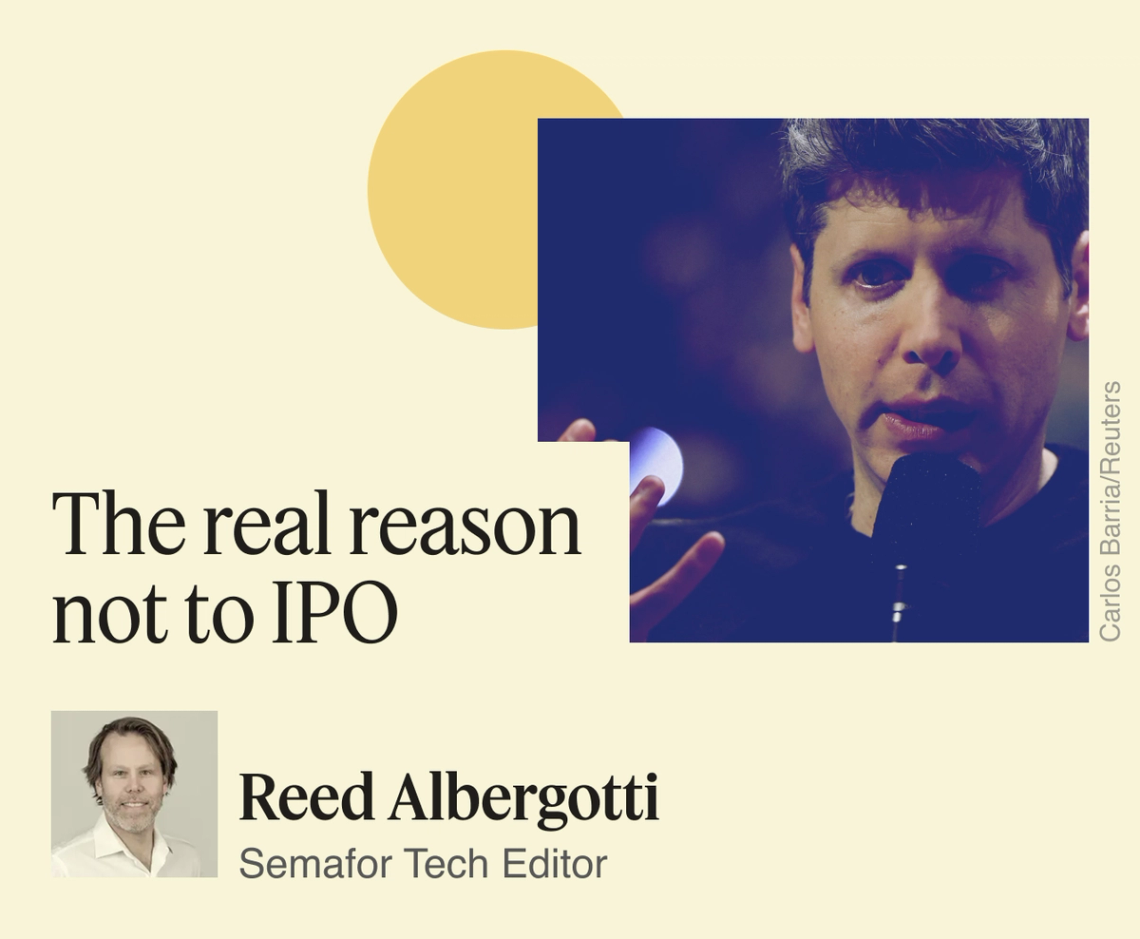 There’s a groundswell of people in Silicon Valley and Washington claiming the AI doomer narrative sweeping the nation is part of some carefully coordinated “psyop.” I don’t buy that. Some inside OpenAI and Anthropic were “blindsided” by an apparent agreement over the weekend that both companies would slow down the pace of AI research, the FT reported. Leaders haven’t communicated a new strategy and staff are confused about what to do next. These are not the moves made by startups ready to enter the public markets, which tend to get spooked by companies that don’t know whether their products can be trusted not to destroy humanity, let alone complete an accounting audit. And that’s why Sam Altman’s decision to push an IPO to next year is the right one. While OpenAI has been around for more than a decade, its real founding happened less than four years ago, when it launched the chatbot that changed the face of the tech industry. Before that, OpenAI and Anthropic were essentially research laboratories, running on the thrill of innovation without the pressure of revenue models or Wall Street analysts. Put that into the context of other Silicon Valley heavyweights: It took Uber a decade to IPO, with Airbnb, Palantir and SpaceX taking even longer than that (SpaceX was technically founded in 2002). These capital-heavy companies are eager to hit the public markets because of their ever-growing race for cash. It’s no different for the AI labs, which need gobs of money to pay for massive amounts of compute needed to build out enough inference capacity. But there’s still plenty of cash out there willing to help pay for the data center and compute buildout. The bigger issue for the labs right now is having the space and time to build the biggest, most powerful LLMs and work out all the regulatory, safety, communications and technological issues — without the public stock markets distracting them. |
|
Kai-Fu Lee predicts an AI panopticon |
 Semafor/YouTube Semafor/YouTubeWhen Andrew Edgecliffe-Johnson and I interviewed Kai-Fu Lee recently, I came away with a sinking feeling that China’s work culture is a better fit for an AI future than America’s. Lee is one of the great thinkers on AI, and his 2018 book, AI Superpowers, was a prescient and instructive preview of where we are today. Lee described to Semafor a future in which employees are almost constantly recorded and AI keeps tabs on every task they let slide. It’s a vision in which AI enables extreme accountability, but it also clashes with American individualism. And on its face, it sounds rigid and not very fun for anyone except a CEO. The US needs to find a way to encourage and incentivize entrepreneurship, where people use AI to become their own bosses. That’s a better outcome than being scolded for taking too long for every coffee break by an AI supervisor. |
|
Nvidia’s case for taming AI agents |
 Stephen Nellis/Reuters Stephen Nellis/ReutersThe scaffolding that’s built around an AI model is just as important — if not more important — for AI safety than the model itself, Nvidia’s VP of agentic AI told Semafor. “Rather than creating fear and FUD, let’s just secure it. We know how. We’ve done these things before,” Adel El Hallak said, referencing the acronym for fear, uncertainty and doubt. El Hallak’s argument provides insight into the more technical case — as opposed to the geopolitical or ideological ones — for why AI doomerism may be overblown. Nvidia CEO Jensen Huang has emerged as the most prominent tech figure voicing skepticism about the argument that AI labs should slow down model development because the tech is quickly advancing beyond companies’ abilities to safeguard it. AI agents are central to that fear because they can take actions on their own, though regulation of agentic AI specifically is not discussed as much as is broad oversight of the models. El Hallak said advances in AI models make “harness engineering” more critical, referring to the layer of instructions and code that governs how an AI agent operates in practice. “If you’re training a capable agent, it is important that you don’t put a lion in and expect to be able to control it in a horse’s pen.” — J.D. Capelouto |
|
AI titans to attend US-China summit |
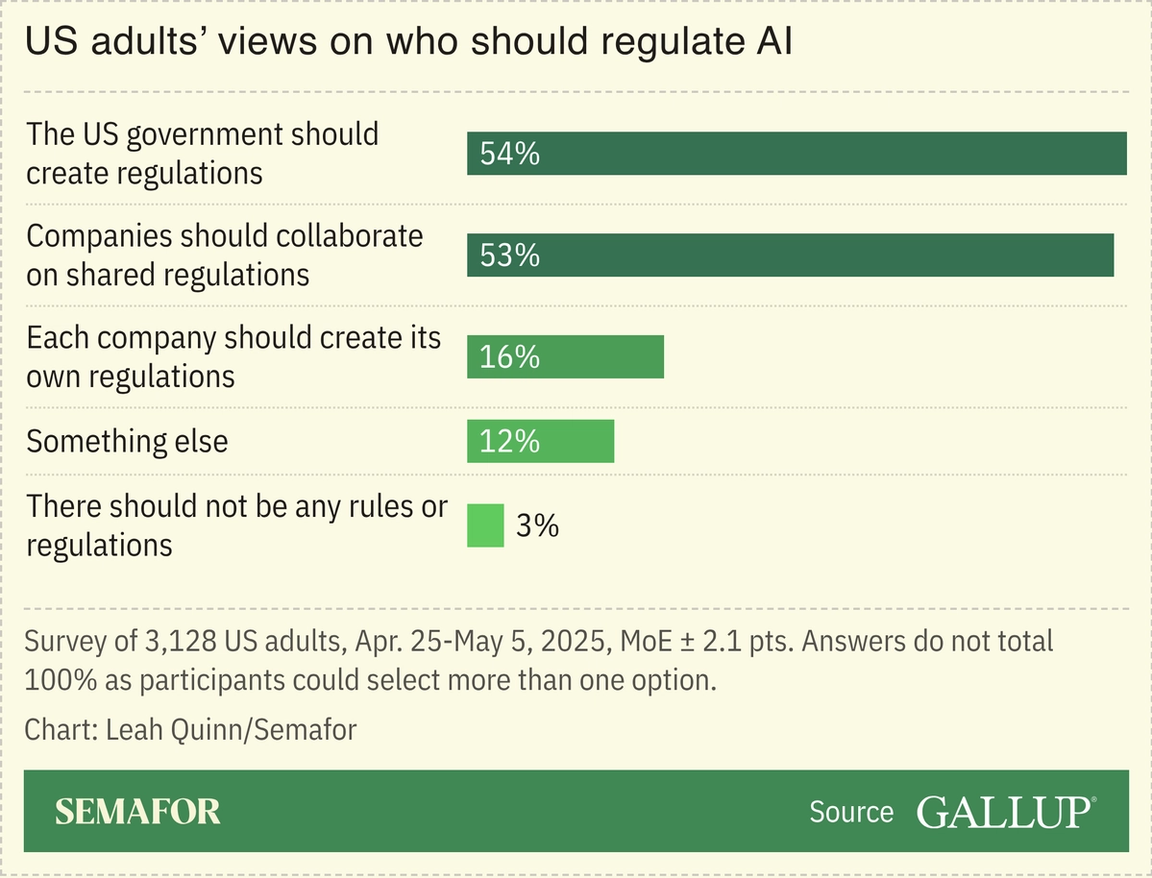 AI safety worries are looming over Chinese leader Xi Jinping’s visit to Washington next week, Semafor’s Ashley Gold writes. Big names in the AI world, from OpenAI’s Sam Altman to Nvidia’s Jensen Huang to Apple’s Tim Cook, are expected to attend. There is also talk of an adjacent White House meeting with AI CEOs next week, which House Speaker Mike Johnson referenced, but a representative for the speaker declined to provide further details. The meeting could be a turning point for international collaboration on AI if Trump and Xi respond to calls for both countries to cooperate on AI safety. But recent suspicion about the necessity of AI regulation has cast doubt on that outcome: Officials from both sides of the aisle have expressed skepticism about regulation, as have AI leaders like Meta’s Mark Zuckerberg, and Huang, who will be in attendance. Chinese officials also criticized Anthropic CEO Dario Amodei’s “pace the frontier” essay as “fearmongering.” |
|
WH launches AI meme campaign |
 @DoWCTO/Screenshot/X @DoWCTO/Screenshot/XA pro-AI meme campaign is rolling out on government social media accounts, casting “effective altruist” as a slur as the White House doubles down on its regulatory light touch. Amid an international reckoning over the capabilities and dangers of high-level AI, the Trump administration is casting effective altruists — who focus on reducing harm from the tech and heavily weigh advancement versus risk — as the enemy. Images of a fist-pumping Trump and “Americanism, Not Effective Altruism!” are appearing on X posts from the Pentagon. The Federal Communications Commission posted a Western-esque graphic with the text “Choose the Frontier — Never Doom.” An account run by the Centre for Effective Altruism replied to one post, “Thanks for the mention.” One person working in AI policy who has been associated with effective altruism told Semafor: “This is the best publicity EA has gotten in years.” — Ashley Gold |
|
How fear about nuclear energy parallels today’s AI fears |
 Illustration/Jake Angelo/Semafor Illustration/Jake Angelo/SemaforNewspaper archives from the early 1900s show some striking parallels between the early days of atomic energy and today’s debate about AI safety. While it’s not a perfect allegory, that era also had doomers and skeptics, utopian boosters, and scientists pleading for calm. In 1919, for example, a prominent British physicist warned there was “enough atomic energy in an ounce of matter to destroy a continent.” A couple decades later, physicists worried about “public alarm over the possibility of the world being blown to bits by their experiments,” with the scientists fearing a “revolution.” There was also optimism that the breakthroughs could herald “radical change in civilization,” as one expert put it. But the past is also a warning to today’s AI executives and government leaders that it shouldn’t take mass destruction to force a consensus on human safety. The most serious discussions around governance and regulation for atomic energy didn’t happen until it was used to bomb Hiroshima and Nagasaki. — J.D. Capelouto |
|
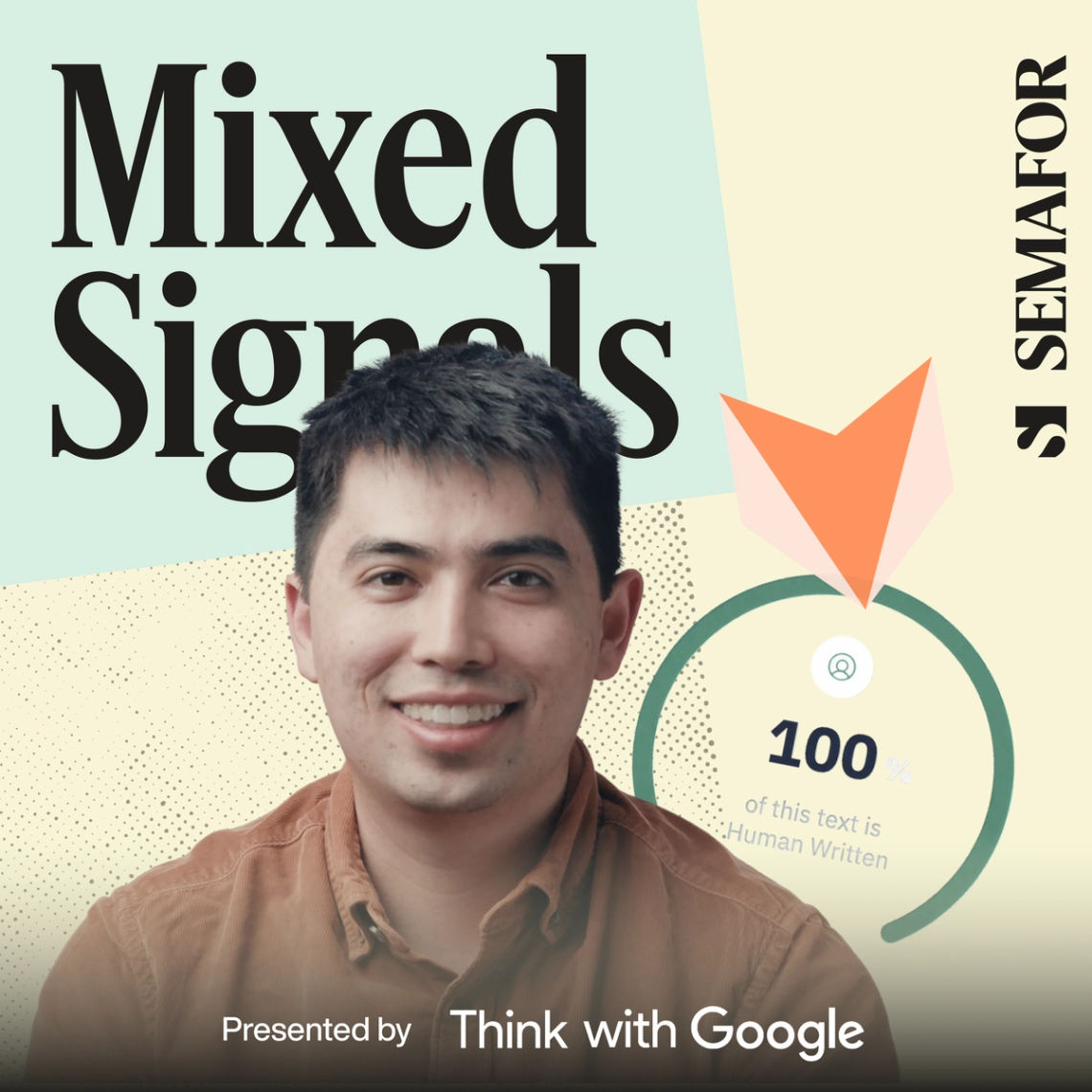 Will human touch become the scarcest thing on the internet? Pangram CEO Max Spero thinks so. On this week’s episode of Mixed Signals, Spero joins Max and Ben to explain how his AI detection tool actually works, and why he thinks the escalating cat-and-mouse game between detectors and “humanizers” is a fight worth having. They ask Spero how Pangram can already distinguish Claude from ChatGPT, why he built a humanizer internally and refuses to release it, and what it would actually take for a fine-tuned personal AI to fool his model. |
|
 Courtesy of Pika Courtesy of PikaVideo AI company Pika launched a program to help users make AI-generated videos faster by using fewer prompts. The AI video-generation process, as it is today, requires long, detailed paragraphs describing a shot plan, the framing, and other scene details over and over again until the product is to a creator’s liking. Pika’s new product streamlines that process, requiring just a few choices: Users can input basic details of what they want a video to look like; the platform generates a shot-by-shot list that can be edited and adjusted. The company is pitching the product as an antidote to older AI tools that many creatives consider shame-ridden, or “cringe.” “We want to make sure that the element of creative control and stewardship still remains,” said Lindsay Brillson, Pika’s head of brand and content. |
|
|


