| | In this edition: Pretoria hits back at Washington, Democrats scrutinize deportation policy, and Nige͏ ͏ ͏ ͏ ͏ ͏ |
| |  | Africa |  |
| |
|
 - Pretoria hits back at US
- Dems scrutinize deportations
- Nigeria fuel price hike
- Transnet grapples with theft
- Zimbabwe ZiG shift
- Weekend Reads
 Nollywood mourns the loss of a legend |
|
 The African diaspora is often discussed as a vast reservoir of capital and goodwill waiting to be tapped for the continent’s development. But that may undersell its value. The numbers are there: The broader sub-Saharan African diaspora in the US has swelled to roughly 4.8 million people, tripling since 2000, according to Migration Policy Institute data. Nearly 50% of adults hold a bachelor’s degree or higher, outpacing both the broader immigrant population and native-born Americans. In other words, first- and second-generation Africans in the US could move from “diaspora engagement” to “diaspora participation,” as trade lawyer and former US government official Ufo Eric-Atuanya explained in a speech on Capitol Hill this week. The diaspora, he said, should be treated as “an economic bridge” carrying capital, expertise, and relationships between markets. It is a useful concept, particularly at a moment when there appears to be growing impatience with the idea that Africans abroad should simply act as a cash machine for projects conceived elsewhere. Instead, diaspora professionals and entrepreneurs should play a more direct role in originating companies, structuring investments, building supply chains, and developing infrastructure. One compelling example is the continent’s emerging space industry: A recent paper on African space programs points to diaspora engineers as a pool of expertise developed abroad and suggests remote collaboration and incentives for returning professionals to help build capabilities. But the paper also cautions that such engagement “cannot substitute for” domestic capacity. That is where the rhetoric around diaspora participation needs to be tested. It is relatively easy to invite communities abroad to conferences, solicit investment, or ask professionals to mentor young Africans. It is considerably harder to give them meaningful roles in building institutions and infrastructure. The distinction matters because African economies do not simply need more money flowing across their borders. They need more productive capacity: Businesses that can scale, infrastructure that can support them, and institutions that can retain the talent building them. The diaspora can help supply all of those. But the goal should not be to make Africans abroad better sources of money or expertise. It should be to make them active participants in building the capacity that ultimately makes their participation less necessary. |
|
S. Africa hits back after US visa curbs |
 Foreign affairs minister Ronald Lamola. Axel Schmidt/Reuters. Foreign affairs minister Ronald Lamola. Axel Schmidt/Reuters.South Africa called on international allies to “speak in solidarity” against Washington’s visa restrictions and trade pressures, escalating a diplomatic feud that has been simmering for nearly two years. Foreign affairs minister Ronald Lamola made the remarks to Business Day after the US imposed new visa restrictions on some officials it accused of “government-sponsored discrimination” against white Afrikaners. Lamola urged countries to agree to a new trade regime to send a clear message that “economic sabotage” will not destabilize countries with elected governments. President Cyril Ramaphosa also called on the Global South and fellow members of the BRICS trade bloc to counter unilateral pressure. Pretoria’s stance mirrors broader international pushback against US trade policies: Canada, whose prime minister has called for nations to form trade partnerships to withstand economic pressure, was this week invited to become an “associate member” of the EU. — Tiisetso Motsoeneng |
|
Dems target third country deportations |
 Kylie Cooper/Reuters Kylie Cooper/ReutersUS Democrats are warning that the Trump administration’s secretive third-country deportation program could face a full congressional investigation if the party wins control in November’s midterm elections. The warnings follow recent flashpoints including one in Equatorial Guinea, where a video showed police pointing guns at migrants deported from the US during a dispute. A spokesperson for Democrat Senator Chris Coons told Semafor it was cruel to send deportees to third countries “that may imprison them or send them back home to face persecution and imminent danger.” Sen. Chris Van Hollen told Semafor that: “We will be demanding accountability” if Democrats flip the Senate in the midterms. At least 11 African countries have reportedly agreed to receive deportees from the US who cannot be returned directly to their home countries, in some cases in return for Washington providing or pledging millions of dollars in financial and migration-management support. — Adrian Elimian |
|
Nigeria fuel prices spark inflation fears |
| |  | Alexander Onukwue |
| |
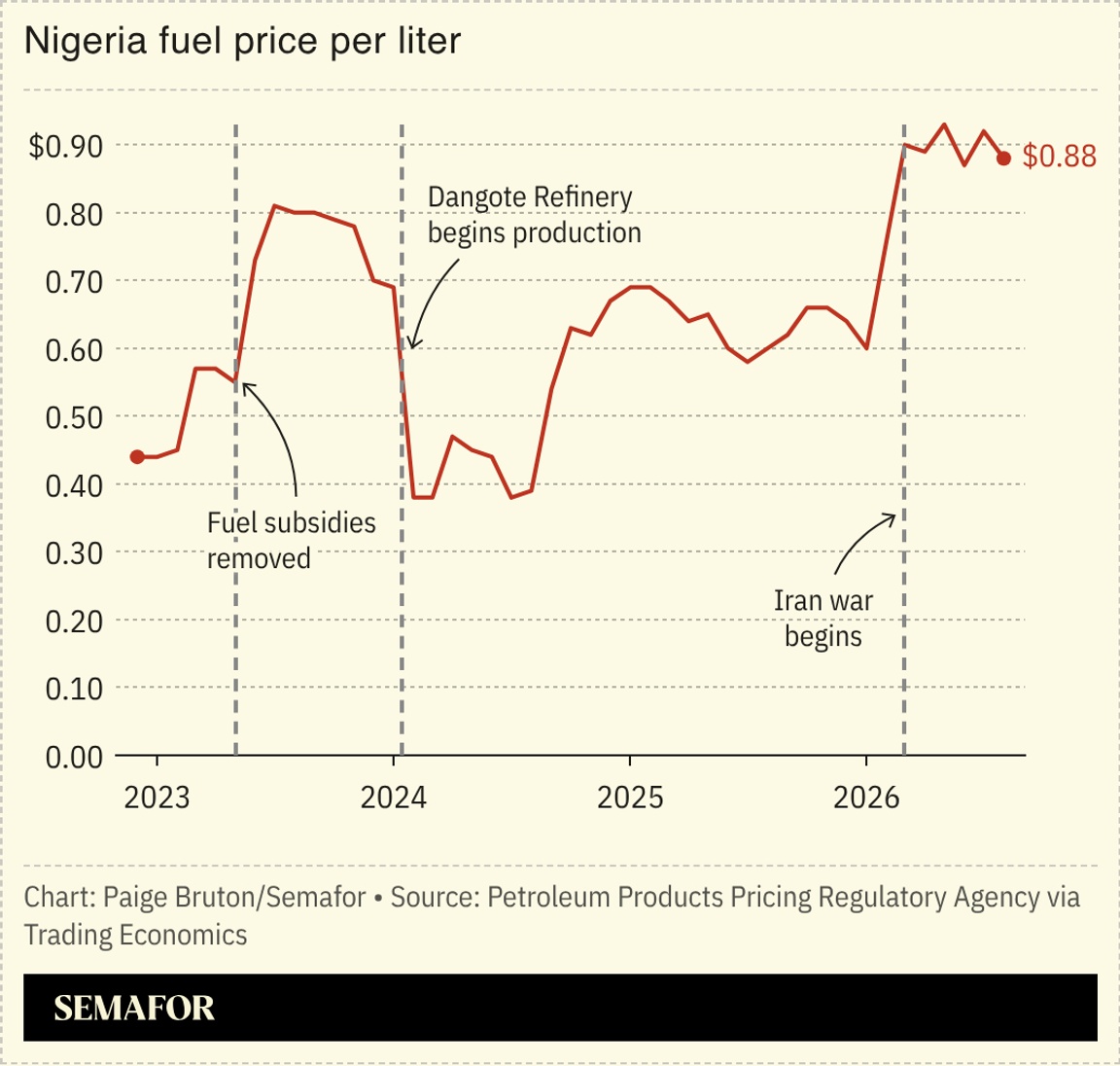 An energy price spike in Nigeria is renewing fears of rising inflation and concerns that Africa’s top oil producer remains vulnerable to global shocks despite growing domestic refining capacity. The Dangote Refinery whose shares went on sale on Monday to kick off the continent’s largest-ever initial public offering, raised its wholesale petrol price by 7% late last week. The move set off increases of up to 5% across pump stations in Lagos and the capital Abuja. Much larger increases are expected in northern towns and rural areas. The country’s largest labour union, Nigeria Labour Congress, warned rising fuel prices risked imposing “incalculable damage” on wages and could cause household expenses to rise sharply alongside higher transport costs. It acknowledged the Iran war’s role in raising global oil prices, but questioned why Nigeria had to suffer a “bleak situation” given its domestic oil production and refining capacities. President Bola Tinubu ended Nigeria’s decades-old fuel subsidy scheme in 2023. Fuel prices in naira have risen five-fold since, sparking a cost-of-living crisis that has become a key campaign issue ahead of an election in January, in which Tinubu will seek a second term. |
|
Transnet counts cost of theft |
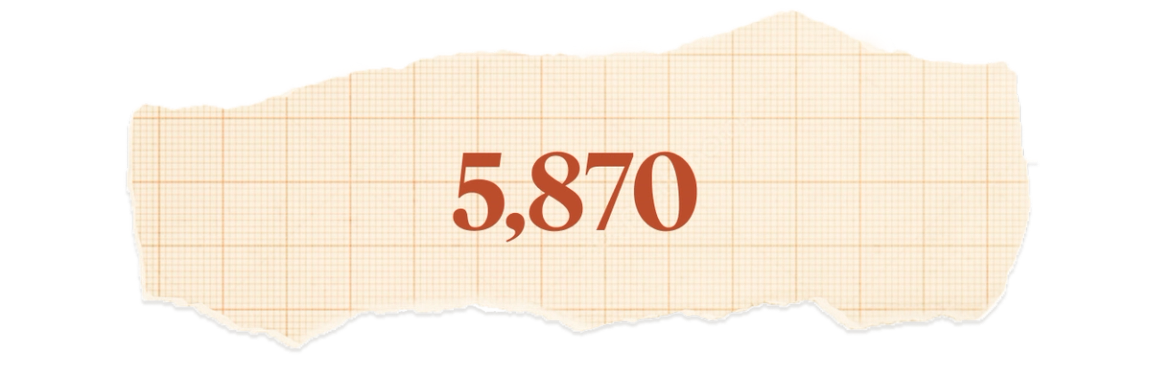 South Africa’s state-owned freight company Transnet recorded 5,870 incidents of theft and vandalism across its rail and pipeline networks in its latest fiscal year. The security incidents — which were down 7% on last year but still equate to an incident every 90 minutes — cast a shadow over the operational recovery of Transnet, whose sprawling rail, ports, and container terminal network makes it a crucial player in Africa’s biggest economy. It took just over $100 million in losses from destroyed property in the year to the end of March. Rail network disruption is an escalating problem worldwide, where criminals target high-value cargo and surging copper prices drive cable theft. But at Transnet, organized criminal syndicates also target the rail network itself, dismantling kilometers of overhead traction power equipment, severing signal links, and stripping physical track components. — Tiisetso Motsoeneng |
|
Harare eyes market-driven ZiG shift |
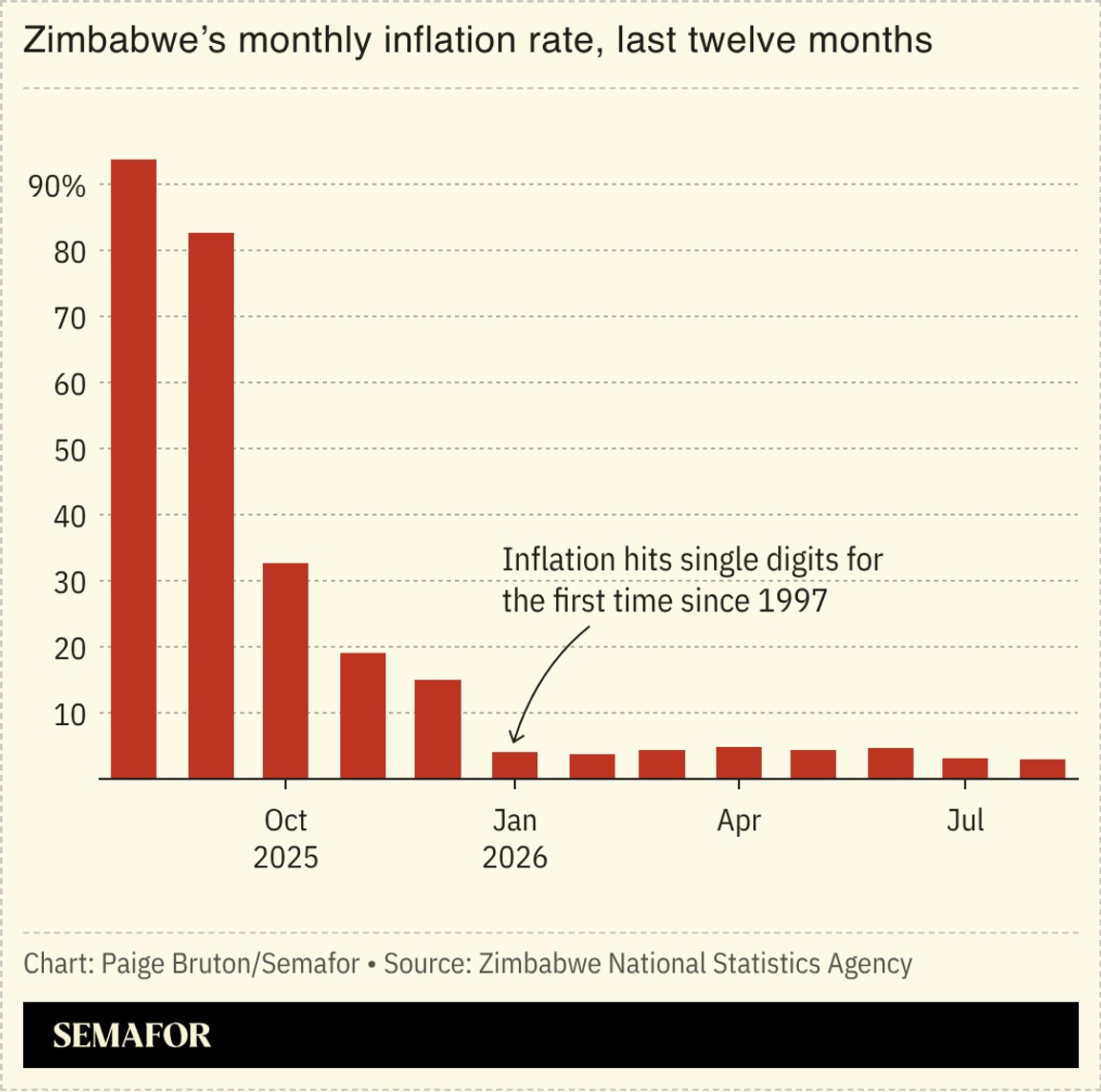 Zimbabwe’s transition to a single currency will be dictated by market conditions and macroeconomic stability rather than a pre-determined deadline, central bank Governor John Mushayavanhu said. Harare had initially set a deadline of 2030 to phase out the use of the US dollar and transition exclusively to the ZiG, a gold-backed currency launched in 2024. But officials have now said that single-digit and stable inflation, as well as foreign exchange reserves covering three to six months of imports, would be the benchmark. Last week, the World Bank warned against de-dollarizing too rapidly: “Forcing a shift before local currency credibility is established triggers capital flight, widens parallel market premiums, and reverses stabilisation gains,” the lender said. While ZiG inflation has dropped from 15% in December last year to 2.9% last month, trust in the new currency remains tentative following years of hyperinflation. |
|
 - Africa has a wealth of geological information hidden amongst the rock and soil that makes up its landscapes. The fossils, caves and river valleys that wind through countries including Morocco, Kenya, and South Africa retain artefacts of ancient climates, writes Kamaldeen Omosanya in The Conversation. However, inconsistent documentation, underrepresentation of African journals in academic databases, and responsibility being split across conservation and tourism authorities have contributed to limited public awareness of the continent’s geological heritage.
- Do citizens trust the institutions through which political power moves in Africa? That is the question Dr Blessing Vava asks in This Is Africa as he reflects on Zambia’s election in August, which saw Hakainde Hichilema declared the winner with nearly three million votes. However, elections remain controversial on the continent, with allegations of ‘stolen’ elections and fake GEN-20 forms. Vava calls for the evidence to be examined rather than assumed: “An election can produce a legitimate political outcome while still being an imperfect process that requires serious reform.”
- Africa’s size has long been understated in school textbooks and online atlases, in what Howard French suggests in Foreign Policy could be termed the ‘map justice’ movement of the West’s underestimation of the continent’s importance over the next century. French says the continent’s ballooning demographic weight could be the antidote to the West’s stark fertility decline, which could result in aging populations, fewer children being born, and fewer young workers entering Western workforces.
- Dr Jean Kaseya, head of the Africa Centers for Disease Control, has been pushing African leaders to fund a public health response to the Ebola epidemic that has already killed 3,300 people in his native DR Congo. However, his leadership of Africa CDC has been marred by allegations of extravagant spending and fraught relationships with staff, notes Ruth Maclean in this profile for the New York Times. Kaseya, who has a habit of wearing shirts embroidered with his own name, is instrumental in funding Africa’s disease response amid shrinking Western aid budgets.
|
|
 As AI and emerging technologies reshape the global economy, three billion people remain offline, disconnected from the digital opportunities transforming our world. On Tuesday, September 22 in New York City, The Next 3 Billion will bring together leaders including H.E. William Ruto, President, Republic of Kenya; H.E. Judith Suminwa, Prime Minister, Democratic Republic of the Congo; Dr. Ngozi Okonjo-Iweala, Director-General, World Trade Organization; Sanda Ojiambo, Assistant Secretary-General, CEO and Executive Director, United Nations Global Impact; James Manyika, SVP, Research, Labs, Technology & Society, Google-Alphabet; and more to explore how AI, energy, and global development can expand access, unlock opportunity, and drive inclusive growth across the world’s fastest-growing regions. September 22 | New York City | Delegate Application |
|
|


