| | US stocks rally following the Fed’s first rate hike in years, Washington approves the sale of F-35s ͏ ͏ ͏ ͏ ͏ ͏ |
| |  COPENHAGEN COPENHAGEN |  CAIRO CAIRO | KUALA LUMPUR |
 | Flagship |  |
| |
|
The World Today | 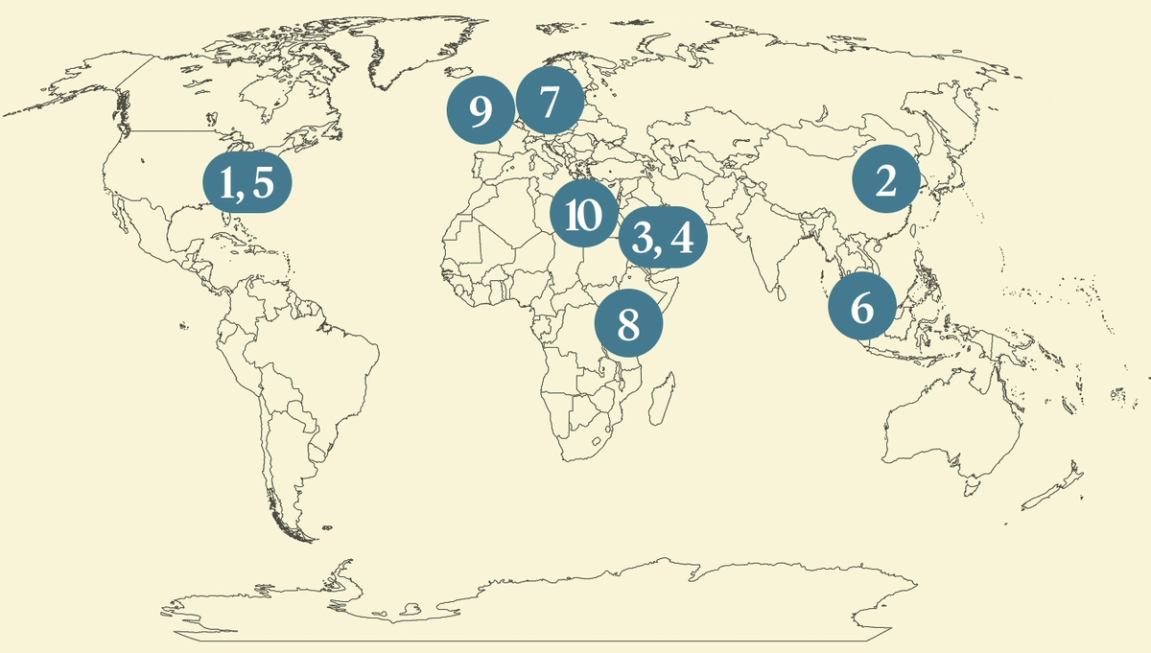 - WH backs Fed’s Warsh
- Trump to greet Xi at airport
- Saudi wages a lonely fight
- Aramco races to fix pipeline
- GM to make Patriot parts
- AI boosts Asian economies
- Novo uses AI to find drugs
- Kenya’s anti-migrant unrest
- Britons are very disengaged
- Poetry crafted in prisons
 A new book details the US government’s ties to the ‘arsenal of the broligarchy.’ |
|
Trump backs Warsh after Fed rate hike |
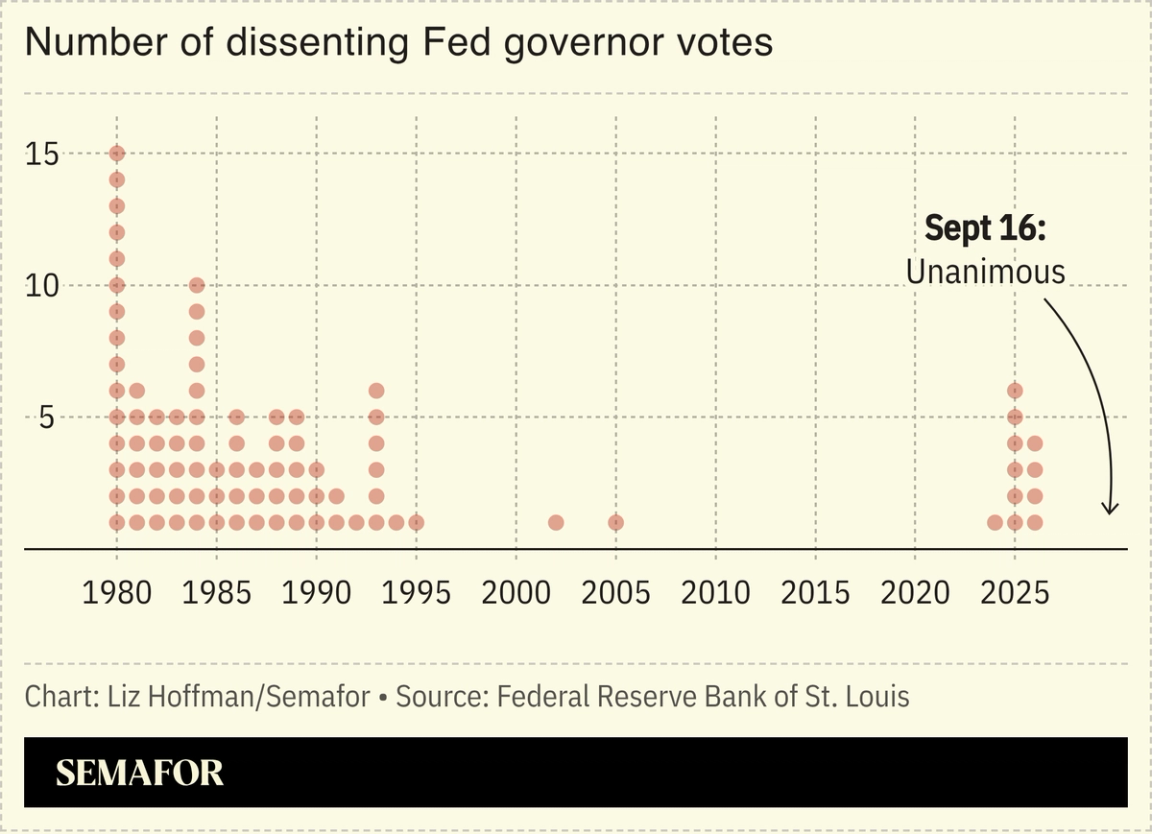 Stocks rallied Thursday as markets digested the US Federal Reserve’s decision to hike interest rates — an expected move, but one that was seen as a critical test of the central bank’s independence. “Stocks can move on, as uncertainty has faded,” an analyst told Bloomberg. US President Donald Trump criticized the decision but stopped short of faulting Fed Chair Kevin Warsh. “Trump cares less about any specific outcome than about winning, and he won by replacing Jerome Powell with Warsh,” Semafor’s Liz Hoffman argued. Though Warsh reiterated the central bank’s independence Wednesday, Trump later revealed that he spoke to him before the Fed’s meeting, suggesting Warsh may have been “trying to foam the runway,” a Wall Street Journal columnist wrote. |
|
US, China ramp up summit preparations |
 US Secretary of State Marco Rubio and China’s Foreign Minister Wang Yi in 2025. Mandel Ngan/Pool via Reuters US Secretary of State Marco Rubio and China’s Foreign Minister Wang Yi in 2025. Mandel Ngan/Pool via ReutersUS President Donald Trump will reportedly greet China’s leader Xi Jinping as he steps off the plane in Washington, DC next week — the first leader accorded that deference in Trump’s second term — as preparations ramp up for their summit. The countries’ top diplomats spoke Thursday, possibly to finalize an agenda that will center on trade issues, AI governance, and defense ties. Though Washington signaled openness to discussing “shared risks” on AI, experts have rejected the possibility of major breakthroughs. Other discussions may involve strengthening military-to-military ties, as well as resuming arms-control talks halted in 2024 over US weapons sales to Taiwan. Asian allies are concerned that Trump could soften US support for Taiwan in exchange for economic concessions. |
|
US agrees to sell F-35s to Saudi |
 Marco Garcia/Reuters Marco Garcia/ReutersThe US approved a potential $24.3 billion sale of military aircraft to Saudi Arabia on Thursday, as the kingdom is drawn into an expanding war with Iran and its proxies. The support, which Washington said “will not alter the military balance in the region,” comes as the Houthis in Yemen have escalated attacks against Saudi targets, and the kingdom’s critical East-West pipeline is shut down after drone attacks from Iraq. Riyadh has faced the Houthis alone so far, with Washington opting not to intervene. Saudi’s military lacks the power to defend itself from the “extortion business” run by Iran and the Houthis, an expert said, and will “sooner or later” have to pay both “to back off from attacking them.” |
|
Aramco credits tech for war response |
 Maxim Shemetov/Reuters Maxim Shemetov/ReutersSaudi Aramco credited its technology investments for enhancing its response to disruptions from the regional war, with one top executive telling Semafor that they were “as critical as the core business” to the world’s biggest oil company. In the region, Aramco has the best ability to repair assets, especially pipelines, an IEA oil analyst told The Wall Street Journal. The company is rushing to restore half the East-West Pipeline’s capacity within days by bypassing a section damaged in drone attacks last week, Bloomberg reported, with full operations expected in about six weeks. With the kingdom’s finances under strain, Aramco is under more pressure than ever to deliver dividends to a government that relies on oil for 55% of its revenues. |
|
GM to build Patriot missile parts |
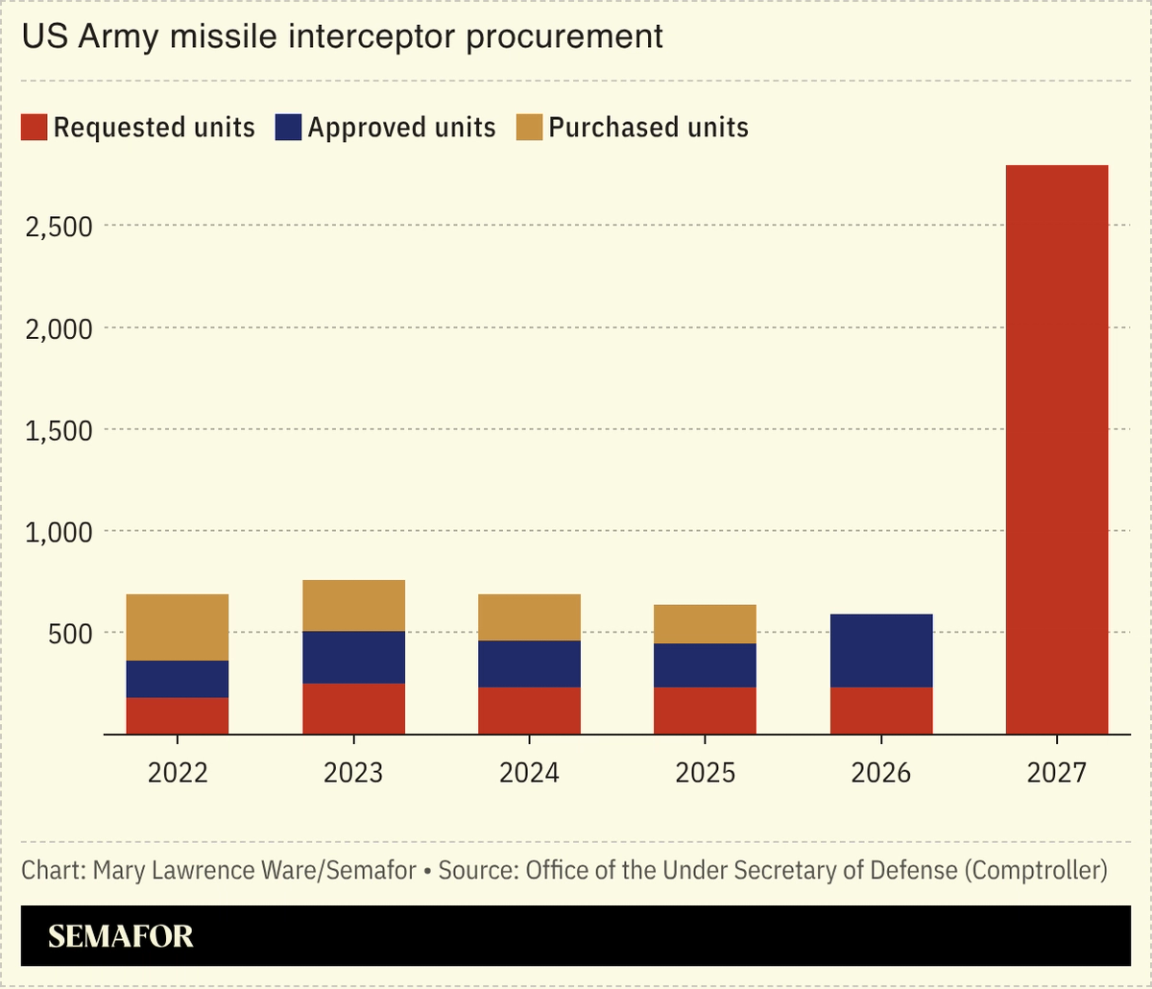 American automaker General Motors will manufacture components for Patriot missiles, Lockheed Martin announced Thursday, potentially boosting efforts to plug the US’ gaping munitions holes that have emerged during more than six months of conflict with Iran. The Pentagon is hoping to enlist more manufacturers in its push to speed up procurement, The Wall Street Journal reported: The US has used up as much as two-thirds of its missile interceptors, a government watchdog said this week, while Reuters reported that “virtually all” long-range missiles were expended. A group of defense experts warned last month that the US lacks the capacity to deter a potential Chinese attack on Taiwan and called for a “two-year sprint” to replenish stockpiles. |
|
Asia’s AI-fueled economic boom |
 Hasnoor Hussain/Reuters Hasnoor Hussain/ReutersMajor Asian economies are profiting from growing global demand for AI as their manufacturing sectors build the high-end equipment needed for a worldwide data center boom, economists said. Surging exports are set to drive GDP growth in Malaysia, South Korea, Taiwan, and Vietnam, while Seoul’s and Taipei’s burgeoning tax receipts — thanks to fast-rising corporate profits — are driving government spending, Goldman Sachs economists noted. Japan, too, is benefitting further up the supply chain by making semiconductor manufacturing equipment for many of these Asian economies, Barclays said. Not everyone is doing as well, however: Populist policies in Indonesia, AI’s threat to outsourcing jobs in the Philippines, and demographic decline in Thailand have left those Southeast Asian nations particularly vulnerable. |
|
Novo uses Claude for drug discovery |
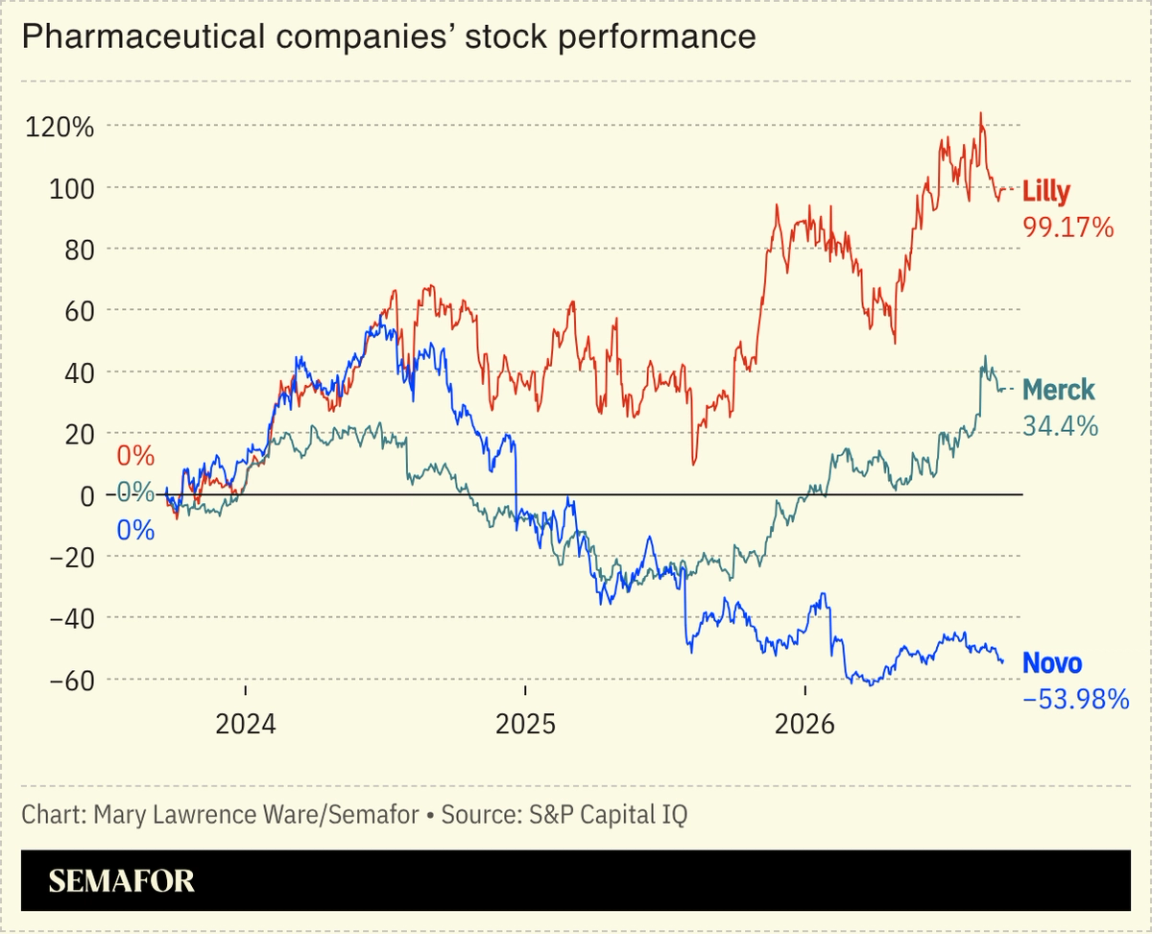 Danish drugmaker Novo Nordisk will partner with Anthropic in an effort to speed up drug development, as the one-time GLP-1 leader bets AI will help it reclaim lost market share. Novo rivals Lilly, Merck, and Roche have all invested in AI, though it has largely been used to improve workplace productivity and design clinical trials, rather than discover new drugs. But researchers are bullish on AI’s use for bioscience, and Novo — having jumped out to a lead with its Ozempic injectable that became synonymous with GLP-1s — is playing catch up: Its shares have plunged 20% in the past year, prompting the firm to launch a culture shake-up. From this week, Novo Nordisk will henceforth be known simply as “Novo.” |
|
 Redefining what’s newsworthy. The news isn’t all doom and gloom, and Nice News is proof of that. The free, daily newsletter delivers uplifting, interesting, and curiosity-driven stories that help readers view the world through a more optimistic lens. Subscribe to Nice News. |
|
Anti-migrant sentiment grows in Kenya |
 Monicah Mwangi/Reuters Monicah Mwangi/ReutersKenya’s plans to bar foreign nationals from running businesses and performing low-skilled labor sparked violent attacks against migrants. East Africa’s largest economy has roughly a million foreigners working in it, many from neighboring Burundi and DR Congo, and anti-migrant sentiment is growing as the economy stagnates. The violence following President William Ruto’s comments last week led to the government backtracking and giving non-nationals 90 days to get papers in order, but many are planning to return home, NPR reported. There is a growing distrust of outsiders across sub-Saharan Africa: Tanzania has also imposed restrictions on foreign-owned businesses, while South Africa has seen a wave of attacks against migrants. |
|
UK residents pull back from state |
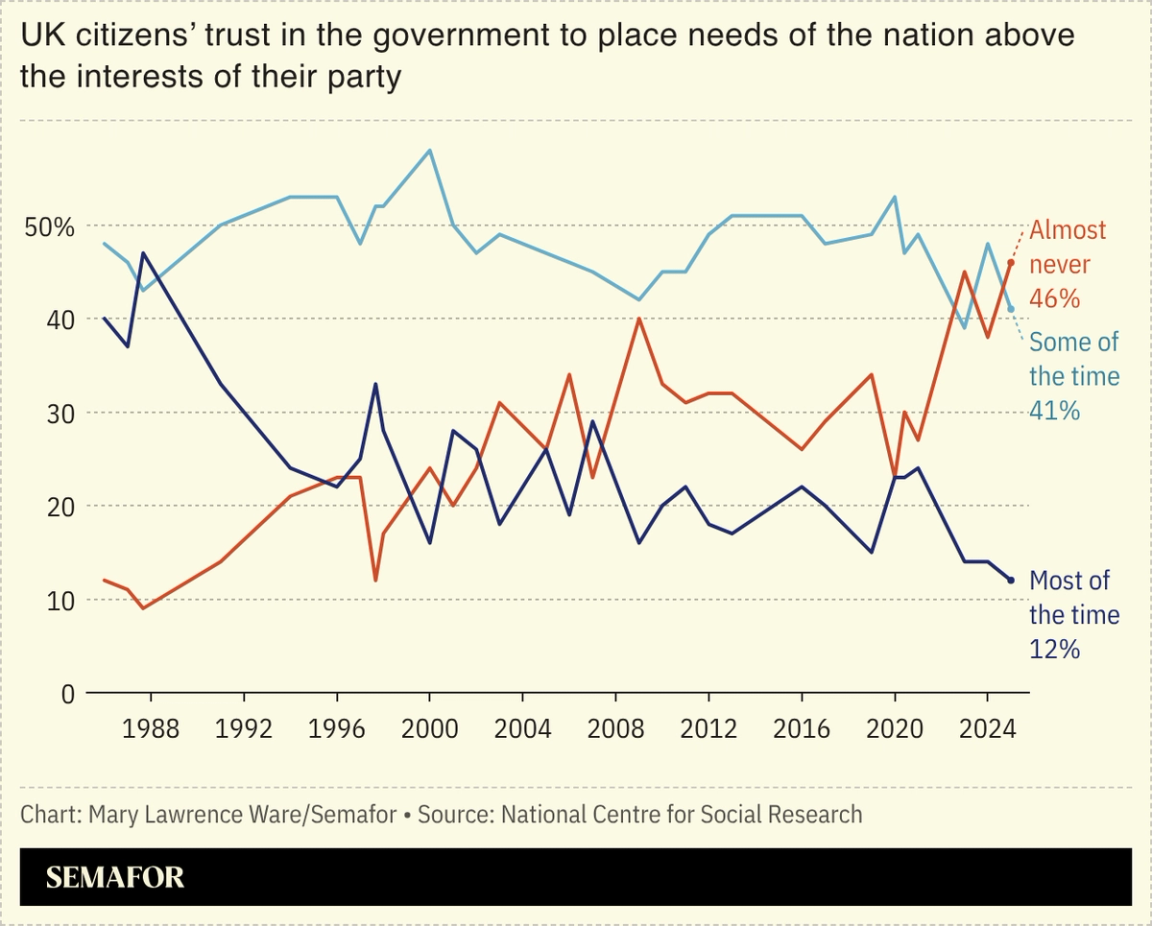 Britons are increasingly opting out of even the slightest engagement with the state, with cable fees going unpaid and laws and customs unobserved. A public broadcaster, the BBC allows anyone with a hookup to watch under the e |
|
|


