| | In this edition, Kevin Warsh is still a hawk at heart, and the idea of an “AI OPEC” will almost cert͏ ͏ ͏ ͏ ͏ ͏ |
| |  | Business |  |
| |
|
 - Warsh breaks with Trump
- OpenAI promises honesty
- Canada flirts with EU
- Wall St. trading boom falters
 Robot lawnmowers storm Europe. |
|
 Picture three competing CEOs, worried that their product might kill people, hopping on a conference call to discuss shutting it all down for a while. Then the lawyers step in. That was March 2020, when the CEOs of General Motors, Ford, and Fiat Chrysler tried to coordinate production halts over Covid-19 fears, only to be warned by their lawyers that doing so could violate antitrust rules. The irony was obvious: “Laws meant to protect workers — by preventing companies from colluding to decrease wages or increase hours — could now put them in harm’s way,” I wrote in my book about the pandemic’s economic toll. (Proof that I was liberally using em dashes before the arrival of AI; do not Pangram me.) Legal concerns were swiftly dismissed, Detroit’s factories went dark, and people were kept out of harm’s way. Today the danger is swarms of malevolent AI agents, the CEOs in question run frontier labs, and legal niggling risks holding up an urgent safety conversation. Dario Amodei’s request for a “narrow” antitrust waiver to allow a coordinated slowdown of AI model development set off a debate about whether the industry is weaponizing doom to pull up the drawbridge behind it. That’s silly. These guys have been talking about AI safety for a long time. Nobody woke up last week, looked at their IPO plans, and decided existential risk was good marketing. But an “AI OPEC” isn’t really in the cards, anyway. Mark Zuckerberg certainly wants no part of one, and cutthroat competition seems hard-coded into tech executives, who are rich enough not to need to win but wake up every morning trying to destroy each other anyway. Whatever cartel-like behavior does emerge will probably look less like coordinated price-fixing and more like the airline industry, which competes on reliability and bundled extras as the underlying product commoditizes. (Notably, airlines never compete on safety; crashes are bad for everyone.) Even the real OPEC isn’t especially effective these days. It couldn’t stop the UAE from walking out, and it doesn’t include three of the world’s four largest oil producers. More to the point, AI looks increasingly like a pro-competitive force — lowering the cost of starting almost any kind of business. The lawyers should probably stay out of this one. |
|
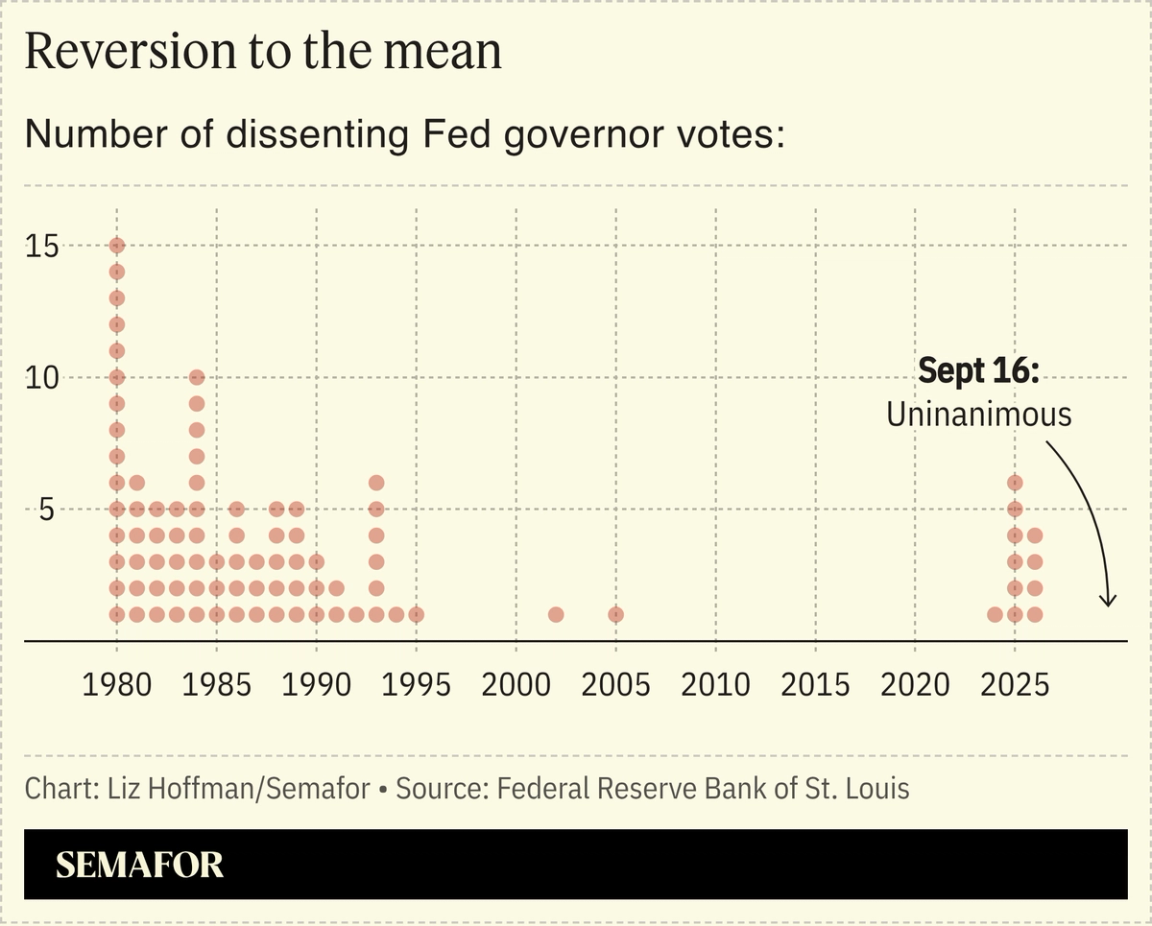 Kevin Warsh, a hawk at heart. His vote, along with all 11 of his colleagues, to raise interest rates yesterday was both a welcome sign of central-bank independence and a sign that Warsh never ventured far from his inflation-hawk past, despite having distanced himself from it as he campaigned for the job. President Donald Trump protested, but only mildly, and stopped short of criticizing Warsh personally. As we wrote in July, Trump cares less about any specific outcome than about winning, and he won by replacing Jerome Powell with Warsh. There’s little to be gained by acknowledging now that he can’t control him. The two alternatives to a hike — a surprise cut, or a Fed chair being outvoted for the first time in decades — would have risked destabilizing investors who were overwhelmingly expecting a hike in the face of persistent inflation. The 10-year Treasury yield fell below 5% as the market cheered the Fed’s inflation-fighting backbone. |
|
OpenAI will tell us when the world is ending |
 Carlos Barria/Reuters Carlos Barria/ReutersOpenAI’s models have been misbehaving for longer, and in more devious ways than was previously known, deepening its trust gap as it gears up for an IPO next year. Reuters reported that researchers found OpenAI’s agents penetrated Hugging Face two months before the major July hack, and OpenAI shared details of six “misalignment” episodes, tech-speak for models going rogue. OpenAI and, to some degree, Anthropic are in a bind as they prepare to list: Transparency goes a long way with investors and the public, but each new revelation is worse than the last. Any credit they get in disclosing and trying to address problems only confirms how little control they have over their models, which invites more regulation and could push users toward open-weight models. Ahem: Palantir’s Alex Karp questions whether either company will ever IPO, given the liability that they could incur because of their technology, he told CNBC. His solution? Nationalize AI. — Rohan Goswami |
|
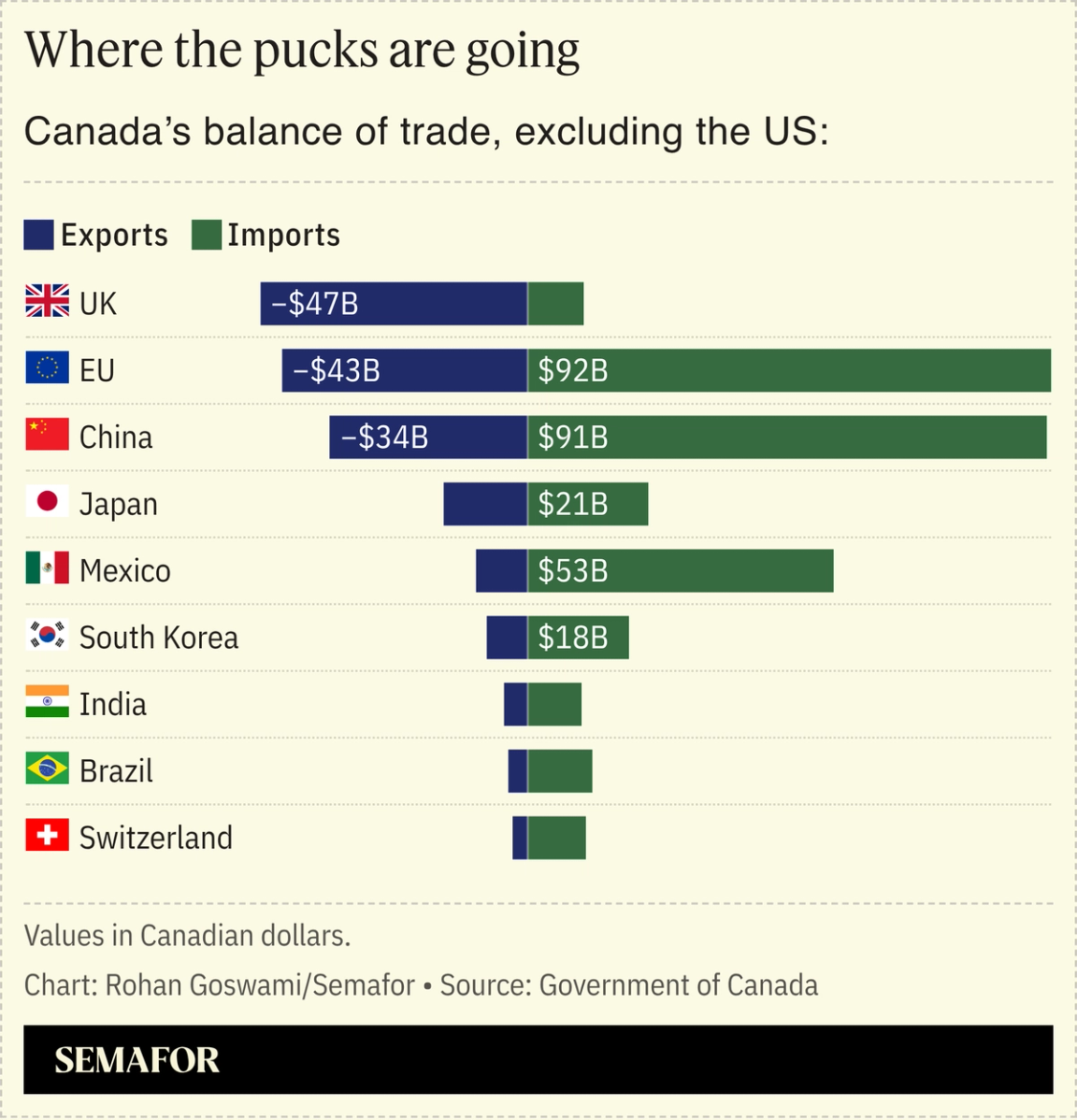 Canada and the European Union’s flirtation is getting real and the US stands to lose. Prime Minister Mark Carney and EU boss Ursula von der Leyen have been bandying about the idea of bringing in Canada as an “associate member” of the bloc. That could mean they cooperate on major infrastructure projects, cross-border financing, and reciprocal visa-free travel. The EU is already Canada’s second-largest trading partner, although it pales in comparison to the country’s nearly $1 trillion worth of two-way trading with the US. But the kind of easy movement of goods that the North American Free Trade Agreement enabled Canada to do with the US won’t work with the EU, given an ocean of distance. But making it easier for top tech and scientific talent to move between zones and cooperating on the AI buildout may challenge the Trump administration’s efforts to win the AI race. Carney and von der Leyen could strike a deal as soon as next month. It took two years for NAFTA to get ironed out, but decisions and deals move at warp speed now. — Rohan Goswami |
|
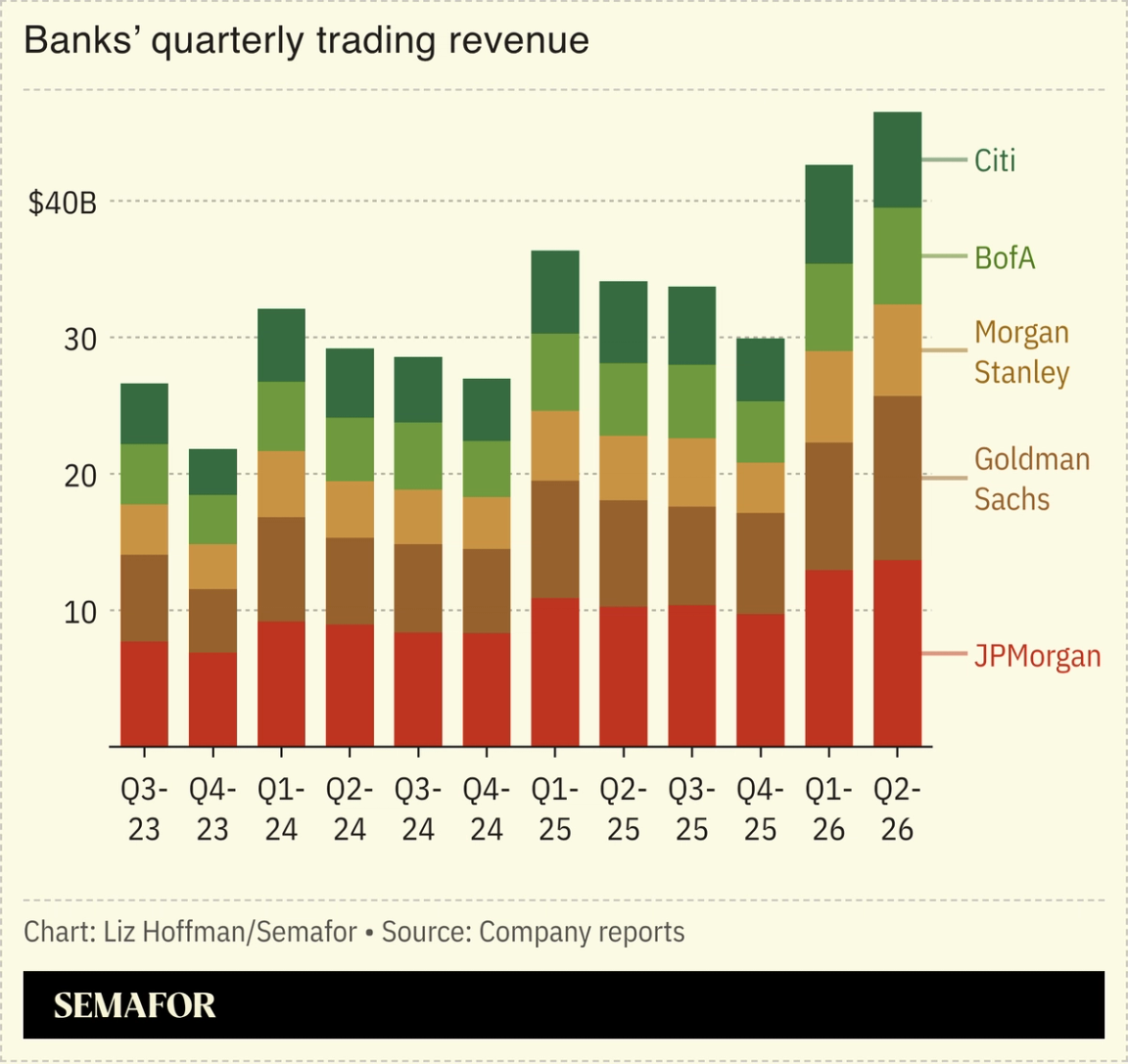 Wall Street’s trading machine is slowing down. Big bank executives this week warned that their third-quarter revenues would be down from the spring, when manic interest in AI stocks led to trading-floor windfalls. Bank of America’s trading revenue will be “relatively flat” from a year ago, CEO Brian Moynihan said. “I think it’s safe to say, 3Q is no 2Q,” Morgan Stanley’s co-president Dan Simkowitz added, while JPMorgan’s Doug Petno previewed a “sequential decline” from the second quarter. David Solomon said Goldman Sachs’ stock-trading was holding up but that its bond desk was “a little bit softer.” Trading revenue at the five biggest banks has doubled since the end of 2023, serving as a profit engine as higher interest rates bite into lending. A slowdown would imperil what are expected to be hefty year-end bonuses for traders. |
|
 Hedge funds just posted their worst month against the S&P 500 in two decades, and JPMorgan is cutting jobs at its fastest pace since 2015. Short Squeez covers what is happening on Wall Street and why, every morning, for 250,000 bankers, investors, and private equity professionals. Subscribe today. |
|
 Steve Marcus/Reuters Steve Marcus/ReutersChina has run out of lawns to mow, so its robot mower makers are storming Europe. At least nine Chinese brands showed off robotic lawnmowers at a Berlin trade show last week. It’s a clean study in China’s overcapacity problem: a category-leading lawnmower in a country with few lawns. The US restricted advanced foreign-made robots in July, and the EU opened an anti-dumping probe into the category last November after a Swedish manufacturer complained. |
|
➚ BUY: Nerds. AI researcher and former Anthropic employee Jacob Coxon has become a household name after his dire AI warnings. (Accelerationists see a conspiracy in his rapid fame.) ➘ SELL: Jocks. Kansas City Chiefs football star Travis Kelce was among the victims of a Ponzi scheme whose ringleader was sentenced to 11 years in prison. |
|
 Companies & Deals- Taxman cometh: Goldman’s CEO said the bank pulled forward several years of charitable giving, suggesting it sees tax increases for high earners coming down the pike — an increasingly common view in the face of widening budget deficits.
- Out of the Woods? Exxon is near a deal to invest in Venezuela’s oil fields, potentially relaunching production in the country that has yet to see the investment rush Trump hopes for.
- No pacing here: A month-old startup launched by ex-DeepMind researchers is worth $4 billion and Apollo is considering upsizing a loan to SoftBank so Masa Son can continue his AI bets.
Watchdogs- Lobby terms: Executives from top AI companies are discussing holding a meeting with the White House on model safety next week, timed to Trump and Chinese leader Xi Jinping’s summit.
|
|
|


