| | In today’s edition: Saudi Arabia works to restore key East-West pipeline, the significance of a Chin͏ ͏ ͏ ͏ ͏ ͏ |
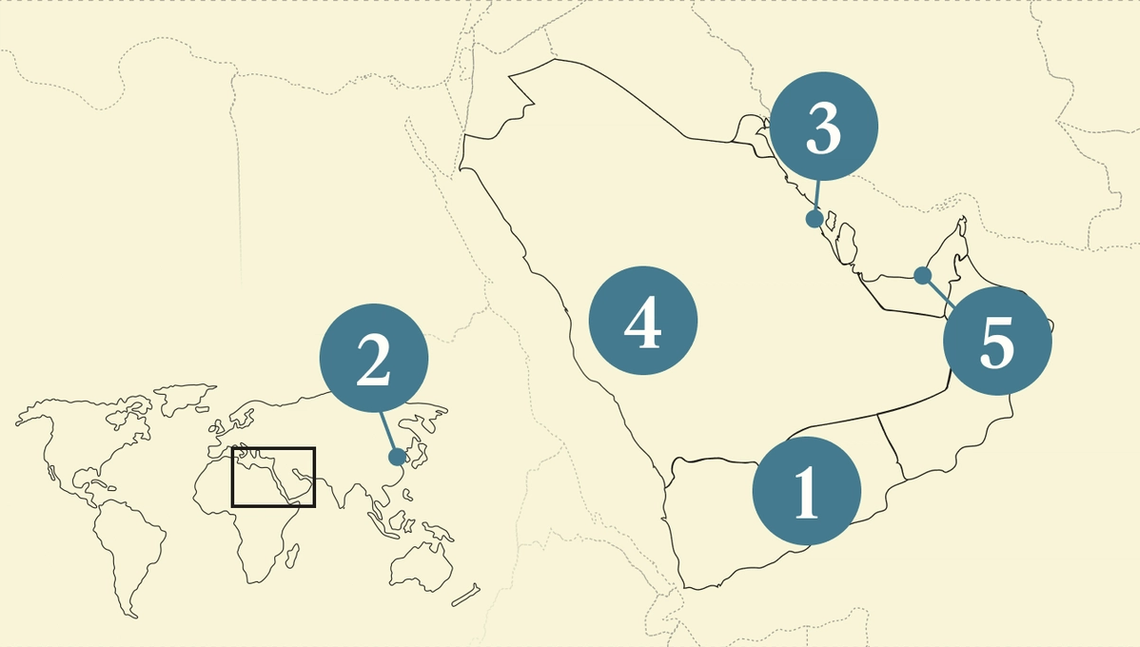
| |  Beijing Beijing | Dhahran | Abu Dhabi |
 | Gulf |  |
| |
|
 - Saudi Arabia’s lonely fight
- China’s Middle East role
- Aramco leans on tech
- Saudi uranium find
- Abu Dhabi’s power surge
 Emirati dressage team … very good at naming horses. |
|
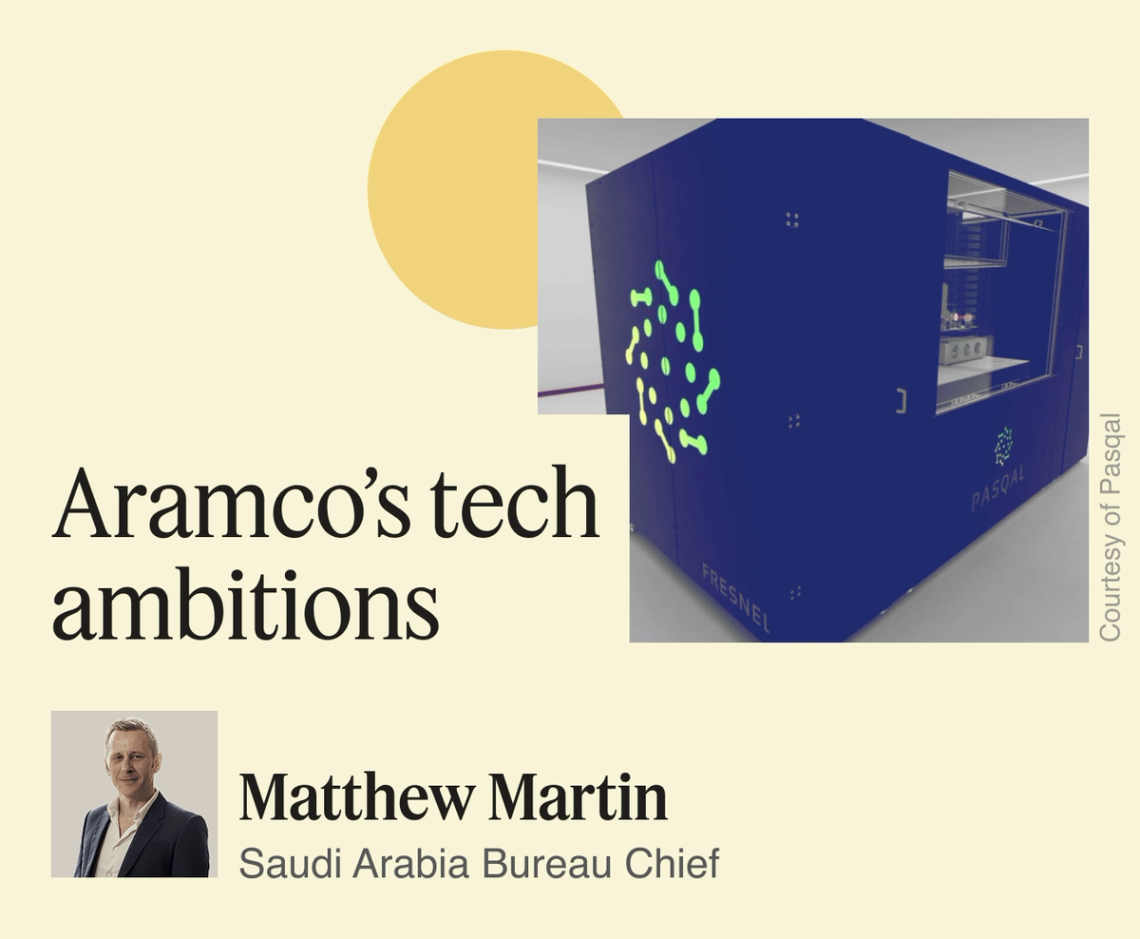 In a nondescript building in Saudi Aramco’s sprawling campus, in the coastal city of Dhahran, sits Saudi Arabia’s first quantum computer. The cutting-edge, recently installed machine, costing millions of dollars, is the latest sign of the world’s biggest oil company’s tech ambition. “We never wait for someone to tell us what’s coming in the future,” Sami Al Ajmi, Aramco’s senior vice president of digital and information technology, told me. In nearby buildings with modern-feeling industrial architecture (a world away from Aramco’s more staid design) startups backed by the company are developing technology they hope to sell to one of the most profitable firms around. Tech is an integral part of the company’s story that has helped keep lifting costs — how much oil producers spend to get the stuff out of the ground — at $3 a barrel for decades. Aramco was building data centers and talking about AI tokens years before they became buzzwords. If data is the new oil, then who better to understand that than the world’s biggest oil company? But right now, the bigger challenge for the company is maintaining the pace of investment and management attention on technology at a time when there are more immediate priorities. With traffic through the Strait of Hormuz and Bab el-Mandeb disrupted, the company’s biggest issue now is how it gets oil out to customers. On top of that, Aramco is under more pressure than ever to deliver dividends to the government at a time when the kingdom’s finances are under strain. For a company that has spent years, and billions, looking to the future, its near-term focus will be on core operations rather than transformational bets. |
|
Saudi Arabia’s lonely fight |
 Planet Labs PBC/Reuters Planet Labs PBC/ReutersSaudi Arabia may soon restart its damaged oil pipeline, but remains under threat of attack from Iran and its allies in Iraq and Yemen. Aramco is working to restore half the East-West Pipeline’s capacity within days by bypassing a section that was damaged in drone attacks last week, with full operations expected in about six weeks, according to Bloomberg. The route has been critical to global oil flows since the Strait of Hormuz was disrupted. In Yemen, Riyadh has so far faced the Houthis alone. US officials met with the group in Oman, according to Reuters, where the Houthis promised to respect their ceasefire and leave American, Israeli, and other commercial ships alone — except Saudi ones. The expanding war points to a deeper Saudi vulnerability: Bernard Haykel, a Princeton professor who has had regular contact with Crown Prince Mohammed bin Salman, said Arab states lack militaries powerful enough to defend themselves from the “extortion business” run by Iran and the Houthis. Given their “structural weakness,” he said, the Saudis will “sooner or later” have to pay both Iran and the Houthis “to back off from attacking them.” |
|
Chinese missile used in Yemen |
 Houthi Military Media/Handout via Reuters Houthi Military Media/Handout via ReutersDebris that appears to be from a Chinese DF-15A ballistic missile has been found in Yemen, a sign that Beijing’s military hardware is reaching conflicts far afield. No export of that missile to the Middle East has been confirmed — but Saudi Arabia, which secretly acquired an earlier version of such a system, may have used it against the Houthis, according to the South China Morning Post. That could trouble US intelligence officials, who have warned that a potential advanced fighter jet sale to the kingdom risks the technology leaking to China, The New York Times reported. Fears of a Saudi pivot to Beijing are overblown, Princeton professor Bernard Haykel said, adding that Riyadh is committed to ties with the US. He also said China may have provided intelligence to the “Iranians, Houthis, and possibly to the Iraqi militias” to strike the kingdom. |
|
Aramco leans on tech in wartime |
 Courtesy of Aramco Courtesy of AramcoSaudi Aramco says its investments in artificial intelligence and other technologies are already paying off by cutting costs, boosting efficiency, and enhancing its response to disruptions from the regional war. At Aramco’s headquarters in Dhahran this week, Semafor saw how the company is deploying technology across its operations, and was given a glimpse of the quantum computer it plans to use for more complex tasks in the future. The state-controlled oil producer’s “realized value” from technology — its measure of the financial impact of its tech investments — exceeded $5 billion last year. That surpassed Aramco’s targets and should grow further in coming years, Sami Al Ajmi, senior vice president of digital and information technology, said in an interview. — Matthew Martin |
|
Saudi Arabia’s well-timed uranium find |
 Divya Rajagopal/Reuters Divya Rajagopal/ReutersOn July 22, the US and Saudi Arabia finalized a nuclear deal that gave the kingdom a pathway to enrich uranium. Fifty-four days later, Energy Minister Prince Abdulaziz bin Salman announced an estimated 110 million tonnes of ore with “promising concentrations of uranium” were discovered near Medina. He didn’t say when it was found. How promising remains to be seen: Concentration, grade, and recovery rate will determine the deposit’s value. Though the element is more abundant than gold, the timing is curious. Chinese geologists have surveyed potential uranium sites, and Beijing reportedly helped build a facility to extract yellowcake from ore. But the kingdom, which has an estimated $2.5 trillion in untapped mineral wealth, had never officially sized a deposit until this week. Now, with a US green light for its civil nuclear ambitions, more uranium finds may surface. — Ed Clowes |
|
Abu Dhabi grid hits a record |
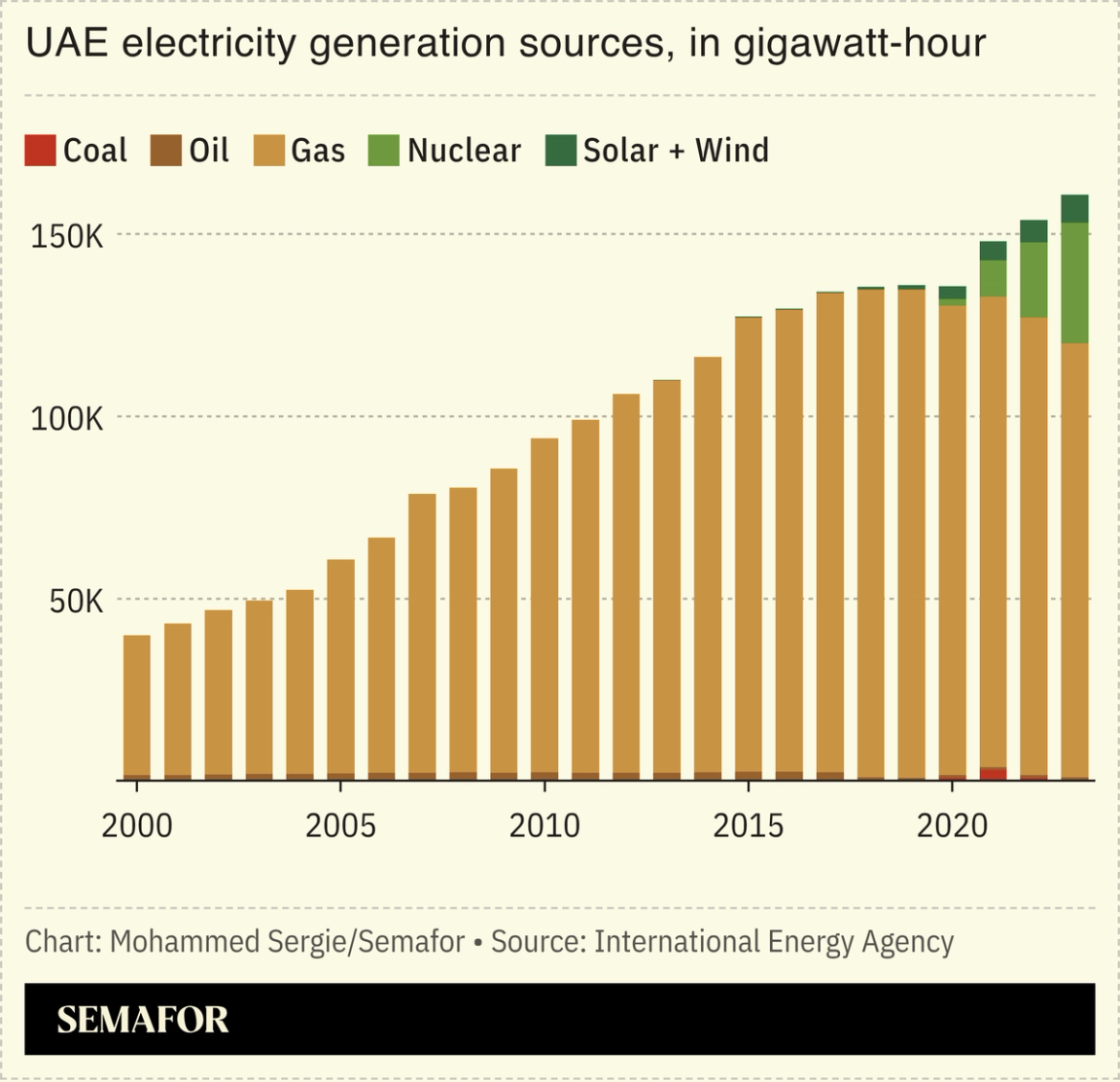 Abu Dhabi’s electricity use hit a record in August, despite the summer exodus of residents, Department of Energy Chairman Abdulla Humaid Al-Jarwan told Semafor. Demand on the grid is on pace to nearly double between 2025 and 2030, driven by population growth, industrial expansion, and AI infrastructure. To keep up, Abu Dhabi is investing 300 billion dirhams ($81.7 billion) by 2035 to add capacity and shift to cleaner sources. It’s also transforming its water system to reduce reliance on gas and make seawater desalination cheaper and more efficient. Water is the latest soft-power tool for Abu Dhabi. The emirate wants to export its technology, expertise, and capital abroad. The UAE will co-host the UN Water Conference with Senegal in December, alongside the Department of Energy’s inaugural Water and Power Week, which organizers expect to draw more than 25,000 visitors. It will be a chance for Al-Jarwan — and the UAE — to pitch solutions to what UN researchers call a global “water bankruptcy.” — Kelsey Warner |
|
 Defense- Gulf states have announced or approved more than $5 billion in defense contracts focused on counter-drone systems since the Iran war began. In what one former adviser to Qatar’s military calls the “greatest spending spree in Gulf defense history,” the deals are benefiting firms including Anduril, RTX, Rheinmetall, and EOS, as well as Ukrainian companies that honed their skills during the war with Russia. — Bloomberg
Fintech- Saudi fintech Barq has achieved unicorn status, raising $329.5 million in a Series A from mostly regional backers, including Dubai e-commerce firm Noon. The financing round for the mobile wallet and payments platform valued Barq at $1.85 billion. — Saudi Gazette
Media- Saudi Arabia’s push to build a creative economy is getting its own tentpole gathering: Cannes Lions, regarded as the advertising industry’s benchmark event, will launch a Riyadh edition in December 2027, convening marketers, agencies, and brands at the King Abdullah Financial District. — Arab News
|
|
 Courtesy of UAE Equestrian and Racing Federation Courtesy of UAE Equestrian and Racing FederationI’ve been through the desert on a horse with no name, but it wasn’t one of the UAE’s super stallions going to the Asian Games. Zen Liquidity and stablemate Tesla DXB will carry the UAE’s colors in Japan, alongside Lotus-S and Le Grand Ayden HB. The UAE fielded its first-ever Asian Games dressage team in Hangzhou in 2023, and finished sixth. This time, Zen Liquidity and rider Mohamed Jassim Al Serkal arrive after winning their division at an international event in Abu Dhabi in February. The 20th Asian Games run Sept. 19 to Oct. 4 in Nagoya, Japan. The UAE is sending 165 nationals to compete in 23 sports, making it one of the country’s biggest-ever delegations to a multi-sport event. |
|
|


