
|
 |
Welcome back to HEATED—Emily here. Today’s article was written by Texas-based journalist Saul Elbein, who found this story by attending a little-noticed Texas Senate committee hearing and paying close attention to what industry representatives said there.
Some of the most consequential stories begin in rooms few people are watching. Paid subscriptions allow HEATED to work with journalists like Saul, who know which rooms matter—and how to recognize the broader stakes of what happens inside them. If you’re a free subscriber and value this kind of reporting, please consider upgrading today.
You can also support Saul directly by subscribing to Future Heist, his independent publication covering the oil and gas industry in Texas.
Oil executives just accidentally exposed the industry’s greatest weakness
To keep drilling, Big Oil needs permission to dump treated fracking wastewater into rivers and onto cropland. We don’t have to give it to them.
|

| |||||||||||||||


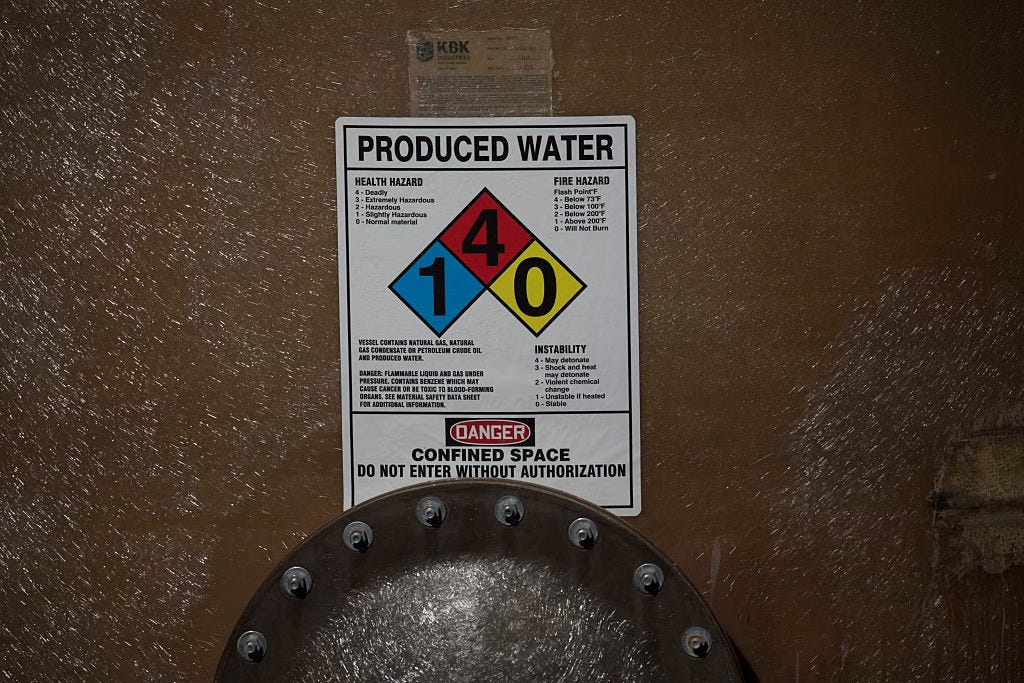 |
Sometime in the next few months, Texas is set to issue its first permits letting the oil industry pour treated fracking wastewater into rivers and onto cropland.
Five applications are currently pending, covering more than 18 million gallons of wastewater per day, all bound for the Pecos and the Atascosa Rivers. The company furthest along expects approval by the end of the year. The Texas environmental regulator is also actively working on the rules that would allow oilfield waste to be sprayed on cropland.
It may sound crazy to dump treated fracking waste on land that is used to grow food, or into waterways connected to drinking water supplies. But last month, oil and gas industry representatives gathered before the state Senate to explain why they desperately need to do exactly this.
In doing so, they inadvertently gave the public a free lesson in how to bring the U.S. oil and gas industry to its knees.
Wastewater: The oil industry’s achilles heel
What happens in the Permian Basin over the next few years will help determine how hot the planet gets. The Permian, which sits under West Texas and southeastern New Mexico and produces about half of all American oil, is a vast flat landscape of endless pumpjacks and burning flares that has been unfavorably compared to Mordor. It is currently on track to become the single biggest source of climate pollution on Earth.