Plus: Why disasters like 9/11 inspire connection |

US Edition - Today's top story: Satellite images show how penguins' diets are changing in response to Antarctic climate change

September 3, 2026

US Edition

The Conversation
 

Top headlines

Lead story

Penguin poop is giving scientists a lot of new clues about what’s going on with Antarctica, climate change and the ocean.

It starts with what penguins eat, which has a lot to do with how well they survive. But it’s also connected to how much sea ice is near the colonies where they nest and breed. Antarctica is massive and remote, and biologists and ecologists have had a hard time getting a full picture of how penguins’ diets are changing as the climate shifts and sea ice coverage varies through the years.

Casey Youngflesh, a professor of biological sciences at Clemson University, is part of a group of researchers who have found a way to use satellite pictures dating back decades to measure and map all those changes around the whole continent.

He explains how they did it – which involved getting up close and personal with penguin guano – and what they found about sea ice changes, food supplies and penguin survival in the harsh environment of Antarctica.

[ Miss us on Sundays? Get a selection of our best and most popular stories (or try our other weekly emails). ]


 

Jeff Inglis

Environment + Energy Editor

 
An Adélie penguin swims through the ocean. Casey Youngflesh

Satellite images show how penguins’ diets are changing in response to Antarctic climate change

Casey Youngflesh, Clemson University

When penguin colonies are surrounded by sea ice, the penguins tend to eat more fish, rather than krill. And colonies that eat more fish are more successful at sustaining their numbers.

Economy + Business

Is there a ‘right’ way for a company to justify a price hike?

Hoorsana Damavandi, University of Tennessee; Kersi D. Antia, Ivey Business School; Praveen K. Kopalle, Dartmouth College

Shoppers are increasingly hunting for value, which puts the onus on businesses to tread carefully when justifying price hikes.

Politics + Society

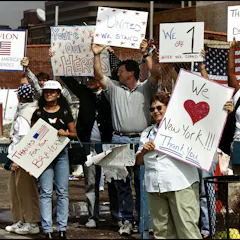
25 years after 9/11, what disasters reveal about Americans’ ability to reconnect

Tonya Cross Hansel, University of Texas at Arlington

Decades of disaster research show how catastrophes strain communities – and reveal the connections that help people endure.

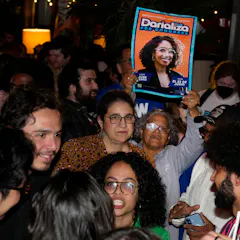
From the Freedom Caucus to the democratic socialists, small groups inside parties can wreak havoc with leaders’ agenda in Congress

SoRelle Wyckoff Gaynor, University of Virginia; Charlie Hunt, Boise State University

What role might DSA-affiliated candidates play if they win election to Congress in the midterms and the Democrats gain a majority in the House of Representatives?

Health + Medicine

AI skin cancer detection tools are getting better – but only for people with light skin

Mohamed Akrout, University of Tennessee

These apps and software programs could provide access to lifesaving screening – if researchers can find a way to remove the baked-in bias.

Education

In Colorado and elsewhere, sexual assault peaks on campuses at the beginning of the school year – here’s what students should know

Kaitlyn M. Sims, University of Denver; Institute for Humane Studies

First-year college women are particularly at risk for being sexually assaulted. Campus intervention programs can help decrease that risk.

Science + Technology

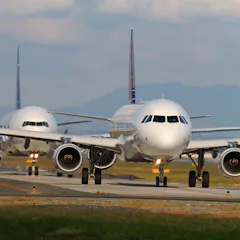
Compared to driving, flying is extraordinarily safe – but why doesn’t it feel that way?

Mihhail Berezovski, Embry-Riddle Aeronautical University; Alex Chaparro, Embry-Riddle Aeronautical University

When it comes to transportation, there’s a hidden danger in choosing what feels safer.

Arts + Culture

Stars and Stripes shows how government-funded journalism can work – if it’s free to report the truth

Cindy Elmore, East Carolina University

The military newspaper earned credibility by informing troops about the good, the bad and everything in between. But the Pentagon’s recent crackdown on the paper is putting that trust to the test.

Environment + Energy

Yosemite, again in corporate crosshairs, embodies the long war over US national park privatization

Michael Childers, Colorado State University

Debate over turning public national park land into private profit dates back more than a century.

International

Global justice report offers bold ideas but misses the realities of 2 billion informal workers – economists

Laura Alfers, Rhodes University; Imraan Valodia, University of the Witwatersrand; Martha Alter Chen, Harvard Kennedy School; Mike Rogan, Rhodes University

Redistribution must recognise that most workers are in informal employment.

Trending on site

Today's video

hands are seen handling a pan with food on an electric stove, with a second stove with food in the foreground