Consider the Oyster Bar
Contemplating life’s mysteries over a seafood tower at Zig Zag Oyster Bar.
View in browser | Your Preferences
The New Yorker The Food Scene Logo

Our award-winning journalism is made possible by our subscribers. Become one today »

Consider the Oyster Bar

Contemplating life’s mysteries over a seafood tower at Zig Zag Oyster Bar.

By Helen Rosner

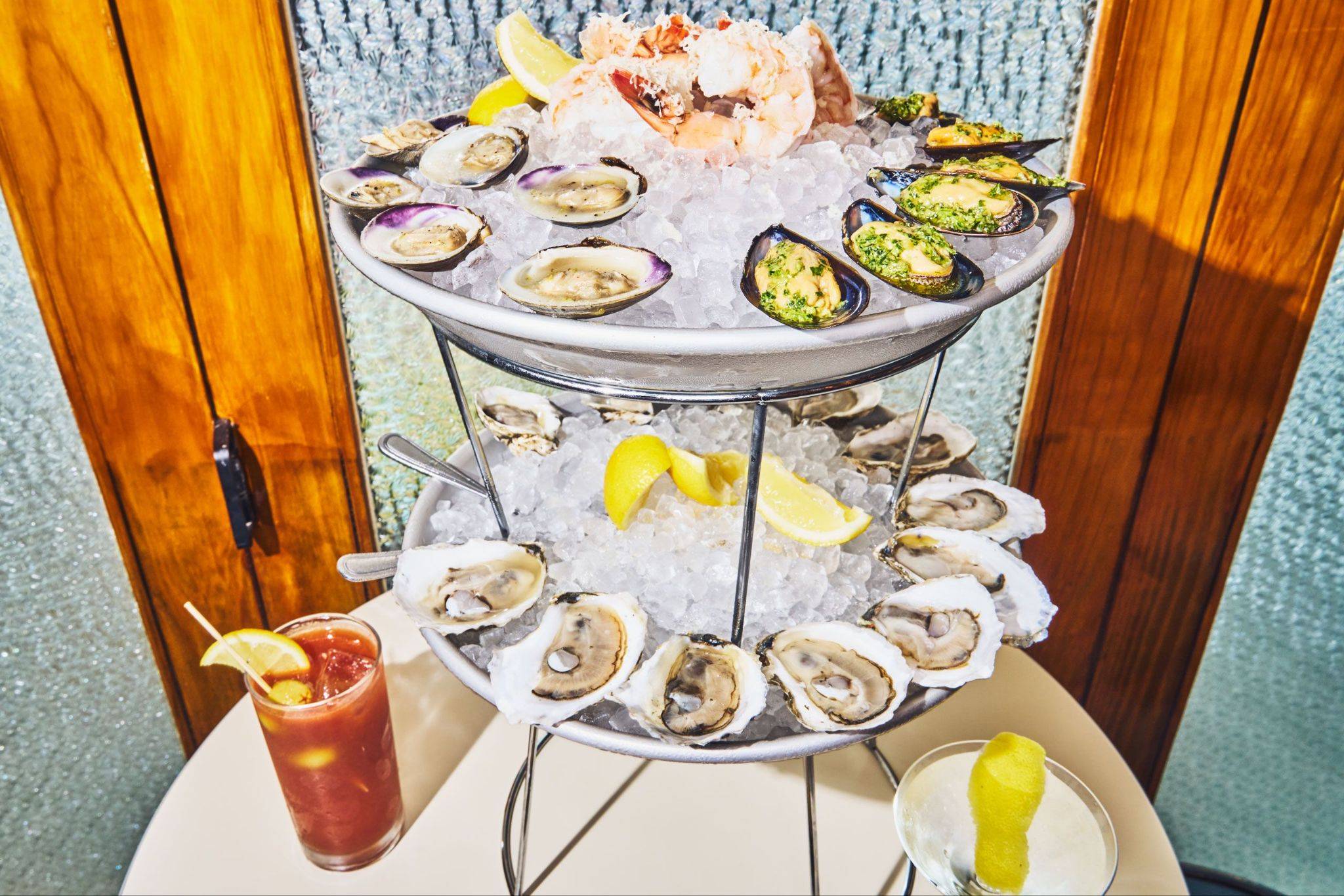
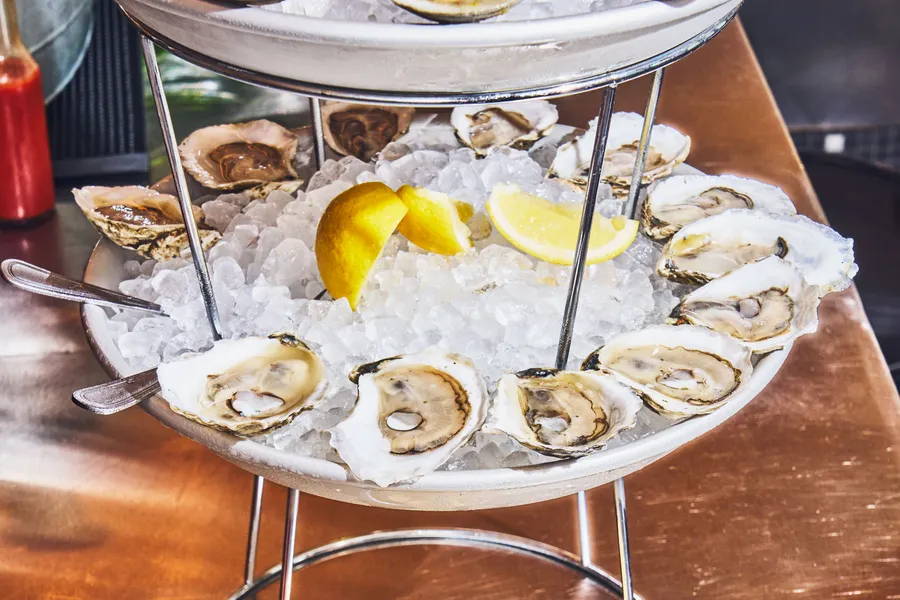
ZigZag’s double-decker seafood tower features cooked chilled shellfish above and raw oysters below.

Lately, I have been considering the oyster. It’s a creature whose life, as M. F. K. Fisher so indelibly put it, is “dreadful but exciting,” and whose arc of birth, existence, death, and consumption have proved to be fertile terrain for humanistic contemplation. But my own recent engagement has been less of an intellectual exercise than a physical one: I have stared down so many oysters this summer, freshly shucked and gleaming. There are many reasons to love oysters on the half shell, but, for me, the most vivid is the concentration they demand, at every step: the selection, the inspection, the ritual application of whatever little sauce or condiment, the spill-avoidant elevation from dish to mouth, the slurp, the swallow. It’s an enlivening, re-embodying thing, eating an oyster, a disruption to the semi-mindlessness that so often accompanies eating, especially at a bar, or with a drink, or alone. You are never alone when you have a chilled, brine-bright oyster glistening snottishly and beautifully before you.


I’ve also been considering oyster bars, and this I mean in the more philosophical sense. A raw oyster, I would argue, shouldn’t be considered a food; it’s a drink. The salinity, the lightness, the slipperiness, even its intoxicating effects: one raw oyster down the hatch and you feel as if you’ve zipped up to a new plane of liveliness. An oyster is one part joyous placebo and one part megadose of zinc and Vitamin B12. The tongue of the oyster resting in its shell, the ribbons of mineral color, the leaflike veining, the over-all glossy strangeness of the naked, alien entity: it belongs at a bar, with all the other alchemical things one can sip and shoot and gulp. I’ve lost count of how many raw bars and oysters bars and seafood shops have opened in the city in recent years—there was Penny, Crevette, the New Orleanian Strange Delight, the brand-new Capitaine, the return of Mary’s Fish Camp—but each new one set off a ripple of excitement for me: the shuffling sound of the ice, the creak and slap of the shucking knives against the shells, the scent of oyster liquor in the air, and that certain, ubiquitous, sleek aesthetic they all seem to share: clean lines, shiny metals, cool marble, all textural reflections of the menu’s star ingredients.


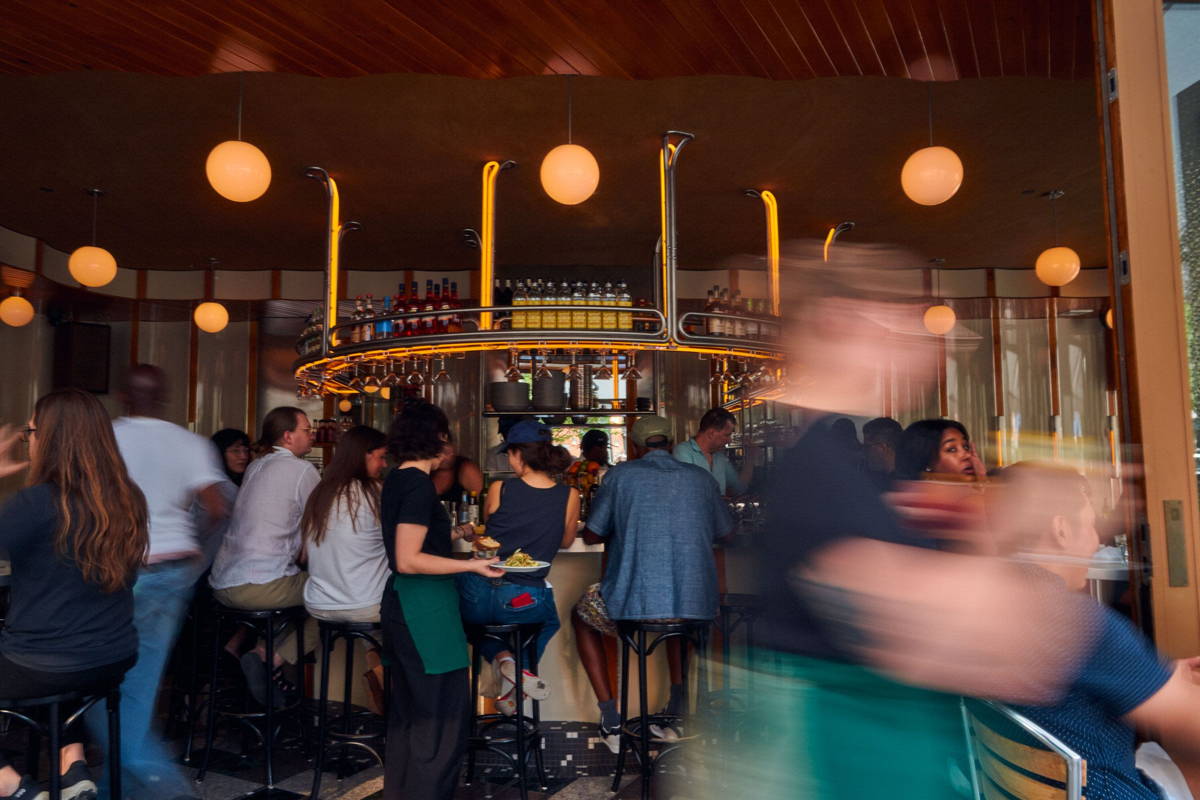
A shiny, U-shaped bar takes up the bulk of the tiny room.

I felt the familiar little shiver of delight not too long ago, when a seafood tower was set down before me at Zig Zag Oyster Bar, a perfect little jewel box that opened earlier this summer, on the border between Crown Heights and Prospect Heights, in Brooklyn. The space is the former location of Bar Meridian, and the same shiny, U-shaped bar still takes up the bulk of the tiny, high-ceilinged corner room; outside, beyond wall-size sliding glass doors, a similar spill of café tables blankets the broad sidewalk. The restaurant is run by Nialls Fallon, Nick Perkins, and Leah Campbell—the same team behind such note-perfect spots as Hart’s, Cervo’s, and Eel Bar—and they’ve built Zig Zag as a petite and well-considered temple of brine, casual and chic. The trio has become known for a passionate fluency in seafood (even their chicken-oriented restaurant, the Fly, has a gloriously anchovy-centric Caesar salad), and an oyster bar feels like a natural next move.


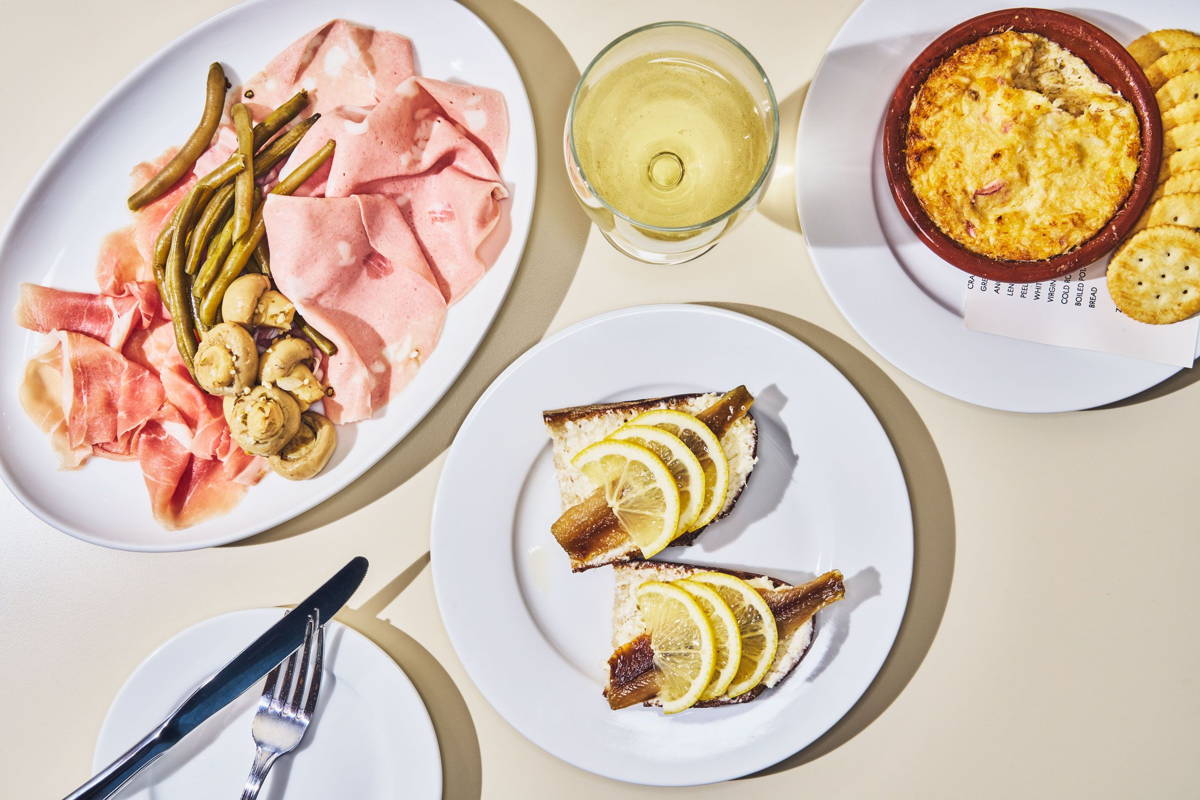
The seafood tower is a double-decker, with oysters on the lower level (recently, it was a selection of tiny, deep-cupped Sweets from Prince Edward Island, and hulky, subtle Long Island Xanadus), and an array of cooked, chilled shellfish above: mussels dotted with punchy salsa verde; steamed clams marinated in a black-peppery escabeche; a tangle of pink-ribbed cocktail shrimp under snowy shavings of fresh horseradish. The mountain of seafood comes with a little sidecar of very thin, very crispy potato chips, seemingly for the hell of it, and a bottle of tart, fiery homemade hot sauce. For nearly double the price, you can make the tower “deluxe,” with added delicacies like crab legs and lobster salad, though I’m not sure if it’s worth it, given everything else the menu has to offer. There are fillets of oily, complex anchodinhas draped over points of generously buttered toast; a sweet and subtle whitefish salad, confettied with multicolored summer tomatoes. The restaurant’s postage-stamp-size basement kitchen has no gas line and no vent hood, but it does have enough electric cooking equipment to bring a crock of crab dip to a broily sizzle. The result is a dish of frankly miraculous constitution, seemingly made with nothing other than crab—it’s got to be a zillion dollars’ worth, at least—and a pinch of spices and salt.

From the left: a plate of country ham and mortadella, anchodinhas on buttered toast, crab dip.

You could, in theory, have a full meal at Zig Zag. There are a few sizable plates, most notably a half chicken. The kitchen’s electrical oven roasts them during the daytime; they’re then chilled and served cold, with hot sauce, a ramekin of mayonnaise, and a pile of pickle spears. This is a dish that is perhaps too clever for its own good: eating it is satisfying, in a desultory, picking-at-leftovers kind of way, but that’s not generally the feeling I’m hoping to summon when I’ve put an effort into actually leaving the house. More pleasing—even more so, I’ll bet, once the swampy summer weather starts to break—is a dish of boiled potatoes swimming in a horseradish vinaigrette, which pairs unexpectedly well with a platter of country-ham slivers and whisper-thin mortadella ribbons. But, on the whole, Zig Zag is a place for concerted tasting more than chowing down: the nibbled crab-dipped cracker, the picky-bits pleasure of a forkful of lentil salad or a daily special of oil-poached tuna with summer tomatoes. This is oyster eating, even if you’re not eating oysters.


The best accessories to oyster eating are those that amplify the bivalve’s puckery, oceanic qualities rather than counterbalancing them. Condiments should be sharp—a savory jolt of mignonette or vinegary hot sauce, an austere spritz of lemon—and the same goes for drinks. I suppose this is a large part of why oysters are indelibly attached to the Martini, to the point of cliché; loving oysters and Martinis is as inevitable as loving cake and ice cream, or a slice of pizza and an ice-cold Coke. Zig Zag offers a tight, crisp Martini, gin-based, with a splash of orange bitters, but I’m drawn to some of the list’s less predictable companions to a dozen on the half shell: a spicy Bloody Mary, say, or the Citrus, a non-alcoholic take on a Daiquiri that’s tart and bracing.


So how are the oysters? That’s the thing. For all their infinite variation—kelpy and ferric Wellfleets, pearly Moonstones, saline Glidden Points, melon-sweet Beausoleils, brawny Malpeques, a thousand more—an oyster is really a binary proposition: it’s good or, God help us, it isn’t. The offerings of any decent oyster shucker will change according to the seasons and the tides and the shoals and the shipping lines and the harbor freight and the rush-hour traffic on the interstate. It’s whatever seems best and is best at hand, so there’s rarely any point in walking through the door with a plan. Zig Zag, tidy and efficient, offers just a couple of options at a time. Just show up, and trust them.

Helen, Help Me! E-mail your questions about dining, eating, and anything food-related, and Helen may respond in a future newsletter.

Recommended Reading

A Greenwich Village Dining Room That Feels Far from the TikToking Crowd

Somssi, from a veteran of the restaurant group behind Atomix, knows how to reel you in without trying too hard.

By Helen Rosner

A Tasting Menu That Uses Every Last Scrap

At Cynthia, an emphasis on low-waste cooking yields a menu of thrilling abundance.

By Helen Rosner