Every weekday morning, Luwi Ikabala sets up a sewing machine beside piles of sweet potatoes and firewood at the main market in Goroka, in the highlands of Papua New Guinea. Luwi uses a yellow cooking-oil cannister for a chair. On a good day, he makes enough money from hemming sleeves and mending torn clothes to buy a bag of rice. As he waits for customers, he reads novels, copying passages that he likes into his journal. His favorite author is Fyodor Dostoyevsky. He has kept a journal for the past forty years, giving the entries headings such as “Air of freedom,” “As I recall her—‘the past,’ ” “About Weakness,” and “Who am I?”
Luwi often feels like the “poorest man that ever lived on this planet earth,” “a perfect example of a failure.” He approaches strangers on the street and asks about their problems, until he sees an opening to “touch them emotionally.” He offers advice and then they sometimes give him a little money. One journal entry, headed “Supposed to be somebody,” described an encounter with an old friend who’d seen him aimlessly walking the streets of Goroka. The friend didn’t understand why Luwi wasn’t doing more with his life. But “keeping up with my diary writing,” he wrote, made him “at least feel like I am someone—not too big—but someone in my own way.”
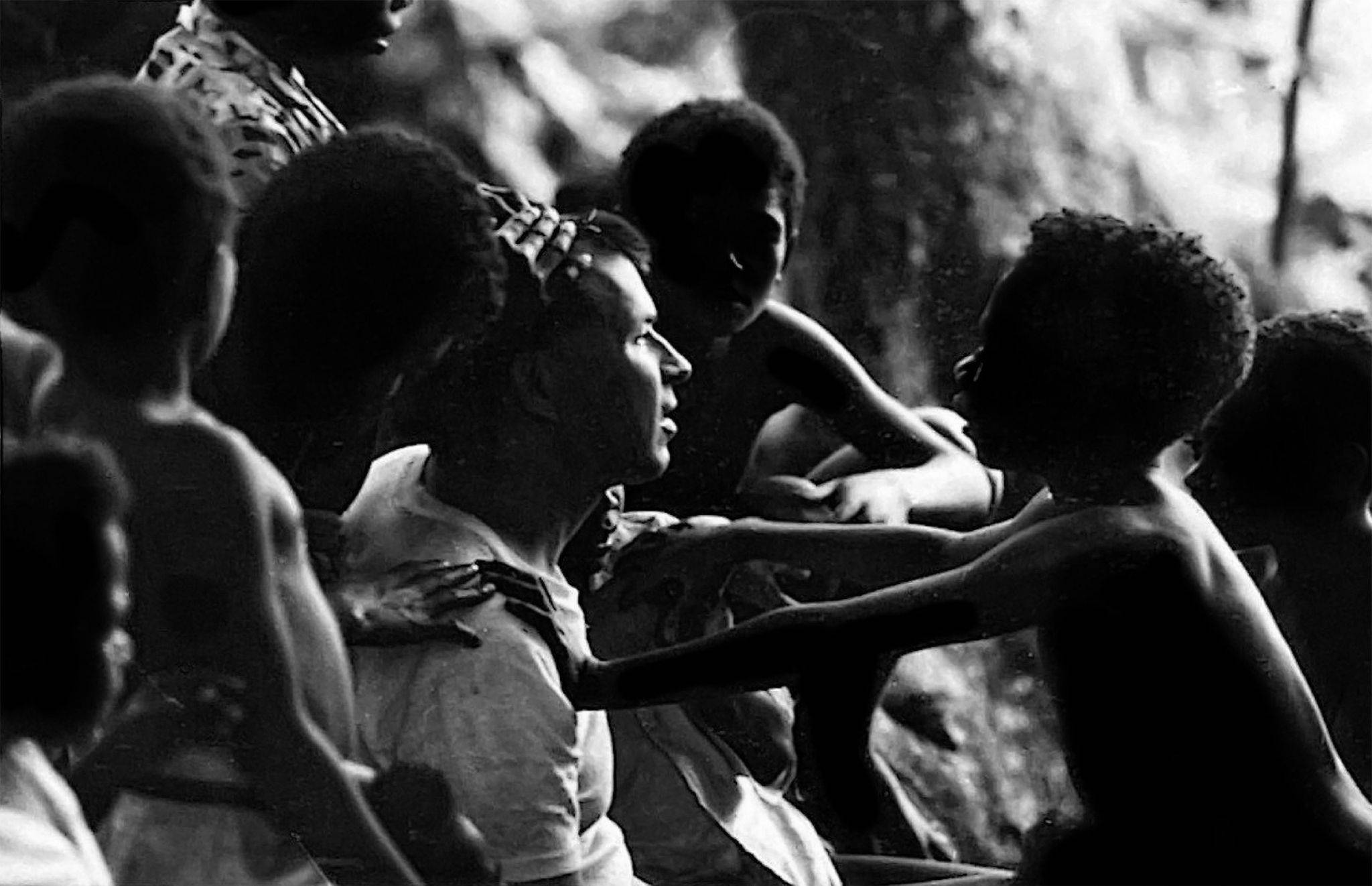
Luwi, who is fifty-seven years old, took up journal writing at the urging of the Nobel Prize-winning pediatrician and virologist D. Carleton Gajdusek, whom he described as “Father of America.” Gajdusek lived in Papua New Guinea while researching kuru, a fatal brain disease that existed only in the country’s eastern highlands. Until the nineteen-thirties, the people there remained unknown to the outside world. Luwi and his friends used to crowd around Gajdusek’s typewriter, their hands on his shoulders and thighs, as he documented their lives: the insects they ate, their moods, the way they sang to birds. Gajdusek wrote six hundred thousand pages of journals, beginning when he was thirteen and ending weeks before he died, in 2008, at the age of eighty-five. Luwi keeps a copy of the journal in which Gajdusek recorded his birth. “When I was born, Carleton was there to bring me out into the world,” Luwi told me. |