| | Iran negotiations falter and shipping risks increase, Boeing plots a comeback, and the rise of ‘Viol͏ ͏ ͏ ͏ ͏ ͏ |
| |  ROSTOV-ON-DON ROSTOV-ON-DON |  MUSCAT MUSCAT | TOKYO |
 | Flagship |  |
| |
|
The World Today | 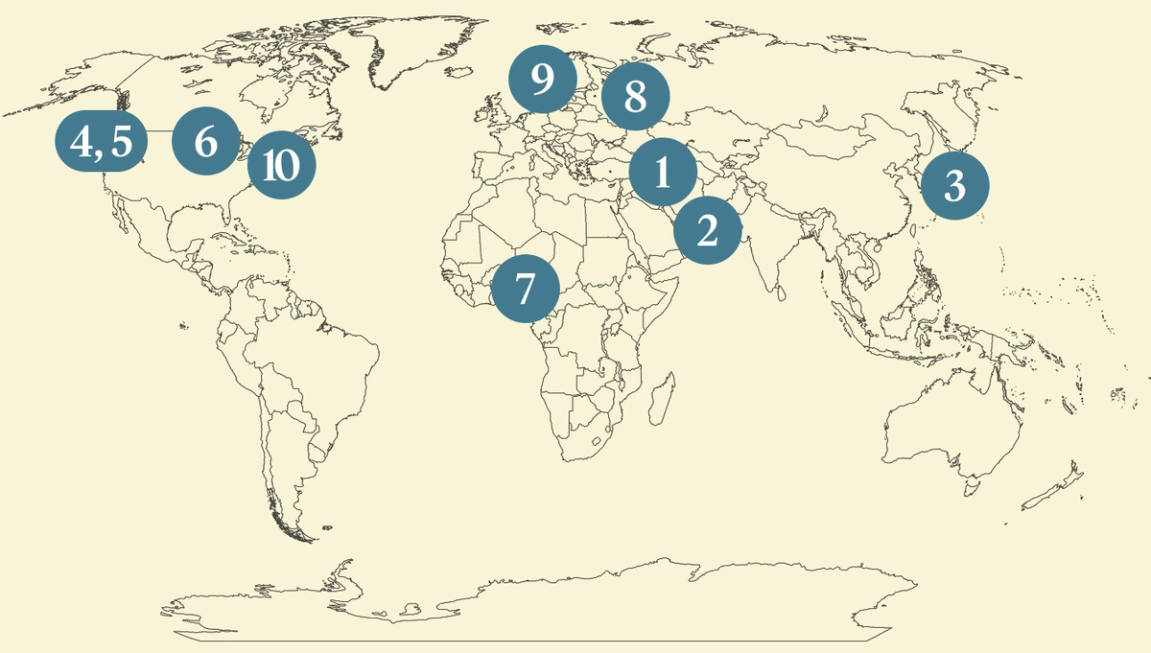 - Iran negotiations falter
- Shipping fears grow
- US, Japan currency moves
- Amazon enters $3T club
- Boeing’s comeback
- AI’s new tradespeople
- Africa’s space race
- Russia’s new samizdat
- ‘Violence-as-a-Service’
- Extreme solar storms
 A ‘beautifully’ rendered account of a blundering coup d’etat. |
|
 Evelyn Hockstein/Reuters Evelyn Hockstein/ReutersDiplomatic efforts to end the Iran war ruptured on Monday after Tehran denied negotiations would take place, and US President Donald Trump described the country’s leaders as “unbelievably duplicitous.” Trump had previously said talks would resume Monday, but later vowed to blockade Iran until “a Deal, or Total Surrender, is accomplished.” Tehran has grown leery of negotiations, viewing US leadership as split on the conflict, Reuters reported: Instead, Iran is resolved on a “pressure points” strategy to reframe Iranian control over the Strait of Hormuz as less costly for the region and the global economy. “Both sides are matching escalation with escalation,” a Council on Foreign Relations expert said. But “if there are going to be negotiations, [Tehran] will define the terms.” |
|
Analysts warn about shipping threats |
 Majid Asgaripour/WANA (West Asia News Agency) via Reuters Majid Asgaripour/WANA (West Asia News Agency) via ReutersOil prices fell Monday even as diplomatic efforts to end the US-Iran war and reopen the Strait of Hormuz sputtered. Iran and Oman are discussing a temporary route for commercial shipping, but analysts sounded the alarm over worsening risks for tankers: A Kpler analyst said threats to crude shipping were higher than at any other time during the war, while another analyst said recent Houthi strikes had taken things “back to square one.” A Hapag-Lloyd spokesperson told the BBC that even a brisk reopening of the strait would leave “three to four months” to restore normal flows, making Monday’s relief “meaningful but provisional,” a BNY analyst wrote, adding that Tehran hasn’t publicly approved Oman’s framework, “leaving markets alert to another reversal.” |
|
US, Japan vow further yen action |
 Evelyn Hockstein/Reuters Evelyn Hockstein/ReutersFollowing a historic effort to prop up the yen and prevent economic spillover, Japanese and American leaders vowed to intervene further if needed. Japan’s top currency diplomat called the joint action the “culmination” of the US-Japan alliance, while President Donald Trump said it was a “signal of friendship.” The action was designed to send a message — as evidenced by the US Treasury secretary’s visible to-do list — but critics said the trade’s structure comes with financial risk: Selling euros to buy yen “undercuts the efficacy of US participation, because it invariably will have markets wondering why the US didn’t just fund yen buying out of dollars,” one Brookings Institution analyst wrote. “Markets will see this as a sign of weakness.” |
|
Amazon hits $3 trillion valuation |
|
Boeing plots its comeback |
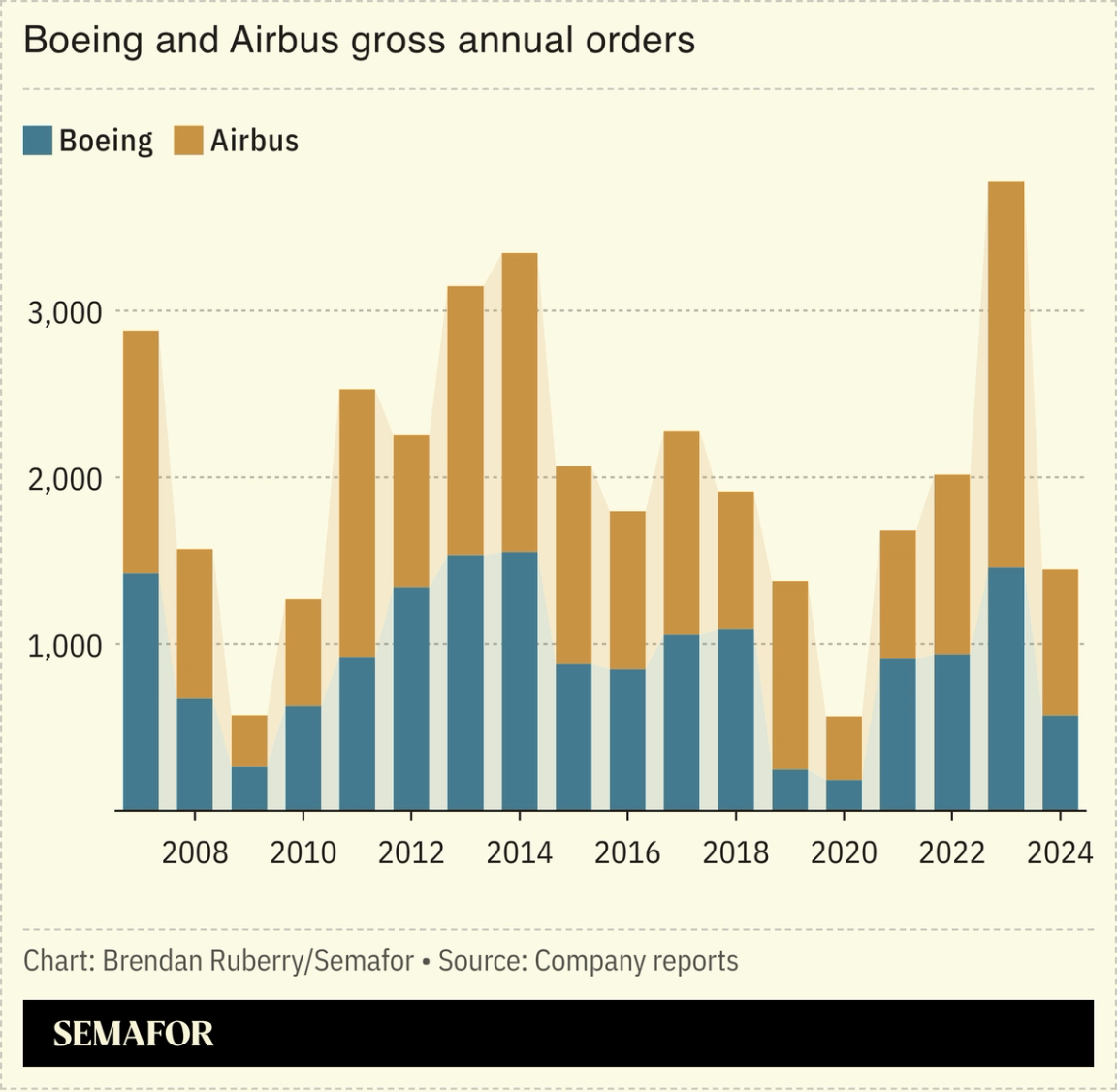 The US Federal Aviation Administration certified Boeing’s 737 Max 7 on Monday after years of delays, boosting the beleaguered aerospace firm’s push to restore its once-sterling reputation. The certification — and several more Boeing is targeting this year — are crucial in getting the company back to profitability, after two fatal crashes months apart in 2018 helped European rival Airbus pull ahead in global plane deliveries. Boeing’s CEO Kelly Ortberg, who took over in 2024, has helped mend relationships with regulators, and the FAA has since lifted some production caps: “They really are getting that thing turned around,” Ryanair’s CEO told investors earlier this year. Still, Airbus’ best-selling A320 remains a “generation ahead of the 737 in design terms,” the Financial Times wrote. |
|
Data center projects boost hiring |
 Audrey Richardson/Reuters Audrey Richardson/ReutersThe AI data center boom is boosting recruitment of electricians and plumbers. Demand for tradespeople is sky high, The New York Times reported: An OpenAI data center project in Michigan, the state’s biggest ever investment, requires “hundreds of electricians working 10-hour days, seven days a week.” The demand for workers is so huge that it is hitting residential construction, which has dropped since 2022, and driven wages up: One analysis finds that jobs at data centers pay 42% more than equivalent jobs elsewhere. The companies building the centers are trying to train new tradies themselves: A $50 million Google program will help train more than 300,000 skilled trade workers; a BlackRock grant is spending $100 million expanding the skilled trades. |
|
China favored in Africa’s space race |
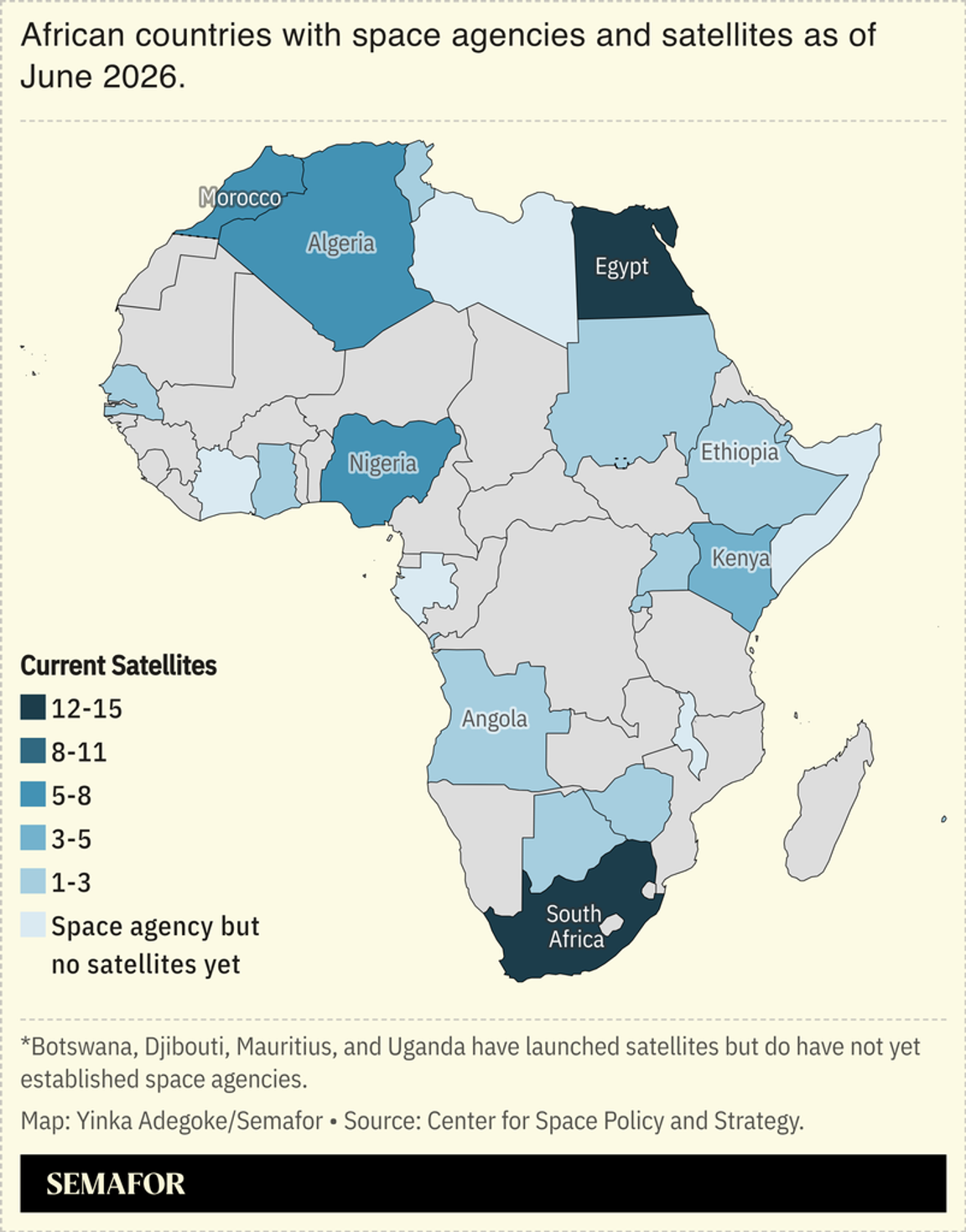 African nations are redoubling efforts to build out their space sectors, seeking international partners to supply satellites, financing, and expertise — a dynamic that increasingly favors China. Dozens of countries are planning to acquire satellites by 2030, and most are turning to Beijing, which provides bundled satellite packages combining hardware, launch services, and financing, while Washington mostly sticks to data, training, and regulatory cooperation, rather than hardware, creating a “structural disadvantage,” Semafor’s Yinka Adegoke argued. No African satellites are US-built, while China’s set to launch Africa’s first lunar science mission in 2029. A similar dynamic is playing out in AI, an Atlantic Council expert argued, where infrastructure packages are more important than “technical superiority.” |
|
Russia’s dissident authors |
 Shamil Zhumatov/Reuters Shamil Zhumatov/ReutersRussia’s authoritarian turn has created an overseas publishing industry of dissident authors. A 2021 young adult novel featuring a gay romance catalyzed anti-LGBTQ laws in the country, which then metastasized into wider suppression; the regime was supercharged by the 2022 invasion of Ukraine. Anything criticizing the war is blocked by censorship laws. Publishers, authors, and booksellers have faced arrest, fines, and raids. Diaspora artists have started publishing banned works as well as their own material, and smuggling it back into Russia, Bloomberg reported. This “tamizdat” (“published over there,” like “samizdat,” or “self-published,” banned texts in Soviet times) literature is paid for with cryptocurrency and smuggled in, or issued as e-books. |
|
‘Violence-as-a-Service’ attacks rise |
 TT News Agency/Kicki Nilsson via Reuters TT News Agency/Kicki Nilsson via ReutersA group offering “Violence-as-a-Service” is believed to have murdered 35 people in 11 European countries since 2022. The Iran-linked Foxtrot Network recruits teenagers via social media to attack people for cash, but “almost never has to pay out as they often get caught,” the BBC reported. Some of the VaaS attacks were on behalf of Tehran, but others are part of drug-gang turf wars. Authorities have arrested more than 280 people, including some senior handlers, but the leader has fled to Iran. It is part of a wider move to recruit young people online for a “subversive gig economy,” the Financial Times said recently, running European youth as spies, hackers, and saboteurs. |
|
Solar storms’ higher risks |
 Chris Helgren/Reuters Chris Helgren/ReutersExtreme solar storms may be more devastating than scientists have predicted. “Coronal mass ejections” hurl vast amounts of solar material at an appreciable fraction of light speed out of the sun. They can damage electrical grids and satellites; the largest recorded, 1859’s so-called Carrington Event, brought down telegraph systems around the world. But modeling had supposed that there were limits on how big the worst ones could be, because — it seemed — beyond a certain point, the Earth’s magnetic field becomes “saturated,” and ever-greater storms do not have worse impacts on the ground. But new research suggests that that limit is a statistical illusion: There is no telling how bad a “one-in-a-thousand-year kind of event” could be, the researchers said. |
|
 Aug. 4: - The US states of Kansas, Michigan, Missouri, Virginia, and Washington hold primary elections.
- SpaceX reports its first-ever quarterly earnings results.
- The White House hosts representatives from
|
|
|


