Last week,
Fortune put out the 2026 edition of the
Global 500. This is a ranking that reveals the largest 500 companies around the world, not just headquartered in the U.S. (that’s the Fortune 500).
The big takeaway was that Amazon is now the biggest company in the world by revenue. My colleague Kristin Stoller has
a new cover story with Jeff Bezos to mark the occasion.
As for female CEOs, let’s check in on where women leaders stand across global business. Women run 34 Global 500 companies this year. That’s an all-time record—and still a paltry 6.8%.
Compare that to the 2026 Fortune 500, where at time of publication in June women ran 55 of the largest companies in the U.S., or 11%. That was also an
all-time record.
Why does the
Global 500 trail behind the Fortune 500 in female CEOs? A few factors. First, the Global 500 is even more competitive. Since it measures the largest business in the world (U.S. included), but not just the U.S., the bar to make the list is higher. The smallest business on the list, at No. 500, is PayPal—which did $33 billion in revenue last year and is No. 139 on the Fortune 500. The cutoff to make the Fortune 500 this year was $7.47 billion.
While women have made great strides to the top of corporate America, they are still often leading companies that are smaller than the Fortune 500 companies led by men—keeping many of those businesses off this list.
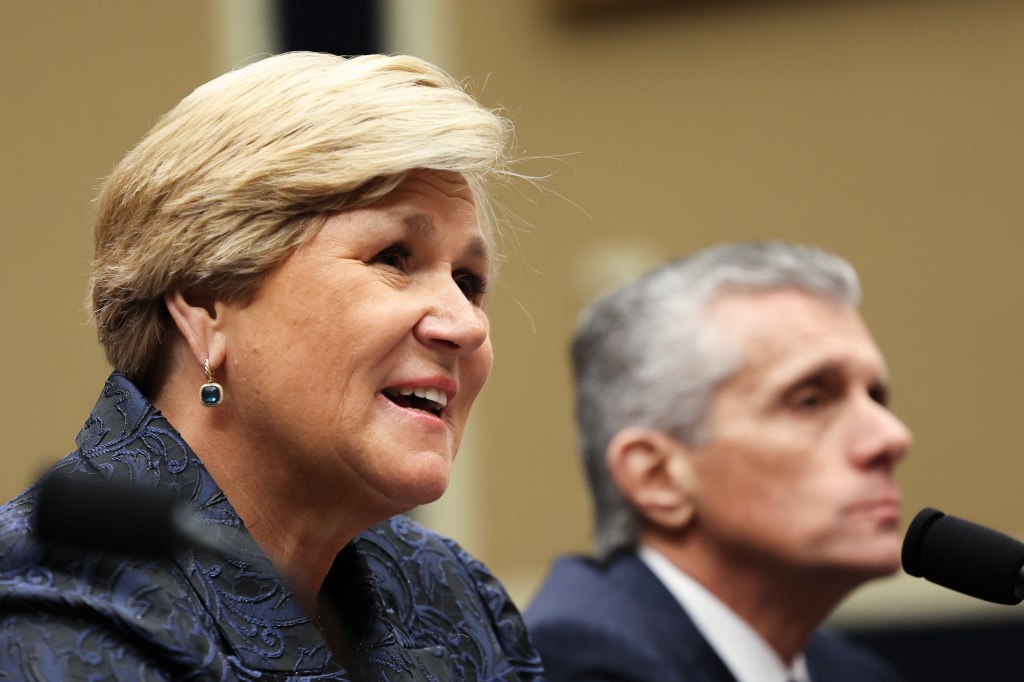
The top-ranking company led by a female CEO
on both lists is Elevance Health, led by CEO
Gail Boudreaux. On the Fortune 500, her company comes in at No. 18, while on the Global 500 it’s ranked No. 33. That means there’s not a woman-led business in the top 20—or even top 30—of the Global 500.
As a global ranking, the Global 500 also reflects norms for female leadership around the world. The U.S., Greater China, and Japan together account for 61% of the list and more than 67% of its revenue. Those countries are followed by Germany and France. For all its flaws, the U.S. business environment has still made more progress elevating women to the very top jobs compared to other markets. (Many of them are on the 2026 Most Powerful Women list
here.)
Why does this matter at all? Global 500 companies represent
two-thirds of the world’s GDP. That’s $43.1 trillion in revenue, $3.4 trillion in profits, and workforces of 70.2 million people around the globe. These businesses’ decisions are deciding the future of our planet. Every year, the stark reality of women-led businesses’ place on this ranking is a reminder of how much further we have to go.
Emma Hinchliffeemma.hinchliffe@fortune.comThe Most Powerful Women Daily newsletter is Fortune’
s daily briefing for and about the women leading the business world. Subscribe here.