| | In this edition: Africa’s space race pulls in the US and China, South Africa’s sugar takeover, and r͏ ͏ ͏ ͏ ͏ ͏ |
| |  | Africa |  |
| |
|
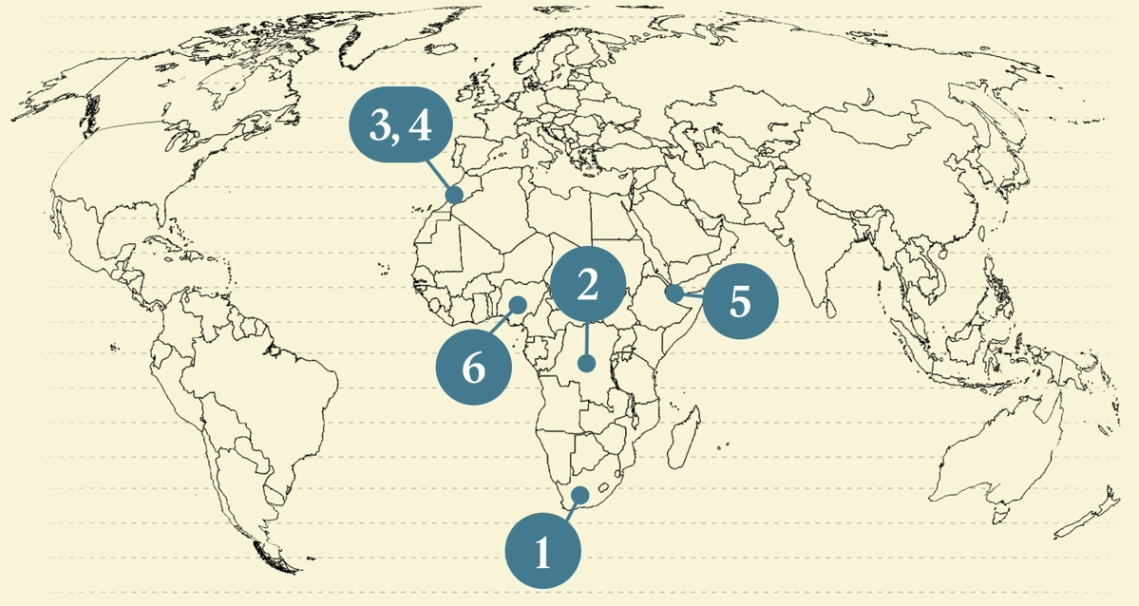 - S. Africa’s sugar takeover
- DRC sells uranium to China
- Spain migrant tensions
- Morocco courts Trump
- US-Somaliland vs US-Somalia
- View: Nigeria’s trust problem
 The week ahead and Oprah’s school in South Africa shuts. |
|
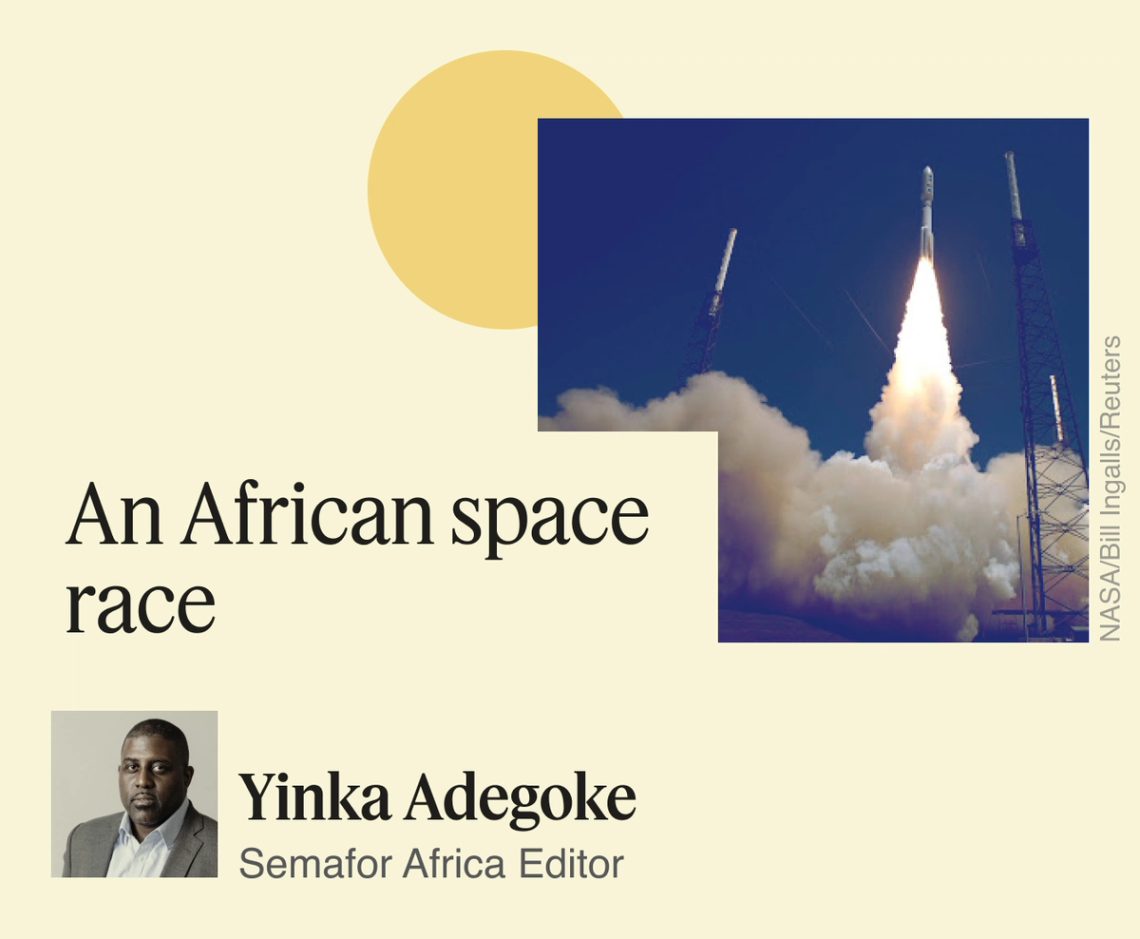 A push by African countries to build their own space sectors is reshaping competition between the US and China, as governments on the continent seek partners to supply satellites, finance infrastructure, and develop domestic capabilities. But a new report suggests Washington’s approach may no longer align with what African policymakers are seeking. Governments the world over increasingly view space infrastructure as an economic necessity, using satellite services to improve mineral exploration, telecommunications, weather forecasting, disaster response and national security. Collectively, African governments nearly doubled their allocated budget year-on-year to $828 million for 2026. The continent’s space economy is projected to exceed $30 billion by 2030, up from $22.6 billion in 2024, according to industry consultancy Space in Africa. As many as 18 countries have developed or acquired at least one satellite as of June 2026 — and six more are planning their first by 2030. As with many specialized industries, countries that procure complete satellite systems often adopt their suppliers’ technical standards, maintenance networks, and training programs, creating relationships that can last decades and become difficult to unwind. Experts argue those choices will do as much to shape Africa’s future space sector as the satellites themselves. That dynamic increasingly favors China, whose companies have supplied bundled satellite packages — combining hardware, launch services, financing, infrastructure and training — to more than 20 African countries, according to the analysis by the Center for Space Policy and Strategy at the Aerospace Corporation. Europe has offered similar bundled models, while Russia, India, Japan and the UAE also favor integrated partnerships. The US, by contrast, has focused on satellite data, technical training, and regulatory cooperation rather than hardware — and no African satellite has been built by a US company, the report’s author notes. That arguably leaves Washington at a structural disadvantage as African governments seek partners that can help establish domestic space industries. Most African governments are not choosing sides. Countries including Kenya, Angola and Senegal have cultivated partnerships with China, Europe, Japan and the United States, seeking to maximize technology transfer while avoiding dependence on any one power. |
|
Semafor Exclusive S. Africa investors eye $1B sugar monopoly |
| |  | Tiisetso Motsoeneng |
| |
 Sisipho Skweyiya/Reuters Sisipho Skweyiya/ReutersA South African investor group that recently rescued the debt-laden agricultural producer Tongaat Hulett is planning a takeover of rival Illovo Sugar, according to sources with direct knowledge of the matter. The move would consolidate control of the continent’s sugar, ethanol, and bioenergy markets under a single African-owned giant. The effort has already reached the executive suite of London-based Associated British Foods, the parent company of Illovo. Representatives from Vision Sugar, led by South African billionaire Robert Gumede and Zimbabwean dealmaker Rute Moyo, have initiated contact with ABF CEO George Weston about a deal, one person said. Corporate finance advisory sources estimate that Illovo Sugar holds an enterprise value of between $800 million and $1.1 billion. The transaction, if it comes to pass, spans Illovo’s vast network of sugar estates across South Africa, Zambia, Malawi, Eswatini, Tanzania, and Mozambique, setting up one of the largest agricultural buyouts on the continent in more than a decade. ABF declined to comment. Spokespeople for Illovo did not respond to requests for comment. |
|
DRC’s secret uranium exports to China |
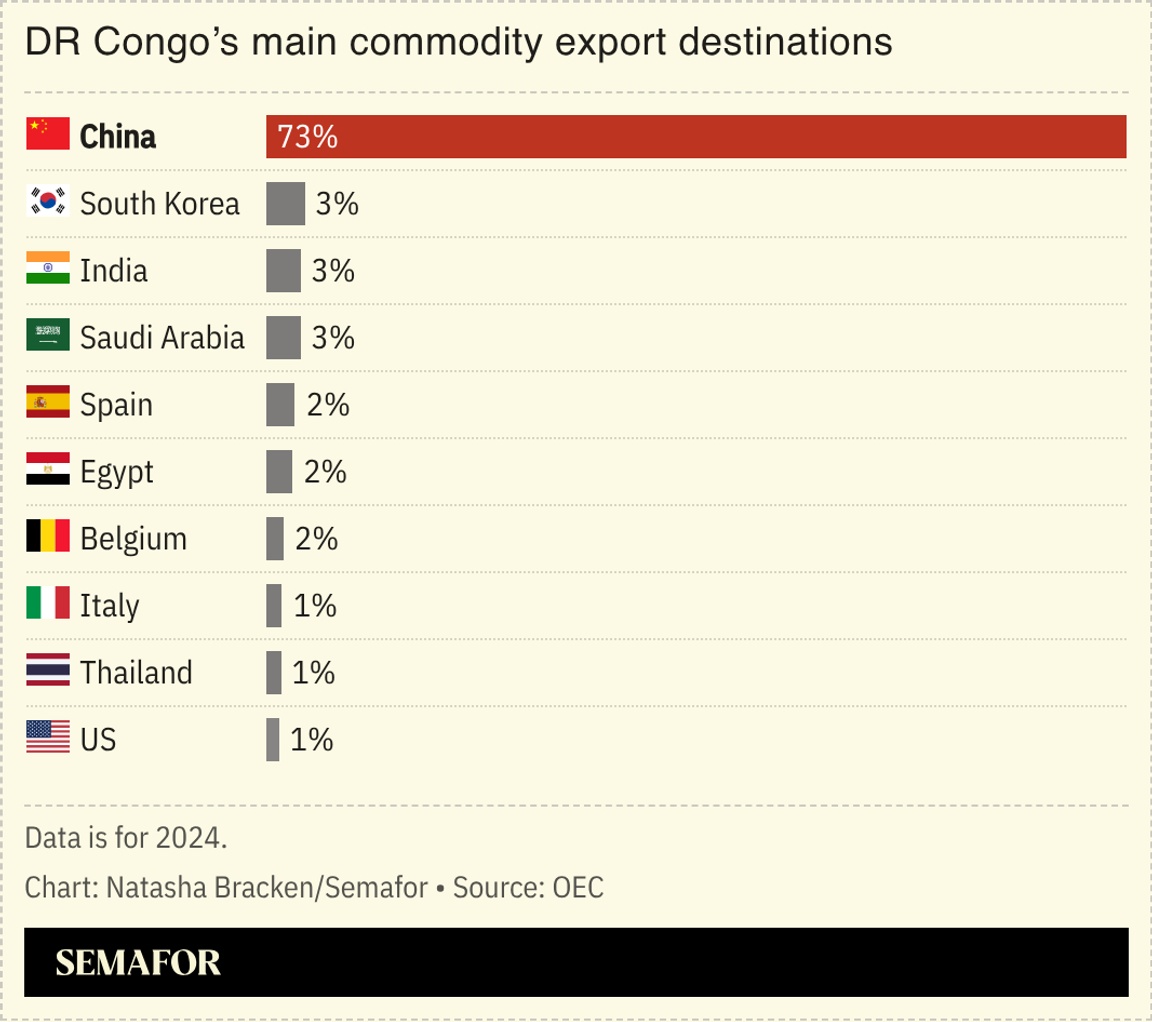 A mineral-rich region in DR Congo that was a major source of the uranium that helped produce US nuclear weapons during World War II has quietly been a source of uranium exports to China over the past two decades, a new investigation alleges. DR Congo has the world’s largest cobalt reserves, with about 95% of the mineral’s ores exported to China. “Significant quantities” of uranium have also been exported to China alongside the cobalt as a by-product, despite a prohibition on commercial uranium export from the Central African country, according to Lighthouse Reports, a nonprofit investigations outfit based in the Netherlands. The investigation drew on a leaked memo attributed to the UN-affiliated International Atomic Energy Agency and documents from TFM, a formerly American-owned firm in Congo that now belongs to China’s CMOC, the world’s largest cobalt producer. The Shinkolobwe mine in the southeastern Katanga region, which fed US nuclear warhead production, was formally closed in 2004, but mining activity persists in the region. Between 2,000 and 5,000 tonnes of uranium were exported from DR Congo to China between 2000 and 2024, Lighthouse’s investigation found. — Alexander Onukwue |
|
Spain migrant crossing crush |
 Violeta Santos Moura/Reuters Violeta Santos Moura/ReutersThe short-lived intrusion of tens of thousands of Moroccans into Spanish territory last week highlighted a trend of risky migration expeditions by African youth seeking to escape difficult economic conditions at home. Nearly all of the 50,000 or so people who crossed into Spanish-controlled Ceuta returned to Morocco over the two-day period of the rush, which Rabat blamed on misleading information online and human trafficking gangs. But about 400 travellers who had come from sub-Saharan Africa planned to remain on the border, ostensibly retaining hopes of making it to Europe. “We are staying here,” a 30-year-old Senegalese man, who initially arrived in Morocco via smuggling routes, told the New York Times. Spain will hasten the repatriation of irregular migrants following the Ceuta incursion, while maintaining anti-trafficking cooperation with Morocco. But Italy’s quick move to pause some of the free movement privileges afforded to Spain under Schengen rules exposed the tense undercurrents tied to migration and security within the European Union. — Alexander Onukwue |
|
Morocco’s highway thank-you to Trump |
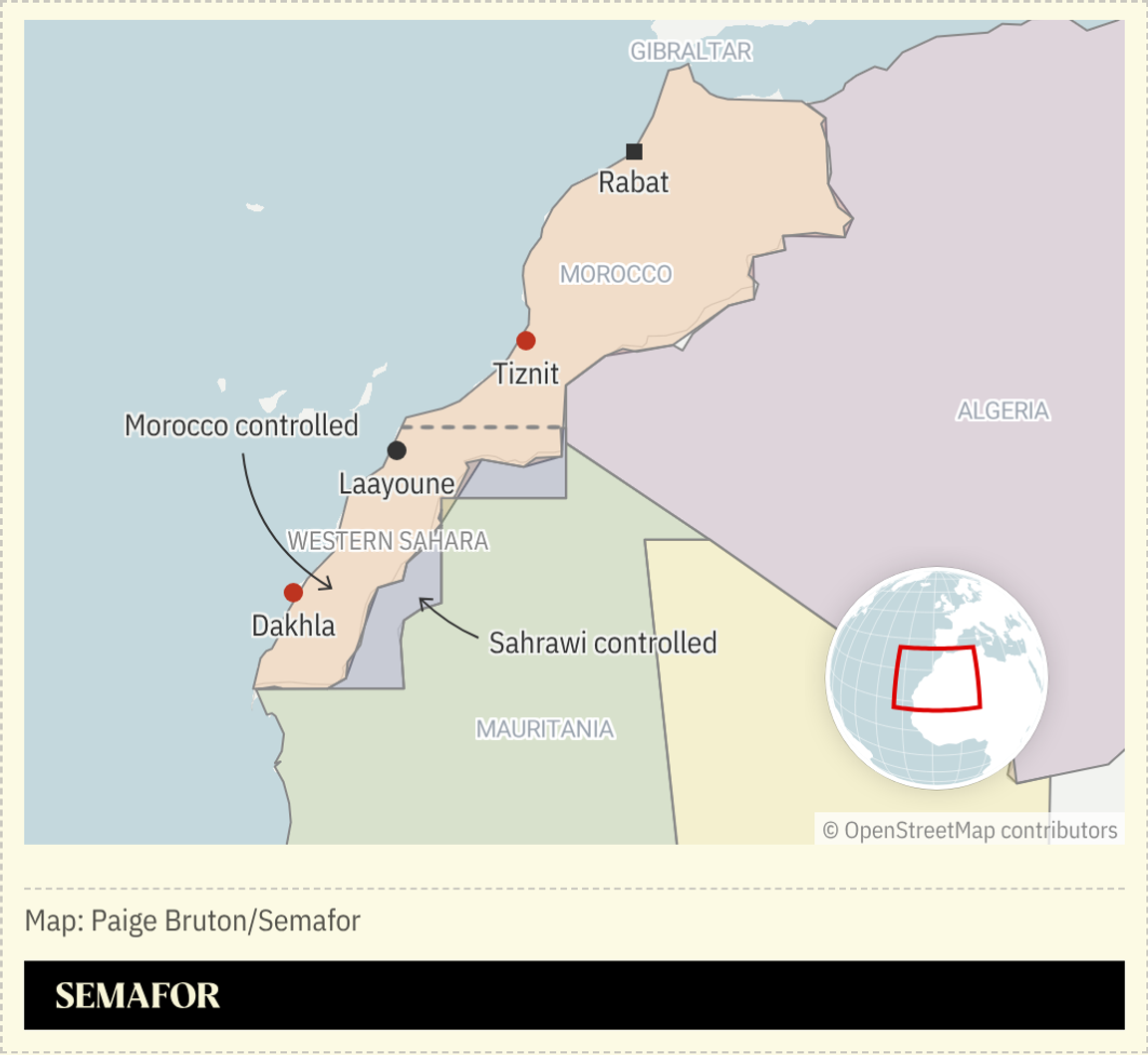 Morocco named a 655-mile coastal expressway the “Donald J. Trump Highway” in a direct thank-you to the US president for formally recognizing Rabat’s sovereignty over the disputed territory of Western Sahara. The move underscores Rabat’s ongoing diplomatic campaign to consolidate international control over the territory, with the highway connecting the city of Tiznit in Morocco to the city of Dakhla, hundreds of miles into Western Sahara. The dispute has long polarized the African Union, deeply dividing member states between Moroccan allies and backers of the pro-independence Sahrawi Republic. Trump’s decision — brokered alongside the Abraham Accords in 2020 that also saw Morocco normalize ties with Israel — was a historic departure from decades of established US foreign policy. Washington had previously maintained a neutral stance on Western Sahara for decades. The dispute over Western Sahara remains deeply tied to neighboring Algeria, the main backer of the Polisario Front, the Sahrawi’s nationalist movement and armed liberation group fighting for an independent state. — Tiisetso Motsoeneng |
|
Somaliland complicates Horn policy |
 Somaliland celebrates its self-declared independence day. Stringer/Reuters. Somaliland celebrates its self-declared independence day. Stringer/Reuters.As the Trump administration deepens its engagement in the Horn of Africa to counter Houthi threats in the Red Sea, US Senator Ted Cruz is pressing Washington to elevate ties with Somaliland — starting with a more favorable US travel advisory. Cruz, chair of the Senate Africa Subcommittee, is urging Secretary of State Marco Rubio to distinguish Somaliland from the State Department’s Level 4 “Do Not Travel” advisory for Somalia, arguing the blanket warning fails to reflect conditions in the self-governing territory. The push comes as the Trump administration makes the Horn a higher strategic priority, stepping up diplomacy with Somalia and Eritrea as Houthi attacks draw the African side of the Red Sea deeper into US security calculations. Cruz’s appeal underscores an ongoing debate in Washington: whether strengthening ties with Somaliland should form part of that strategy despite the diplomatic costs with Mogadishu. In a July 28 letter, Cruz argued the advisory discourages US investment and business ties while sending “precisely the wrong message” about Somaliland. — Adrian Elimian |
|
View: Overcoming the trust gap |
  Akintunde Akinleye/Reuters Akintunde Akinleye/ReutersNigeria’s financial inclusion challenge is no longer getting people into the banking system — it’s giving them reasons to stay, writes a former deputy governor of Nigeria’s central bank in a new Semafor column. Despite years of investment in faster payments, digital identity, and fintech innovation, more than 33 million dormant bank accounts suggest trust has become the biggest obstacle to meaningful participation, argues Aishah N. Ahmad, who served from 2018 to 2023. Failed transactions, fraud, and poor complaint resolution are eroding confidence, while regulators continue to supervise individual institutions rather than the customer experience across an increasingly interconnected financial system. Ahmad contends that Nigeria’s next phase of financial inclusion should focus less on expanding access and more on ensuring confidence in the system, because accounts only matter if people keep using them. |
|
|