| | President Donald Trump’s push to disarm Hamas runs into headwinds, cyberattacks on US water systems ͏ ͏ ͏ ͏ ͏ ͏ |
| |  | Flagship |  |
| |
|
The World Today | 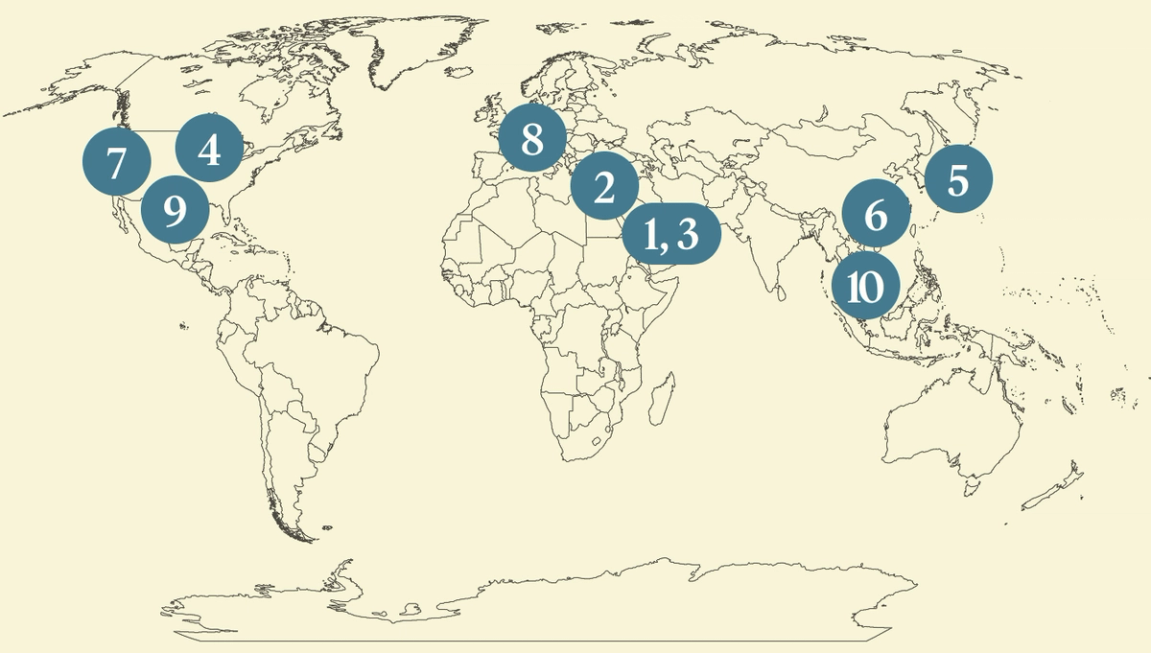 - Trump calls off Iran strikes
- Setbacks for Gaza plan
- OPEC hikes output target
- Cyberattacks on US water
- US intervenes in yen
- BYD’s EV sales spike
- Tech incumbents’ bet
- FIFA ditches plan
- Visiting a flyby asteroid
- Chatbots as scammers
 A novel that celebrates the impermanence of existence, and a look at the week ahead. |
|
Trump calls off Iran strikes |
 Daniel Heuer/Reuters Daniel Heuer/ReutersUS President Donald Trump abruptly called off a new round of planned strikes on Iran on Saturday after some of Washington’s Gulf allies pushed for deescalation. The pause was contingent upon “rapidly” arriving at a deal to reopen the Strait of Hormuz, Trump said, as Iran and Oman discussed a new shipping route that Tehran said would not reopen the strait. Some Gulf allies have expressed frustration at what they see as a lack of clear strategy from the US, The Wall Street Journal reported, and requested more missile interceptors, as the conflict continues to stretch US military assets: The US’ top general in Europe privately warned last week that he lacked the resources to protect Israel from Iranian missiles, The Washington Post reported. |
|
Trump’s Gaza deal faces resistance |
 Amir Cohen/Reuters Amir Cohen/ReutersUS President Donald Trump’s diplomatic push to disarm Hamas has run into headwinds as political resistance in Israel and disagreements with Hamas over implementation cast doubt on the US-backed plan. Trump hailed the agreement last week as a “monumental step” that Israel was “very happy” about, but he dodged key questions over sequencing: Israel insists Hamas must fully disarm before any withdrawal, while Hamas says Israel must halt attacks and withdraw forces before surrendering weapons. Prime Minister Benjamin Netanyahu has yet to endorse the plan, facing pressure from his far-right coalition ahead of elections while also managing Trump’s push for a diplomatic breakthrough. Israeli airstrikes continued Sunday, killing at least 18 Palestinians, medics said, and straining the fragile deal. |
|
OPEC+ raises production targets |
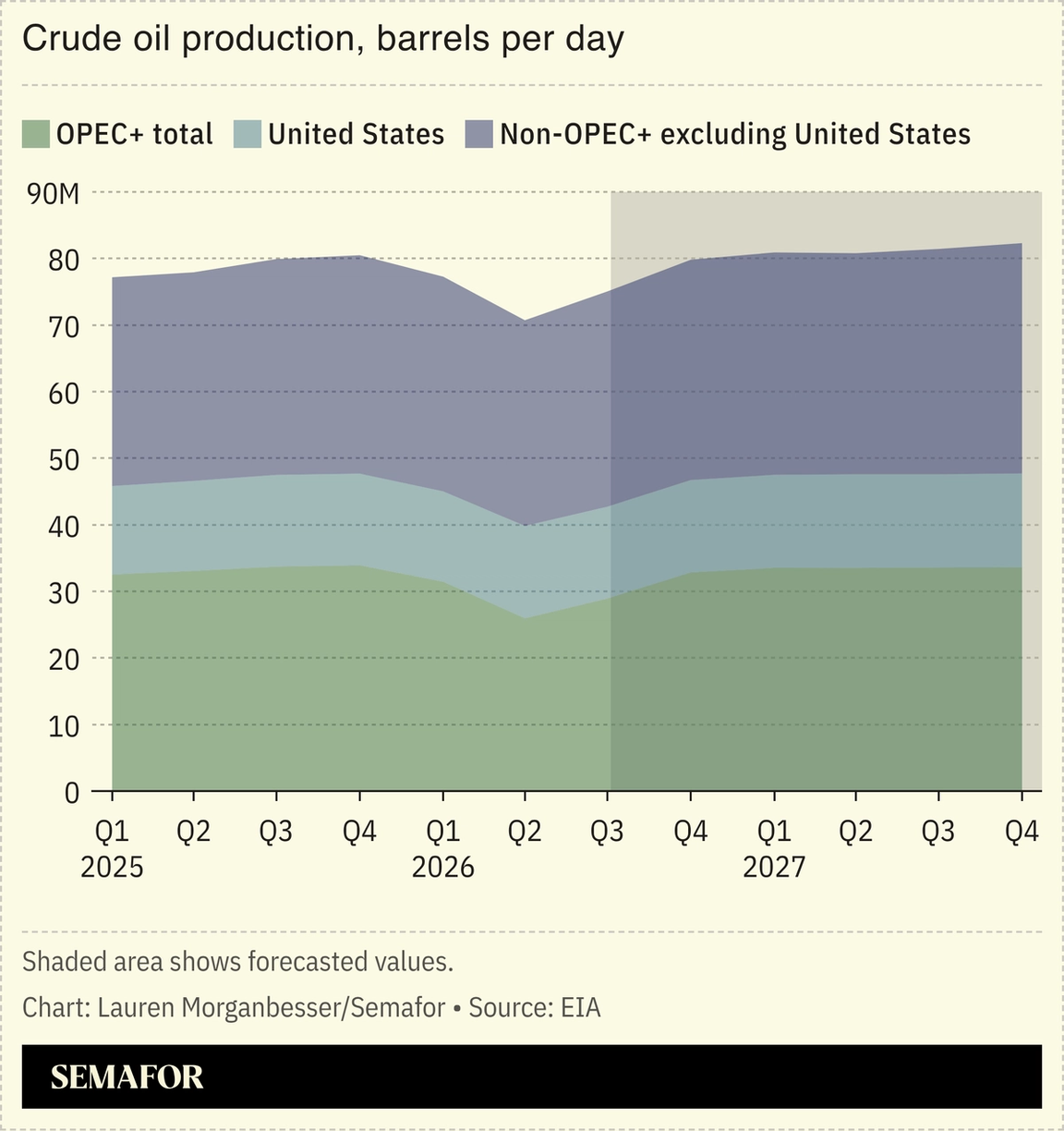 OPEC+ agreed on Sunday to raise oil production by 188,000 barrels a day in September, marking its sixth consecutive monthly increase as the group seeks to restore supply to a market strained by global conflicts. The increase is largely symbolic as the conflicts in Iran and Ukraine continue to disrupt exports, but it gives major producers like Saudi Arabia more flexibility to raise output once regional flows normalize. The group also warned that attacks on energy infrastructure could further threaten supplies and increase market volatility. Even if more crude becomes available, ExxonMobil and Chevron said gasoline and diesel prices will likely remain elevated because global refining capacity remains constrained, limiting relief for consumers. |
|
US water systems face cyber threats |
 Brian Snyder/Reuters Brian Snyder/ReutersA wave of cyberattacks targeting US water systems exposed a growing vulnerability in the nation’s critical infrastructure as federal investigators examine whether Iran was responsible for disruptions reported in at least seven states. While authorities cautioned the investigation remains preliminary, intelligence agencies assessed that Iran was likely behind coordinated attacks on more than 30 municipal water systems in Minnesota and are investigating connections to incidents in other states. The episode highlights a challenge facing state and local governments, which often lack the resources to secure aging infrastructure against increasingly sophisticated cyber threats, particularly as AI compounds cybersecurity concerns. US cybersecurity officials have warned that such vulnerabilities could disrupt essential services and undermine the systems communities rely on every day. |
|
US, Japan coordinate yen purchases |
 Eugene Hoshiko/Reuters Eugene Hoshiko/ReutersThe US and Japanese governments coordinated to stabilize the yen after the currency plummeted last week, a historic intervention aimed at preventing wider economic destabilization. The yen is “very undervalued,” US Treasury Secretary Scott Bessent said on Friday — Japan’s currency has weakened for months, a phenomenon economists attributed to Prime Minister Sanae Takaichi’s expansionary fiscal policy, including her push to boost defense spending. The moves suggest the White House was concerned a yen selloff could further push up US bond yields, which remain elevated, analysts said. The intervention mirrors Washington’s actions on behalf of Argentina’s flailing peso last fall, timed to support President Javier Milei’s coalition — a “calculated wager” that Buenos Aires would “continue advancing economic liberalization,” the Reason Foundation argued. |
|
BYD sees third month of EV growth |
|
Tech giants betting on outpacing rivals in AI |
 Brendan McDermid/Reuters Brendan McDermid/ReutersTech’s incumbent giants are betting that their market dominance will let them beat the upstart AI companies, even though they do not have the strongest models. Microsoft is increasingly challenging Anthropic and OpenAI, despite having significant investments in both, TechCrunch reported: Its cloud and software businesses give it unparalleled enterprise market reach. Mark Zuckerberg, meanwhile, hopes that WhatsApp will allow Meta to be a platform for personal AI assistants for billions of customers. The two are in different situations financially — Microsoft posted $133.7 billion annual net income, while Meta’s fell $2.49 billion year-on-year last quarter as it strains to catch up on compute — but both are hoping that they can make ground with their own AI agents. |
|
FIFA scraps privatization push |
 Benoit Tessier/Reuters Benoit Tessier/ReutersFIFA abandoned its plans on Friday to spin off its commercial arm as a $20 billion private entity following a soccer world revolt that has pushed President Gianni Infantino’s leadership to the brink. On Saturday, UEFA — which had threatened to boycott the World Cup — declared victory over the “shabby, back room” deal. It added that along with CONCACAF, it had lost confidence in Infantino, who had been expected to stand unopposed in next year’s presidential election but could now face competition. Infantino has driven a revenue push during his decadelong tenure, earning him broad support, and privatization would have increased member payouts further. Instead, Infantino stands weakened, perhaps fatally undermining his contested push to increase the tournament’s field again from 48 to 64 teams. |
|
Spacecraft want to probe flyby asteroid |
 NASA’s Goddard Space Flight Center/Handout via Reuters NASA’s Goddard Space Flight Center/Handout via ReutersThree, perhaps four, spacecraft will visit an asteroid as it makes a near-miss flyby of Earth. The asteroid, Apophis, was spotted in 2004 and at first was thought to have a one-in-37 chance of hitting Earth in 2029: At an estimated 20 million tons, it could have caused widespread destruction. But scientists now know that it will miss. Still, it will be the largest object known to pass so close — 20,000 miles, closer than the moon and geostationary satellites. NASA, the Japan Aerospace Exploration Agency, the European Space Agency, and potentially a student-led Chinese team will meet it with probes. Scientists hope for insights into asteroids’ interiors and guidance on how to deflect or destroy space rocks that threaten Earth. |
|
Chatbots better scammers than humans |
 Desks used to make scam calls in a Cambodian compound. Soveit Yarn/Reuters Desks used to make scam calls in a Cambodian compound. Soveit Yarn/ReutersAI chatbots outperformed human scammers at luring victims for online “pig butchering” cons, research found. Pig butchering involves building text-based relationships, sometimes romantic, with people over time — “fattening” the “pig” — then conning them into fake crypto investments. The (admittedly small) study found that AI models were graded as more trustworthy than humans. Because relationship-building is the most labor-intensive and time-consuming part of a scam, researchers suggested that AI could take over much of the scam process. That would make scams harder to fight but might reduce Southeast Asia’s human-trafficking problem: Many scam workers are forced-labor victims, often held in brutal compounds of hundreds of people. |
|
|


