Diesel crunch
 

Power Up

Power Up

A Reuters Open Interest newsletter

By Ron Bousso, ROI Energy Columnist


Data refreshes every time you open this email. For more energy news, click here. Please send any feedback to powerup@thomsonreuters.com.

Hello Power Up readers,

Energy markets are heating up again.

The U.S.-Iran interim peace deal signed on June 17 brought cautious optimism that oil and gas flows through the Strait of Hormuz would recover quickly, but things took a big step back this week.

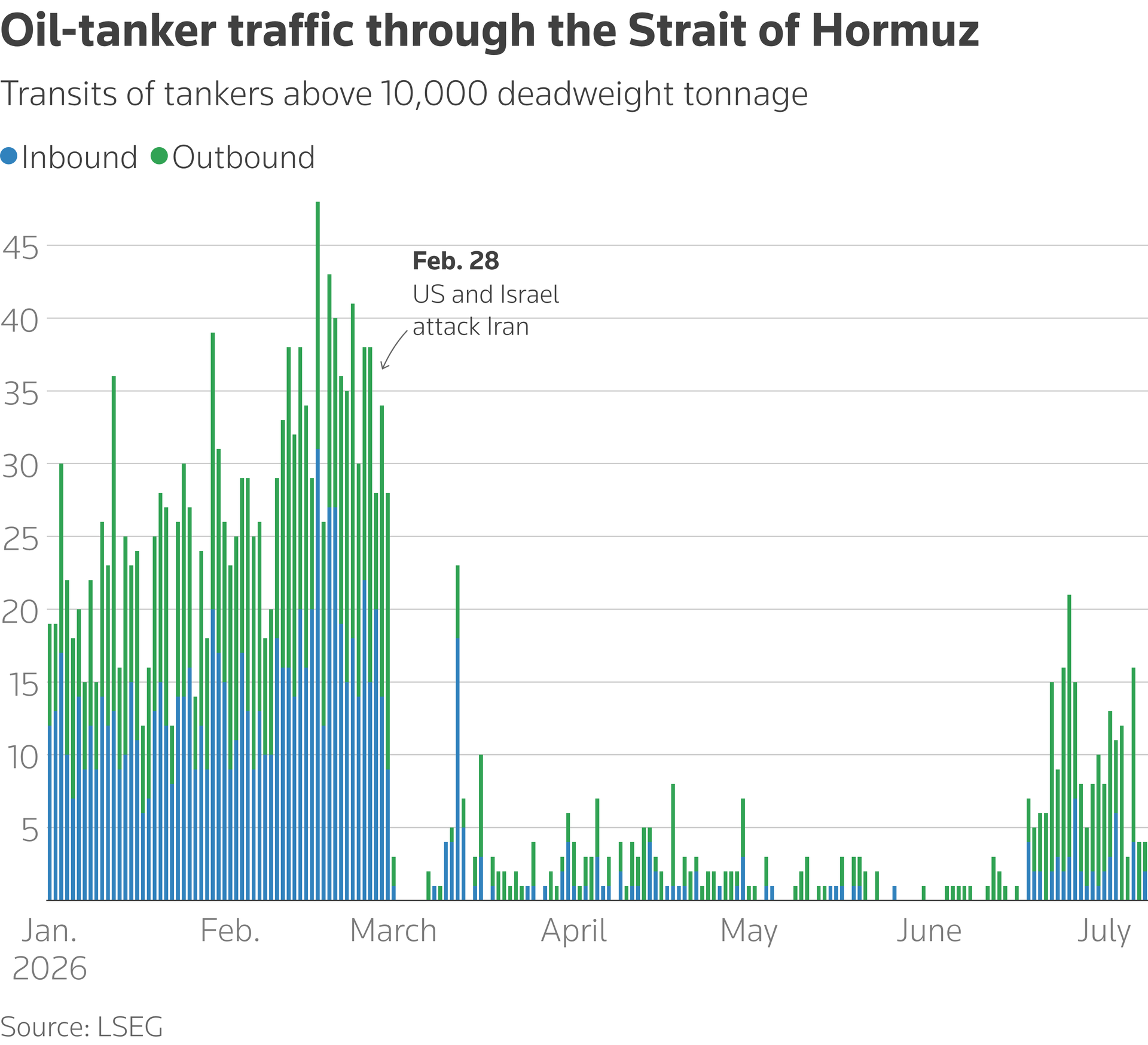
On Tuesday, Iran struck two tankers trying to cross the Strait of Hormuz through shipping lanes on the Omani side. This included a Qatari liquefied natural gas (LNG) carrier that was badly damaged. The attacks were Tehran’s latest effort to assert its  control over vessel traffic through Hormuz in the wake of the war, something Washington and regional powers vehemently oppose.

This was not the first incident since the deal, but by far the most serious one. Within hours, the U.S. military struck dozens of targets across southern Iran, prompting Iran to retaliate across the region.

President Donald Trump, who was in Turkey for a NATO summit, dropped his own bomb when declaring the deal with Iran was “over”, while raining invective on Iran’s leadership. The tit-for-tat attacks continued overnight, as shipping traffic through the strait practically ground to a halt.

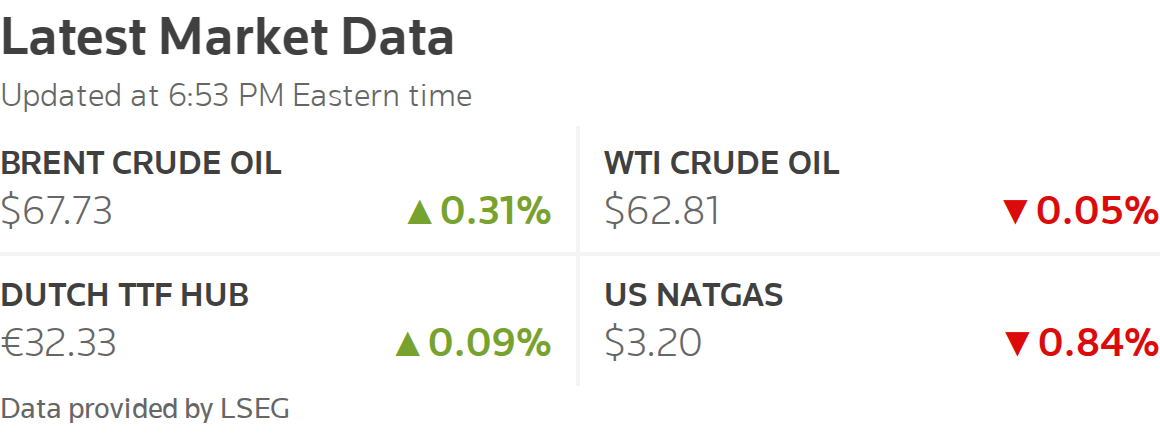
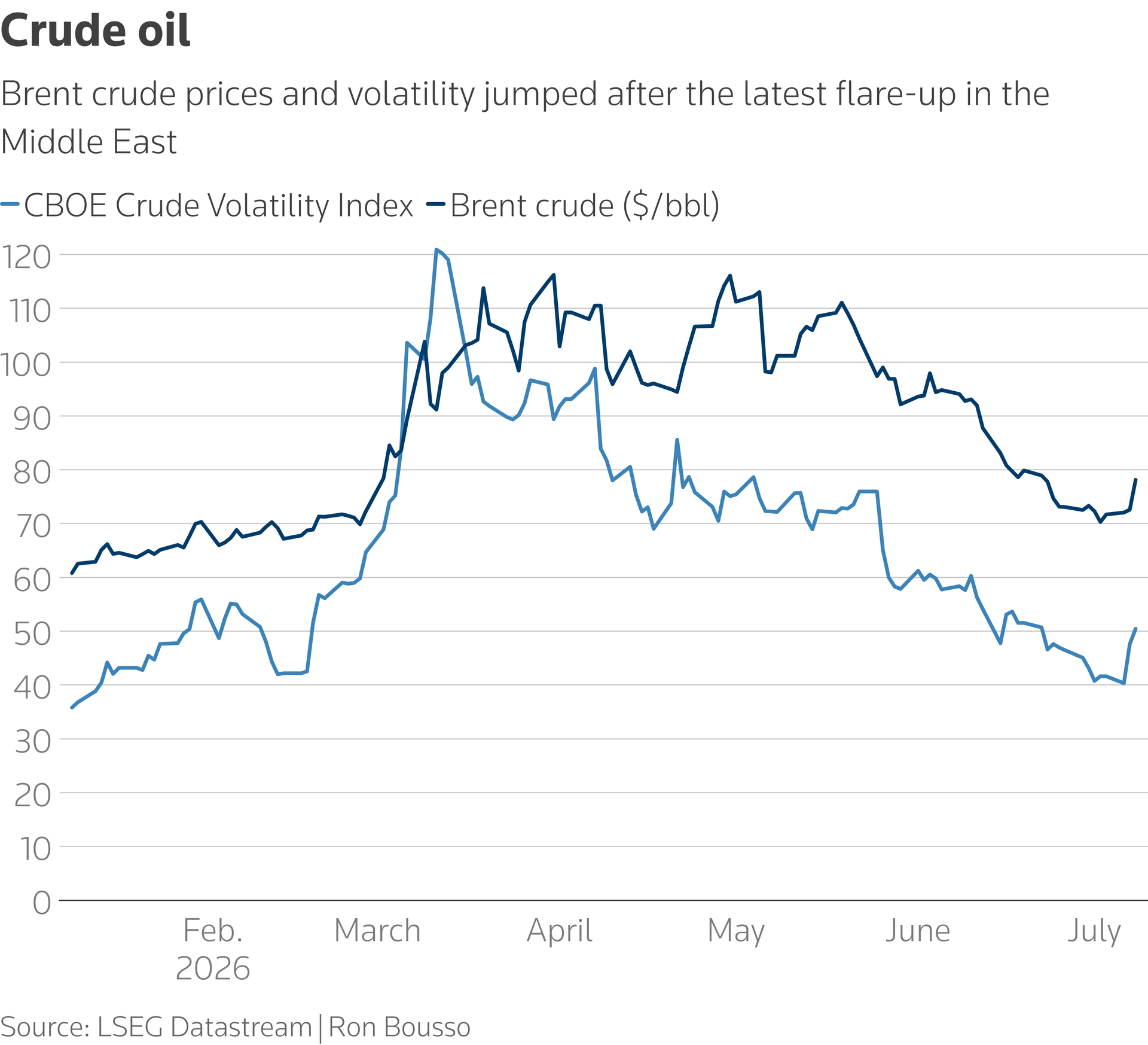
Oil prices soared by over 5% in response on Wednesday towards $79 a barrel, though prices were slightly down on Thursday.

Is the Iran deal dead? Is the war coming back? Probably not.

But one thing is clear - the uncertainty over the deal and the stop-start flow of tankers through Hormuz are a nightmare scenario for Gulf nations desperate to return to normal after a bruising multi-month conflict. More on this below.

If the Mideast flare-up wasn’t enough, another major event shook energy markets when Russia introduced a ban on diesel exports on Wednesday as part of its efforts to support the domestic fuel market. Systematic Ukrainian drone attacks on oil refineries have triggered gasoline shortages and ‌price spikes.

Russia is a major diesel exporter. Combine this news with the ongoing disruption in the Middle East, and the global diesel market now looks dangerously bereft of buffers. I wrote about this last week.

Here are a few more headlines:

  • The latest heat wave across Europe saw roads buckling, runways melting and widespread transportation mayhem, highlighting the inability of the region’s infrastructure to deal with the impact of climate change. This means that the next big winner in climate adaptation in Europe will likely not be solar or wind, but asphalt, wrote ROI Energy Columnist Gavin Maguire.
  • One clever way to deal with the unprecedented and disruptive U.S. presidency of Donald Trump is to make up acronyms using Mexican foods. We’ve all heard of TACO, but ROI Asia Commodities Columnist Clyde Russell wrote that perhaps the best acronym for Trump is TAMALES.

Before you go, give us your thoughts on the latest Mideast flare-up in our LinkedIn poll.

And as always, don’t hesitate to contact me at ron.bousso@thomsonreuters.com or follow me on LinkedIn with any questions or thoughts.


Top energy headlines

  • Oil eases as investors assess US-Iran peace prospects
  • EU drafts 'electrification' plan to curb oil and gas use, after Iran war disruption
  • TotalEnergies divests its distributed solar generation activities in Europe
  • Rising oil prices drive Indonesians to embrace biodiesel
  • US electricity output hits record high, tops 100,000 GWh for first time, EEI says


Chronic instability

What was meant to mark the start of a fragile recovery following the June 17 memorandum of understanding between Tehran and Washington is instead evolving into a period of chronic instability, with each new incident reinforcing doubts over the security of one of the ‌world's most important energy arteries.

The U.S.-Iran standoff creates the conditions for a permanent crisis. Even if both sides stop short of a direct war, the risk of miscalculation remains high, making the strait a persistent flashpoint that could spark a wider regional conflagration in the years ahead.

As a result, traffic through the strait is likely to remain unpredictable for the foreseeable future.

Energy markets have not adjusted to this precarious new reality. The prospect of periodic disruptions to this critical route should embed a higher geopolitical risk premium into crude prices, and it does not yet appear to be doing so.

Put ‌differently, the ⁠era of uninterrupted Gulf energy flows has come to an end – and markets need to catch up.

Read the full column
 

Sponsors are not involved in the creation of newsletters or other Reuters news content.