Hello,
Data centers are in focus today as U.S. manufacturers grapple with sharply higher electricity bills. Many are pointing to data centers as the main driver of rising utility costs, according to a Reuters review of U.S. energy data and interviews with nearly a dozen manufacturers and industry groups.
At the same time, environmental advocates are warning that a wave of gas-fired power plants being built to serve data centers could significantly increase U.S. greenhouse gas emissions. Also on my radar today: |
|
|
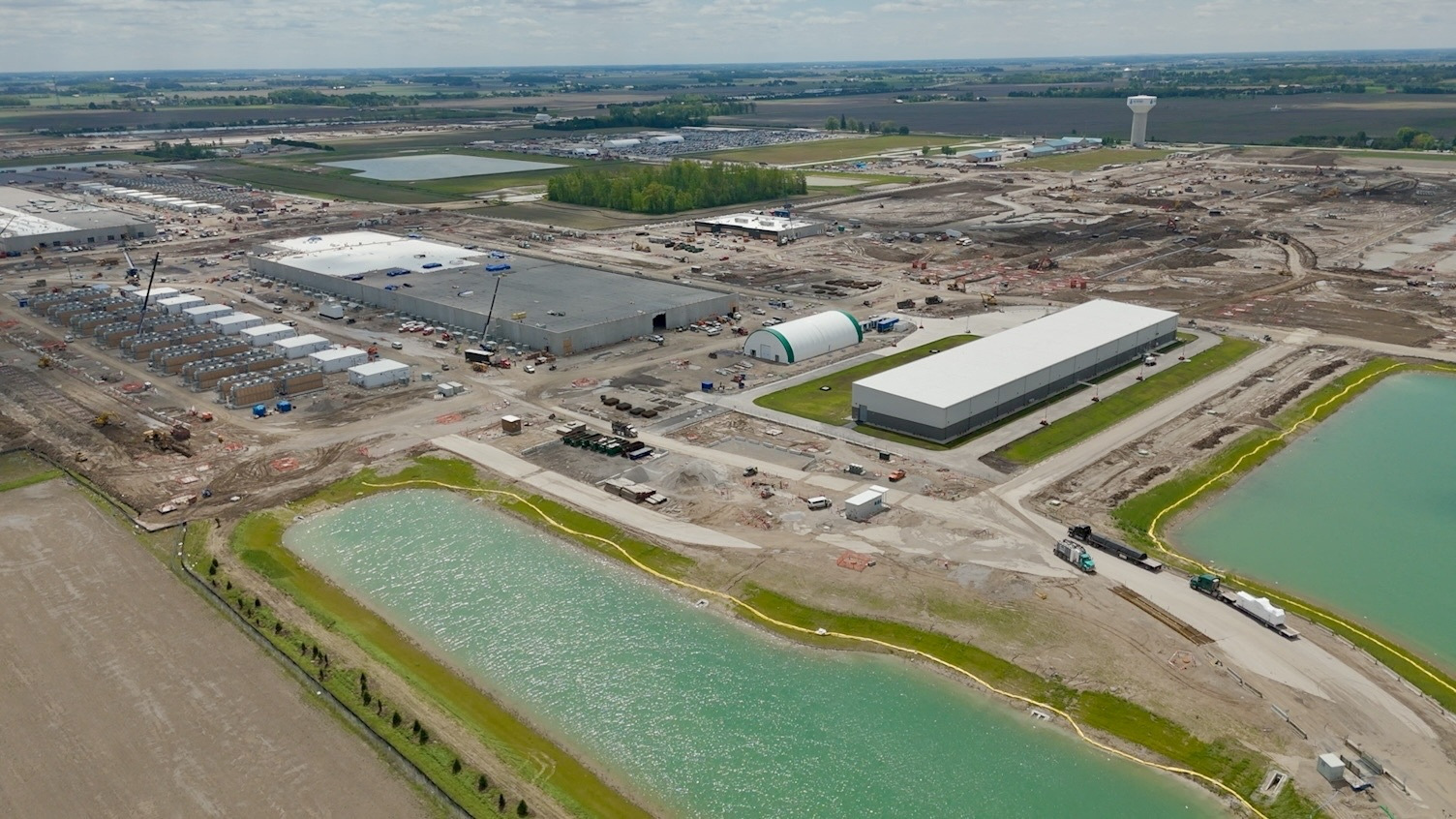
A drone view shows construction underway on Meta's new data center in Middleton Township, Ohio, U.S. REUTERS/Eric Cox |
One example comes from Ohio, where Belden Brick Company in Sugarcreek said its electricity costs surged 90% last year, largely because of growing power demand from data centers in the region. The 141-year-old brick manufacturer said the increase was driven mainly by a monthly capacity charge that jumped from about $1,600 to $12,000.
Belden Brick is among a growing number of manufacturers across the U.S. industrial heartland facing higher costs as power-hungry data centers supporting the artificial intelligence boom proliferate. Federal, state and local governments, responding to consumer anger and grid-stability concerns, are pushing Big Tech to shoulder more of the costs associated with their expected power demand. Some proposals, however, would also affect smaller manufacturers, whose energy needs are a fraction of companies such as Meta and Amazon. Meta declined to comment. Amazon did not respond to a request for comment.
Industry groups and policy experts say rising power costs and regulatory uncertainty threaten manufacturers at a time when U.S. President Donald Trump is prioritizing domestic production. Some companies are considering raising prices, slowing growth, or in some cases relocating.
Click here to find out more about the rising bills for manufacturers. |
|
|
|
Rising greenhouse gas emissions |
Dozens of planned gas-fired plants intended to supply data centers directly could emit as much greenhouse gas annually as Australia or France, according to a report by the Environmental Integrity Project.
The group reviewed 74 proposed or planned projects that would provide electricity directly to data centers, bypassing the traditional process of connecting to the U.S. electric grid.
Together, the projects are expected to generate 143 gigawatts of electricity and could produce 662 million tons per year of greenhouse gas emissions. These off-grid, or "behind the meter", projects are being approved rapidly across the U.S., often with limited public scrutiny, according to a Reuters review of regulatory filings and interviews with public officials, residents, researchers and company executives. Many can move ahead in months rather than years because they avoid some permitting requirements, environmental reviews and public hearings typically associated with large power projects. Developers argue that such off-grid plants for private customers are exempt from many of those requirements.
The EIP report said the scale of the resulting greenhouse gas emissions could pose public health risks to nearby communities through pollutants such as nitrous oxide (NOx) and benzene. |
A resident clears mud from a flood-hit home after typhoon Maysak, near Liulan Reservoir in Hengzhou, Guangxi Zhuang Autonomous Region, China. cnsphoto via REUTERS |
-
China typhoons: Following China’s deadly Super Typhoons this week, the nation’s National Climate Center expects up to six typhoons to form in the Northwest Pacific and South China Sea in July, more than the average of 3.8 storms. Scientists estimate up to three could make landfall, above the norm of 1.8. The intensity of the cyclones will also be stronger, it said. China is bracing for Super Typhoon Bavi on Saturday, the second tropical cyclone to arrive in a week.
-
Germany’s fatal heatwave: Germany has recorded an estimated 5,120 heat-related deaths so far this year, mainly people aged 75 and over, with most of them in late June when weekly average temperatures far exceeded 20 degrees Celsius, the Robert Koch Institute (RKI) for public health said. More women than men died as they make up a higher share of the very old.
-
Europe’s heatwave: Western Europe had its warmest June on record, EU scientists confirmed, after an extreme heatwave at the end of the month smashed temperature records. The average temperature in Western Europe last month was 20.74 degrees Celsius (69.3 degrees Fahrenheit), more than 3 C above the average for June during 1991-2020, the data from the EU's Copernicus Climate Change Service (C3S) showed.
-
French wine under threat: France's scorching summer is stunting grape growth in wine regions including Champagne, Bordeaux and Burgundy, threatening a smaller crop and bringing one of the earliest harvests on record, producers said. Forecasters expect little or no rain in France's main wine-producing regions before July 14, extending a dry spell that will have lasted more than three weeks in many areas. Click here for the full Reuters article.
- India landslides: At least four people died in a building collapse in the Indian capital Delhi, the latest in a series of rain-related incidents as monsoon showers triggered landslides and disrupted travel across parts of the country.
|
|
|
|
A newly hatched Heloderma charlesbogerti, an endemic species of lizard, at La Aurora Zoo in Guatemala City, Guatemala. La Aurora Zoo/Handout via REUTERS |
I’ve got another animal conservation spotlight following Tuesday’s focus on Bengal tigers in Cuba. Today’s spotlight shines on conservationists in Guatemala who are breeding a new generation of lizards that are one of the world's most endangered kinds, in the hopes of rebuilding wild populations decimated by habitat loss and their popularity in the illegal pet trade. |
|
|
|
Sustainable Switch was edited by Mark Potter. |
|
|
|
|