Beijing weighs its own silicon curtain
 

Artificial Intelligencer

Artificial Intelligencer

What matters in AI this week


By Kenrick Cai, Technology Correspondent

China appears intent on pulling a silicon curtain around its own AI technology — including its open-source models — just as Washington has been ramping up  restrictions on foreign access to top-shelf AI.

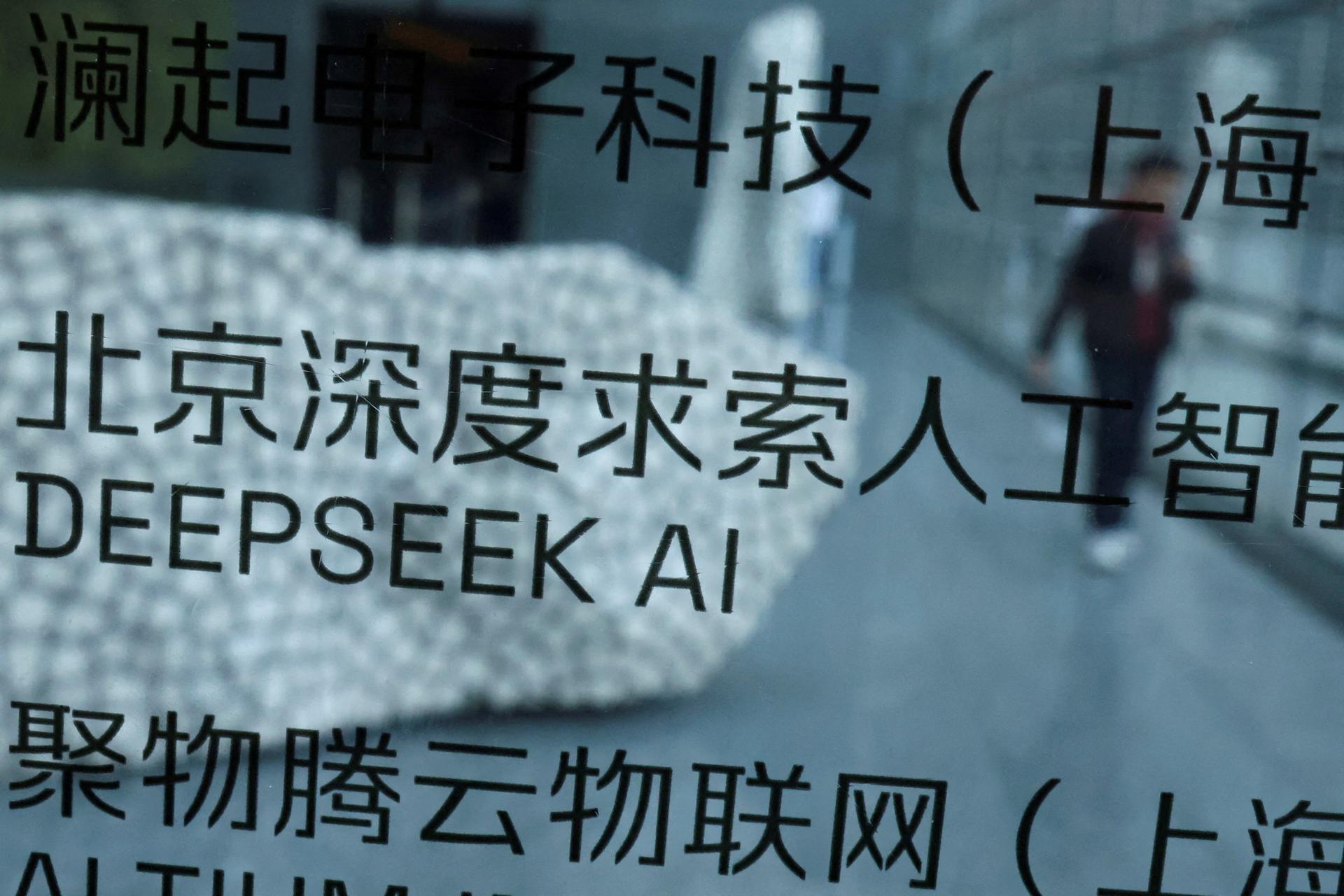
This week, my colleagues in Asia published a pair of exclusive stories breaking the news that China’s DeepSeek is developing its own AI chip that could reduce its reliance on Nvidia and, from Asia Technology Correspondent Fanny Potkin, that Beijing has discussed restricting overseas access to homegrown AI models.

Those moves follow a saga that spanned most of June between the U.S. government and leading AI labs over foreign access to cutting-edge models.

In late June, Washington finally lifted export controls on Anthropic’s Fable and Mythos models after it was satisfied by new safeguards the company put into place. A couple days prior, OpenAI said it was delaying the public launch of GPT-5.6 at the government’s request.

All this is coming to a head at a time when businesses, fretting over the huge bills from “tokenmaxxing” Anthropic and OpenAI models, are shifting workloads over to cheaper alternatives — oftentimes Chinese open-source models.

In this week’s newsletter, we look at who wins in the event of a deepening silicon curtain, and what it might mean for a corporate landscape that is becoming more dependent on Chinese AI by the day.

Share your thoughts by emailing me or following me on LinkedIn. Forward this newsletter to your friend who would benefit from weekly news and insights on AI. They can also subscribe here.


Read our latest reporting in tech and AI: 

  • US cyber agency is using Anthropic's Mythos to audit government code, sources say
  • Big Tech data centers are driving up power bills at America's Rust Belt factories
  • Meta's Zuckerberg says AI agent tech progressing slower than expected
  • Argentina's plan for AI-run companies can't avoid humans
  • Financial services AI dangers highlighted by regulator's review
 

Open-source dependency

Intel CEO Lip-Bu Tan makes a speech on stage in Taipei, Taiwan May 19, 2025. REUTERS/Ann Wang/File Photo

FILE PHOTO: A DeepSeek AI sign is seen at a building where the Chinese start-up's office is located in Beijing, China, February 19, 2025. REUTERS/Florence Lo

Even in Silicon Valley, many of the highest-valued AI startups have built their applications at least in part using Chinese open-source models from providers like DeepSeek, Moonshot AI and Z.ai.

“I don’t think they prefer Chinese models, it’s just the best open-source models are Chinese,” said Lan Xuezhao, a venture capitalist in San Francisco who runs an AI-focused fund called Basis Set. “You go with the best and most efficient and low-cost models.”

On Arena, a popular AI benchmarking platform, the top eight open-source AI models for agent-based tasks are made by Chinese developers, as are the top 17 open-source models for coding tasks.

Thousands of U.S.-based startups, companies and academic researchers are relying on Chinese open-source models, according to Clement Delangue, CEO of the startup Hugging Face, a popular developer platform that hosts open-source models and datasets.

“Any sort of restrictions would be a terrible blow to them and concentrate AI power even more in the hands of a few mega-corporations against whom it would be virtually impossible for anyone to compete,” Delangue told Reuters.

In some use cases, Chinese open-source models are both cheaper than and technically competitive with leading models from the likes of Anthropic, OpenAI and Google. The same cannot be said for the current slate of open-source models coming out of the West, due to the slow release cadence and lagging performance.

OpenAI’s GPT-OSS is nearly a year old — “an eternity in AI timelines,” as Delangue put it — while open-source offerings from both big firms like Nvidia and Google and upstarts like Reflection AI have not kept pace with the advanced capabilities in a model like Z.ai’s recently released GLM-5.2, which had Silicon Valley buzzing with its coding and ‌agent capabilities.

If access to Chinese models were to be restricted, businesses looking to maintain the functionality of their AI offerings might have no choice but to return to their “tokenmaxxing” ways.

Chinese authorities have discussed with at least three companies — Alibaba, ByteDance and Z.ai — putting limits on both closed-source and more open versions, per Reuters reporting.

How exactly the authorities would seek to restrict access to open-source models, which are by definition duplicable, remains to be seen.

Still, as much as American restrictions on Nvidia chip exports to Chinese firms hit a pain point in China’s AI positioning, Chinese restrictions on its widely used models could have the same effect on the West.

That Beijing is deliberating whether to draw its own curtain at all “reinforces the necessity and urgency to build more affordable open-source models in the U.S.,” Delangue said.


This newsletter was edited by Edmund Klamann.


Sponsors are not involved in the creation of newsletters or other Reuters news content. Advertise in this newsletter or on Reuters' website

LiveIntent Logo
AdChoices Logo
 

Reuters Artificial Intelligencer is sent once a week. Think your friend or colleague should know about us? Forward this newsletter to them. They can also