Iran and US, take two
 

Gulf Currents

Gulf Currents


By Andrew Mills, Deputy Bureau Chief, Gulf 

U.S. President Donald Trump declared on Wednesday that the interim agreement to end the war with Iran was "over" after Tehran struck U.S. military sites in Bahrain and Kuwait. Yet the bluster came with a caveat — a source familiar with the Ankara talks told Reuters Trump did not repeat his comments about the interim deal being over when NATO leaders met later at the summit, leaving the question open: is this a rupture or another round of pressure ahead of a return to the table? 

That tension — between escalation and negotiation — runs through this week's newsletter. We track the Qatari LNG tanker Al Rekayyat, stranded off Oman after a strike on one of the mediators shuttling between Washington and Tehran, and the wider tanker exodus from Hormuz now underway. Our analysis asks whether this week's broader cycle of U.S.-Iran strikes is positioning ahead of expected talks or the start of an unravelling neither side can fully control. And in the Last Wave, we look at whether the war is quietly ushering in a new era of Gulf pipeline diplomacy, as Saudi Arabia, the UAE and even Israel race to plan routes around Hormuz. 


Top headlines from the region

  • What are the risks of an LNG tanker explosion?
  • How Iran's 'golden weapon' of Hormuz became a bigger priority than its long-disputed nuclear programme
  • Trump's Board of Peace planning pilot humanitarian zone in Gaza, official says
 

News briefing

  • The Qatari LNG carrier Al Rekayyat sits stranded off Oman, its engine-room blaze leading to a risk of explosion after a projectile strike. The cargo remains secure and the crew evacuated. Notably, it is the first time an LNG ship from Qatar, a mediator in talks between the United States and Iran, has been struck since the start of the Iran war on February 28. 
  • At least four tankers reversed course from the Strait of Hormuz after Tuesday's vessel attacks pushed the threat level to "severe." Three QatarEnergy LNG carriers turned back before reaching the strait, while an Indian-flagged VLCC carrying Kuwaiti crude made a U-turn near Oman, even as three other stranded crude tankers managed to exit.


Escalate to negotiate?

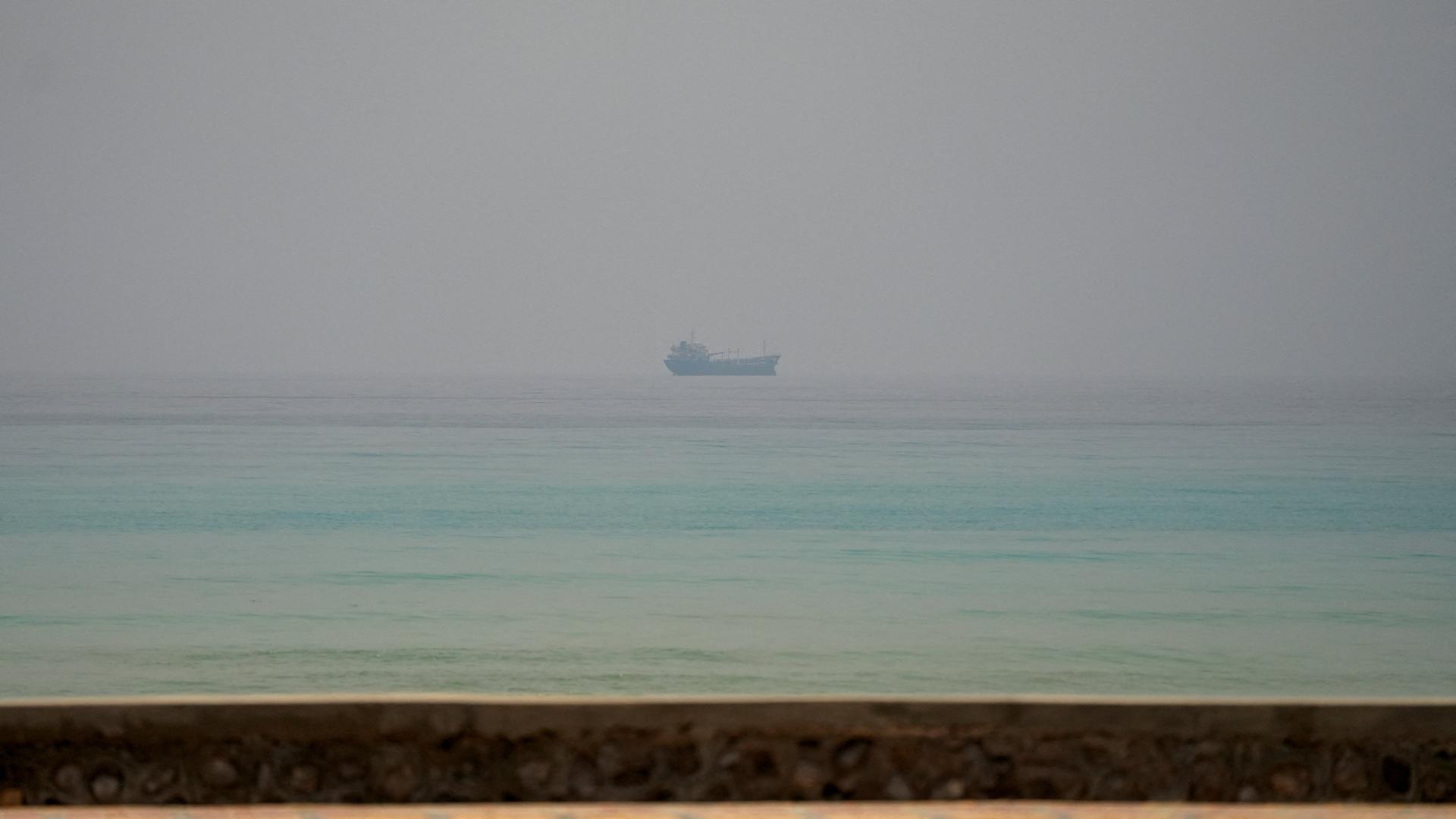
A vessel at the Strait of Hormuz, as seen from Musandam, Oman, July 8, 2026. REUTERS/Stringer

This week's exchange of fire in the Gulf has an uncomfortably familiar shape. Iranian strikes on commercial tankers, U.S. retaliation, then Iranian fire on American positions in Bahrain and Kuwait — it's the second time in weeks this same sequence has played out. The U.S. and Iran traded blows last month after similar Iranian attacks on commercial vessels in the Strait of Hormuz. 

Rather than a breakdown, could this repetition be something more calculated — a script both sides use to stake out leverage before returning to the table? 

The signals are tricky to parse, but one message comes through: Tehran is asserting its own claim over who controls passage through Hormuz. 

There's precedent for reading the broader pattern as tactical, not terminal. The late-June round of strikes gave way to renewed contacts rather than open war, suggesting these flare-ups can serve as pressure valves ahead of more diplomacy — relevant given the possibility that talks could resume next week once Iran's funeral proceedings for slain leader Ayatollah Ali Khamenei conclude. 

This week's conflict round is broader than the last. The IRGC said it targeted 85 military sites in Bahrain and Kuwait, though the attacks seem to have had limited impact. Crucially, one of the tankers hit was Qatari, representing the sovereign infrastructure of a key country attempting to hold the diplomatic process together. 

The escalation raises an uncomfortable question: can this cycle keep repeating without eventually breaking containment? This round widened the target set on both sides.  

Repetition with rising severity is not sustainable indefinitely. 

Trump, however, appeared to leave the door open. He declared the ceasefire "over," but in the same breath added he'd "let our wonderful negotiators keep talking if they want". 

Underneath the rhetoric, structural pressure pointing back towards the negotiating table hasn't disappeared: oil markets reacted sharply after Washington reinstated sanctions on Iranian oil, and mediator Qatar, which needs its LNG tankers to transit the strait and onwards to customers, has every incentive to see this contained. 

So which is it: positioning ahead of expected talks, or the start of an unravelling that outpaces both sides' willingness — or ability — to keep it contained? 


Chart of the week


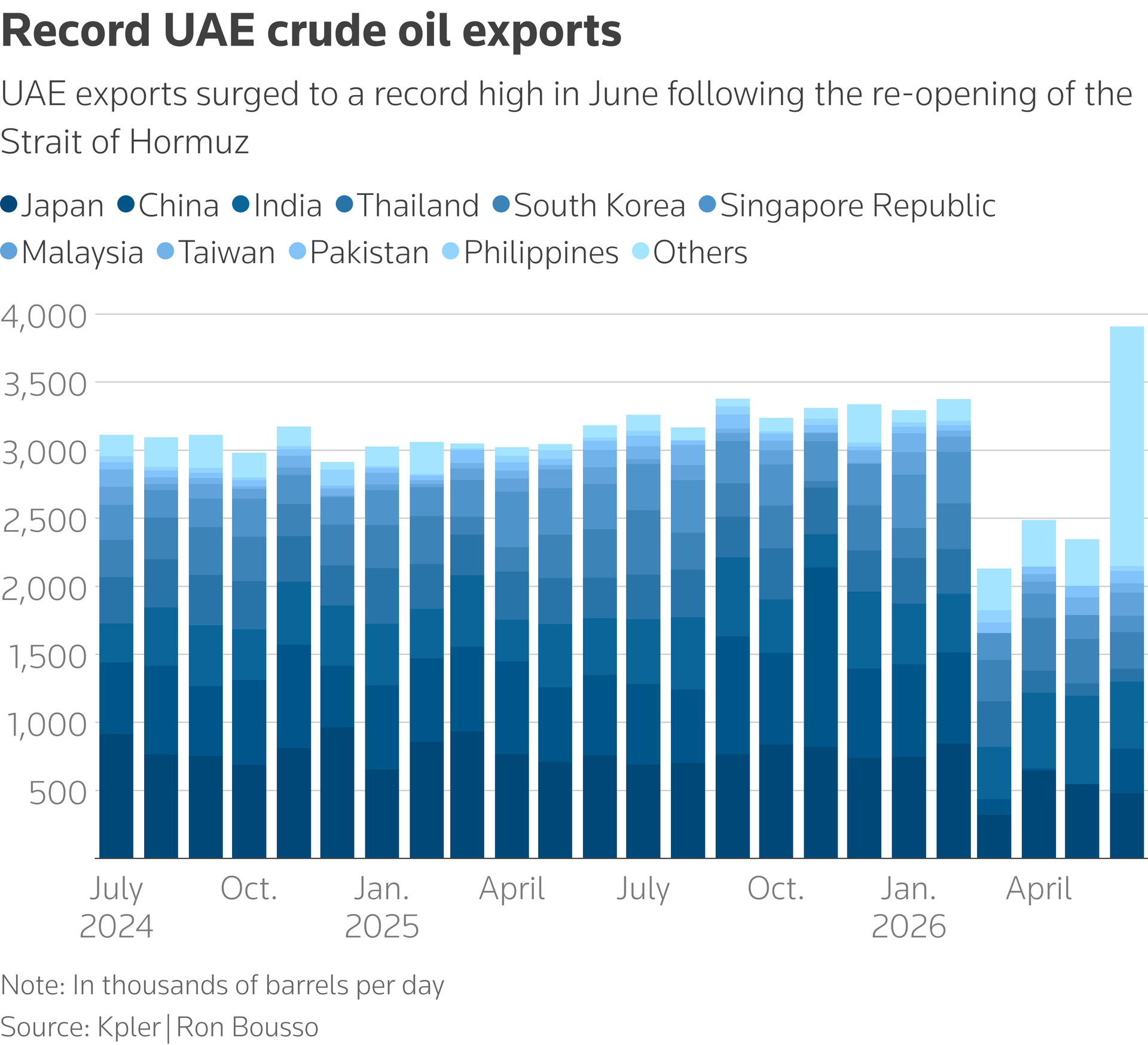
The United Arab Emirates has fired the opening shot in what is fast becoming a fierce battle among Middle East oil producers to reclaim market share after the Iran war, a contest that threatens to weaken oil prices and further erode OPEC's authority. 

Gulf producers, desperate for revenue to replenish state coffers depleted during the four-month-old conflict, are under enormous pressure to sell the millions of barrels accumulated in tankers and storage facilities during the effective closure of the Strait of Hormuz. Until this space is freed, these producers cannot restart the oil and gas operations that were crippled by the conflict. Read more from Ron Bousso. 


The last wave: Are we entering a new pipeline boom? 

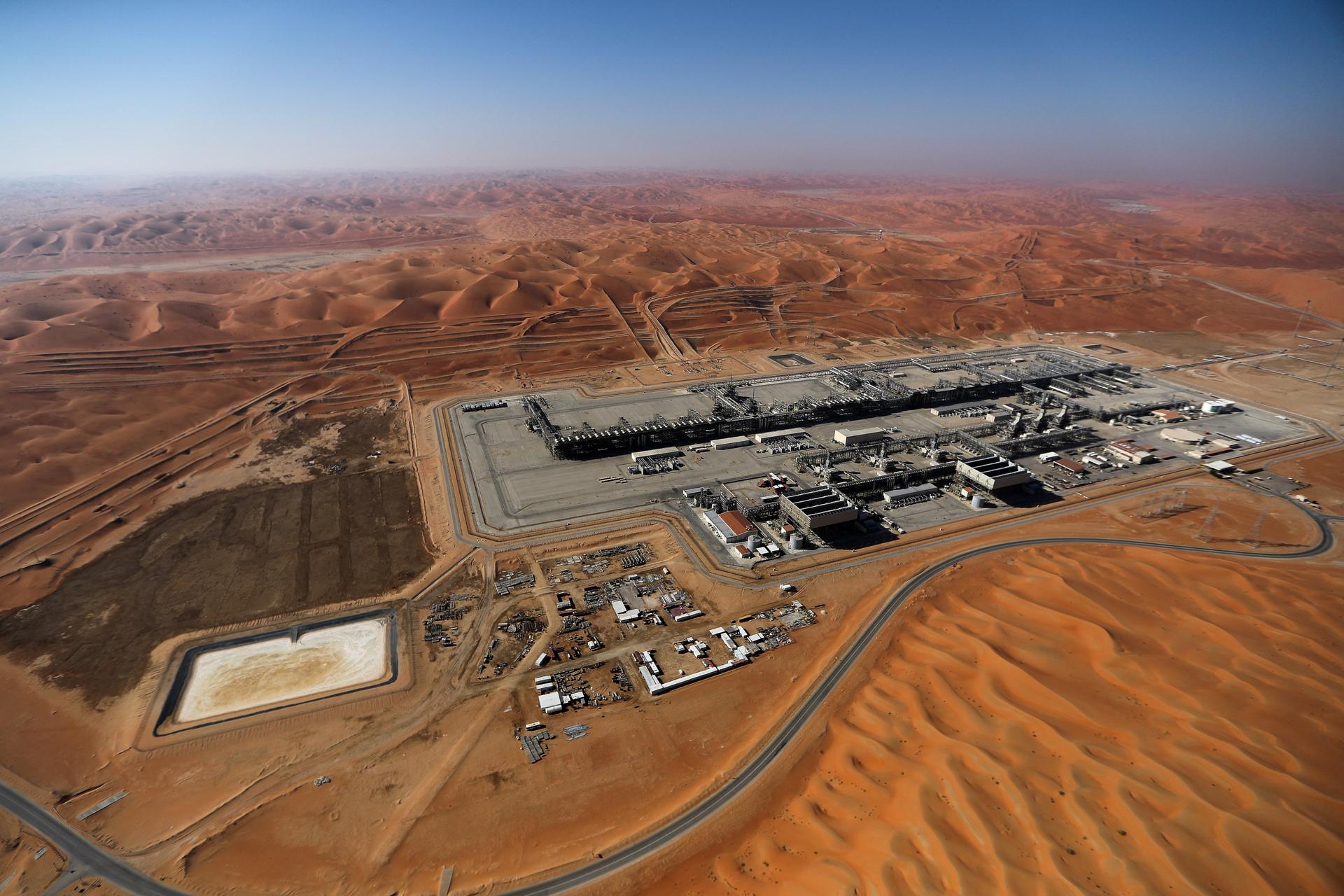
General view of Aramco's oil field in the Empty Quarter, Shaybah, Saudi Arabia, January 12, 2024. REUTERS/Hamad I Mohammed, File Photo


The Iran war has revived Gulf pipeline diplomacy. Saudi Arabia is considering expanding its East-West pipeline by up to 2 million barrels per day, with sources telling Reuters the kingdom is in preliminary talks with some of its neighbours about the potential expansion of the pipeline's capacity. Kuwait's oil chief confirmed talks are underway: "We are in discussions with our brothers in Saudi Arabia and in the emirates to look at how to expand the pipeline system." The UAE is already ahead of the curve, having completed half of a new West-East pipeline that will double crude capacity to Fujairah when it becomes operational next year. 

Israel wants in too. Energy Minister Eli Cohen is pitching a 700-km link from Saudi Arabia to Eilat, connecting to the existing Trans-Israel Pipeline to Ashkelon and onward to Europe, arguing that Gulf states "do not want to be dependent on either Iran or the Houthis... The best route is through the State of Israel." 

Analysts see this as more than wartime contingency planning. Zaid Belbagi of Hardcastle Advisory noted that "the recent talks about new pipeline corridors involving Saudi Arabia, Kuwait and Qatar reflect a broader strategic reality," with the conflict having "focused minds regionally on the perils of relying solely on Hormuz."  

Whether these plans clear the significant political, technical and financial hurdles will determine if this is truly a new pipeline era, or just wartime talk. 


This newsletter was edited by Aidan Lewis and produced by Rawan Yaghi.