
|
 |
What we learned from New York Times, OpenAI and Youtube in Marseille
Plus major new regulation on Google AI tools, and Salt Lake Tribune ends paywall
|
| |||||||||||||||


Welcome to the Press Gazette Future of Media US newsletter on Friday, 5 June.
☀️ This week I’ve been in sunny Marseille meeting people from the global news industry who travelled to France for the WAN-IFRA World News Media Congress.
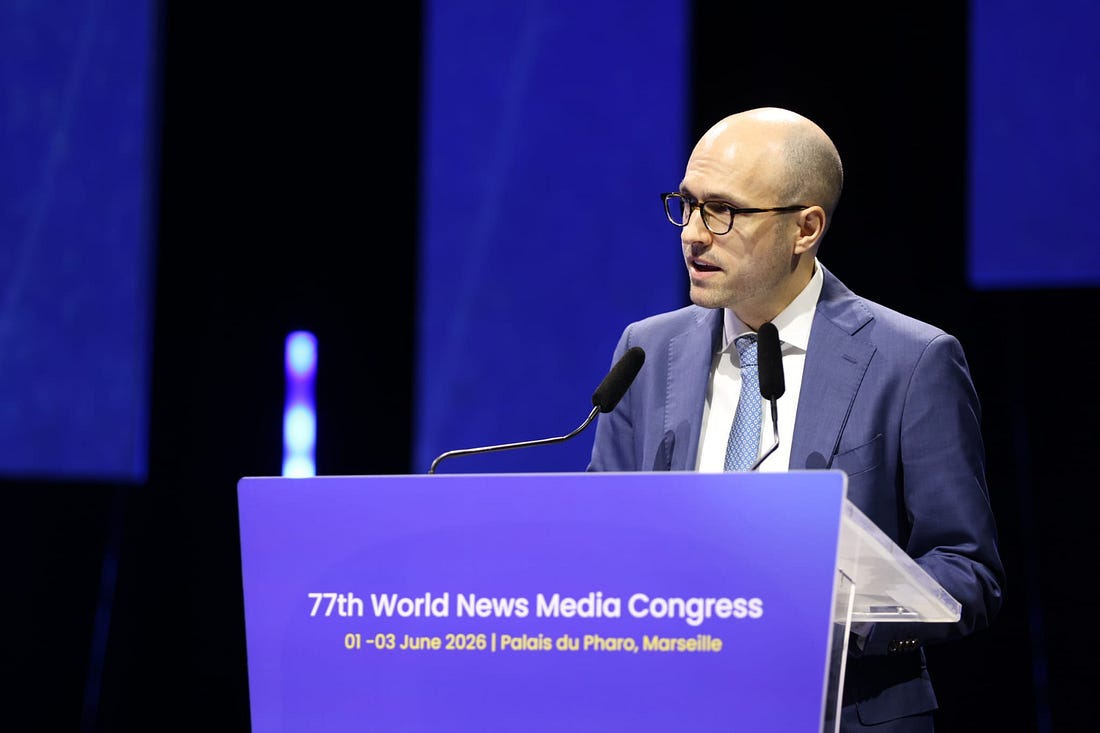
The big headline maker was New York Times chairman AG Sulzberger’s broadside against the “brazen theft” being carried out by AI companies and what news publishers should be doing now to protect themselves.
That came on the first day of a three-day event, so Sulzberger very much set the agenda for the conversations to come.
One person I spoke to felt that he had omitted to share any optimism about the industry in his 35-minute speech. I actually disagree, given one of his conclusions was that original reporting will help distinctive news destinations survive. But I appreciate that the overall tone was pretty bleak.
 |
🤝 Another of Sulzberger’s takeaways was that more collaboration is needed both among news publishers and with other creative industries.
But it’s worth noting the announcement two days later that 18 new publishers from seven countries have joined SPUR, the coalition started by five major UK news organisations aiming to create standards on how content is used and licensed by AI companies.
The New York Times was not one of those publishers, nor were any other US companies, although several US trade bodies are taking part as affiliate members. I understand that more publishers will be announced shortly.
😠 The most direct response to Sulzberger’s speech came the following day as OpenAI’s vice president of media partnerships Varun Shetty and chief of intellectual property and content Tom Rubin appeared on stage.
The audience was repeatedly told that Shetty and Rubin were unable to respond directly to Sulzberger or comment on anything related to, for example, the concept of “fair use” due to the ongoing New York Times legal case against OpenAI.
To be fair not everyone at the Congress was angry at OpenAI.
Le Monde CEO Louis Dreyfus appeared in a session about AI licensing on Wednesday and defended OpenAI’s motivations in the most combative session of the week.
Dreyfus, who has done deals with OpenAI, Perplexity and Meta and teased more to come soon, said he expects the ChatGPT creator to sign more partnerships despite rumours flying around that it only intends to do one per non-English speaking country. And he argued that publishers can’t expect OpenAI to pay for their losses.
📺 Another tech platform represented on stage was Youtube, via its boss in Europe Pedro Pina.
The clear headline for me from this session was that Pina revealed Youtube has engineers working on how publishers could integrate their own website paywalls into the video platform. He promised this would come “very soon”.
However Youtube has since got in touch to deny this is true. It said: “At the moment, there are no plans to launch a paywall integration with news publishers.”
This would be a huge step for publishers if it ever does come to fruition. Users who want to watch a paywalled video on the platform could be invited to sign up for the brand’s overall subscription including unlimited access to their website and other content, rather than having two isolated sets of users.
❓Away from Marseille, the big news coming out of the UK this week was how the competition regulator will impose regulation on Google.
The major changes include letting publishers opt out of AI Overviews without their performance in traditional search results being affected. Notably for publishers in the US and elsewhere, Google has already confirmed it will roll this functionality out.
Google must also give publishers information and data about how their content is used in AI answers, and allow them to opt out on the ‘fine-tuning’ of AI models specifically.
Many in the UK and globally are impressed with what the Competition and Markets Authority have done, but others had criticis