Thanks for reading The Briefing, our nightly column where we break down the day’s news. If you like what you see, I encourage you to subscribe to our reporting here.
Greetings!
Is Palantir soaking up all the growth in the enterprise software sector? That seems like a reasonable question judging by the company’s first-quarter results released on Monday, which showed 85% revenue growth. That’s an astounding growth rate for a business that’s 23 years old. Even better, Palantir turns a lot of that revenue into pure cash. Indeed, its free cash flow of $892 million in the quarter was more than its revenue in the year-earlier quarter. (This article from March explains why Palantir is winning so much business.)
Palantir CEO Alex Karp pointed out that free cash flow factoid in a chest-thumping commentary for analysts on Monday, although frequent microphone outages undermined the force of his hyperbole a bit. (Those outages created a comedic scene on the YouTube video of the earnings call, where a hand kept appearing from the side offering Karp replacement microphones to fix the problem.) For all his over-the-top comments, however, Karp seems to have a point: Palantir is doing astoundingly well, despite deep pessimism about how AI will undermine enterprise software businesses.
Palantir revised up its growth projection for the full year to 71% from 60%—it only gave the previous projection in February—and forecast second-quarter growth of 79%. Other enterprise software firms are doing well if they’re posting 20% growth! Karp couldn’t stop himself from mocking the competition: “If you want old-school software that actually doesn’t work and probably will disappear, there are a lot of names.” Elsewhere in his commentary, he said: “Almost every single highlighted example of AI that actually is producing results in the U.S. is actually parented by Palantir.”
Analysts asking questions on the call were predictably full of praise. Investors seemed less impressed. Palantir stock actually fell slightly in after-hours trading. The shares haven’t escaped the software sell-off this year, dropping 18%, which isn’t anywhere near as bad as the 30%-plus declines other enterprise software stocks have suffered. To be fair, Palantir is trading at a huge premium to others—43 times forward sales, double the equivalent multiple of well-positioned cybersecurity stocks, according to S&P Global Market Intelligence. Palantir’s success may be singular, but there’s a ceiling on what investors are willing to pay.
Cohen’s Chutzpah
You have to admire GameStop CEO Ryan Cohen’s chutzpah. His $56 billion cash and stock bid for eBay seems doomed, given he doesn’t have the cash portion properly financed and the stock portion is, ahem, hard for eBay shareholders to value. (GameStop stock is, after all, an overvalued meme stock.) The obstacles facing his bid dominated commentary of the bid on Monday. The pity is that a combination of GameStop and eBay isn’t a terrible idea.
The two businesses have a lot in common, and not just a lack of growth. Most obviously, both have found trading in collectibles—particularly Pokémon and other trading cards—to be a rare bright spot in shopping businesses that haven‘t grown much otherwise. Collectibles helped eBay post 19% revenue growth in the first quarter. At GameStop, the collectibles segment has nearly doubled in size since 2020, while the rest of the company’s sales shrank 43% in the same period.
To be sure, eBay has more going for it than trading cards. Its advertising revenue more than doubled over the past four years even as marketplace revenues stagnated. But most of those advertising revenues are coming from sellers promoting their listings. To really grow an ad business, a marketplace needs an expanding audience of shoppers, which eBay doesn’t have. The number of active buyers was 136 million in the first quarter, up from 134 million in 2022.
Cohen identified the weak growth in active buyers as one reason why eBay’s sales and marketing spending could be cut, as “more spend is not producing more users on a marketplace with near-universal brand recognition.” Cohen knows how to cut costs: By shuttering stores and exiting numerous countries, he has turned GameStop into a solidly profitable operation. Chances are he won’t get a chance to implement his ideas at eBay. That’s a pity. (Meanwhile, at least one prominent GameStop investor wasn’t happy with the eBay idea).
In Other News
• OpenAI President Greg Brockman said his stake in the startup he co-founded is worth close to $30 billion. Separately, Elon Musk messaged Brockman to gauge his interest in a possible settlement of Musk’s lawsuit against him a couple days before the trial began, according to a document OpenAI’s lawyers filed with the court on Sunday night.
• OpenAI has raised $4 billion from 19 private equity firms and consultancies including TPG, Brookfield Asset Management, Bain Capital and Advent for a new company that will employ specialized tech consultants to help the PE firms’ portfolio companies integrate AI, according to a person with direct knowledge of the discussions.
• Pinterest’s revenue growth accelerated to 18% in the first quarter, lifting its top line to $854.9 million.
• The White House is rethinking its approach to AI oversight as models grow more powerful, according to the New York Times,which reported on Monday that the administration is weighing new review processes, including an executive order that would bring together industry executives and government officials to discuss potential guardrails on the technology.
• Cisco announced its intent to acquire Israeli cybersecurity startup Astrix, confirming The Information’s report from April.
Today on The Information’s TITV
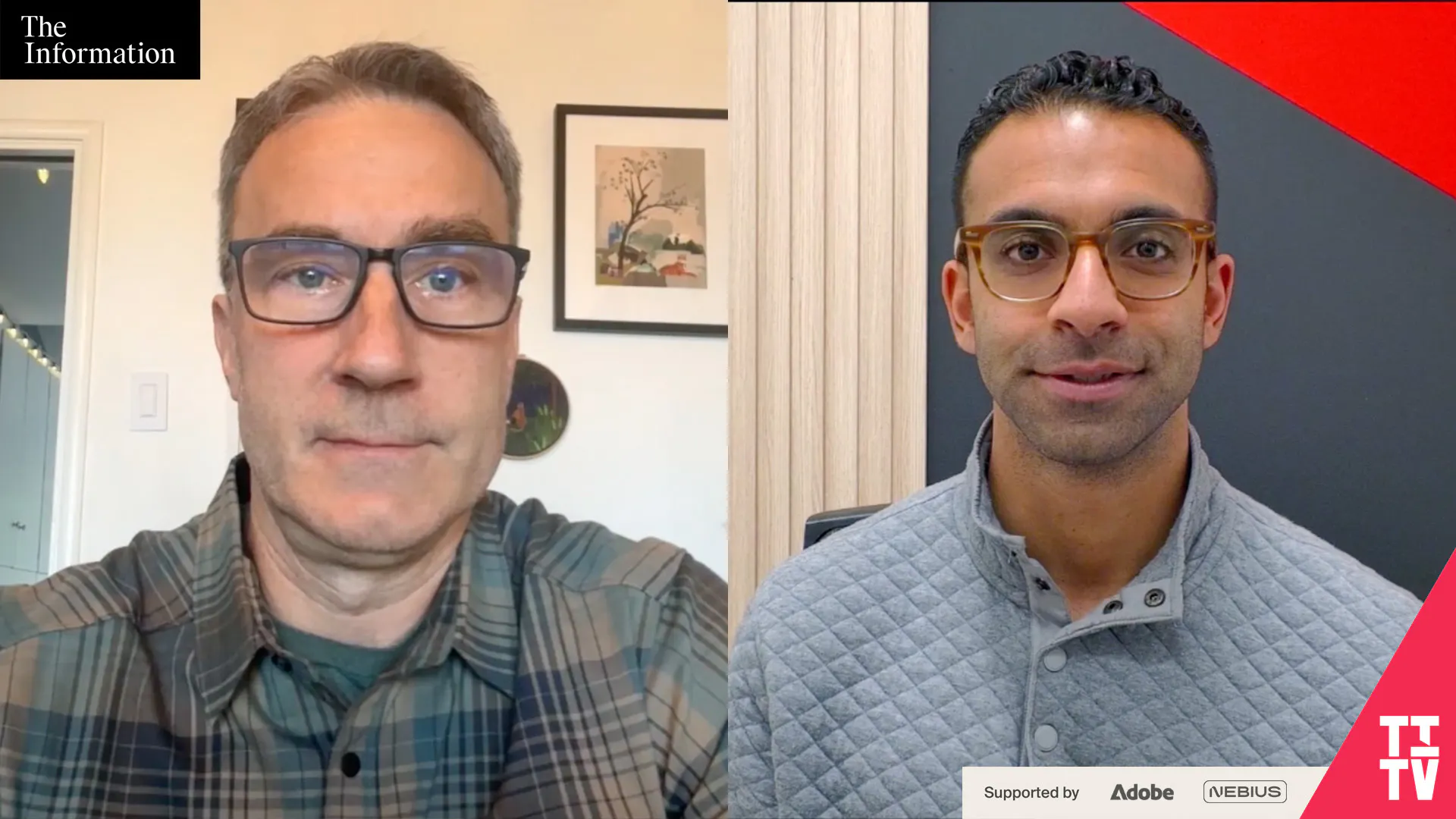
Check out today’s episode of TITV in which we unpack how SAP is responding to the corporate data wars.
Recommended Newsletter
Start your day with Applied AI, the newsletter from The Information that uncovers how leading businesses are leveraging AI to automate tasks across the board. Subscribe now for free to get it delivered straight to your inbox twice a week.
The Information and Aily Labs are convening an intimate group of pharma, CPG, and retail executives in Los Angeles to address the next phase of enterprise intelligence. Request an invite.
Save the date for The Information’s annual AI Agenda Live in San Francisco, where top AI researchers, founders, investors and executives come together for a day of conversations about the breakthroughs and applications shaping the future of AI.
Save the Date: The Information returns to Napa Valley October 27-28 to convene senior women across tech, media, and finance. The event will feature two days of intimate, candid conversations with the leaders navigating today’s global shifts.