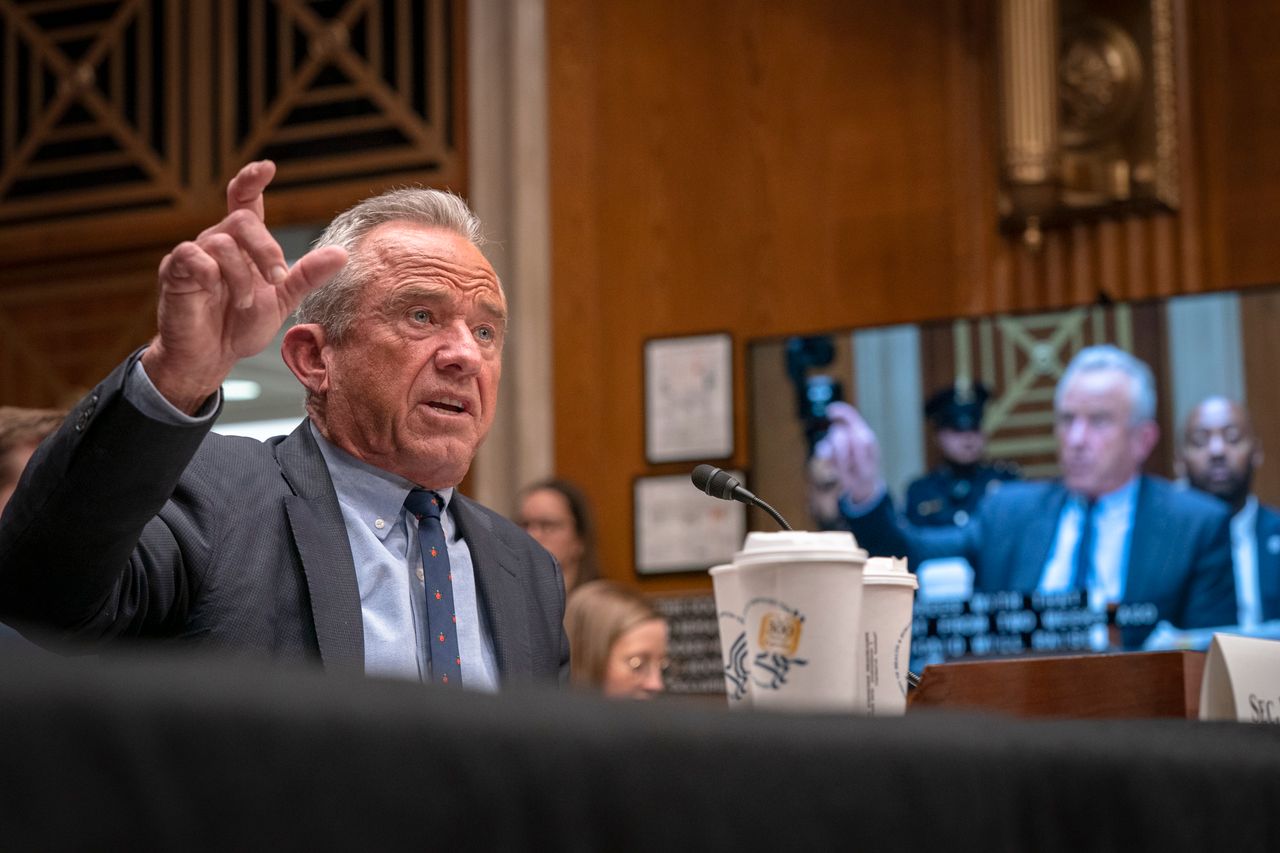
| |  | The Lead Brief | Senate Appropriations Committee Chairwoman Susan Collins (R-Maine), supported by a group of other Republican and Democratic senators, is pressuring the Trump administration to stop blocking two years of global vaccine funding that Congress approved. Lawmakers including former Senate majority leader Mitch McConnell (R-Kentucky), Lisa Murkowski (R-Alaska) and Patty Murray (D-Washington) asked in a letter to Secretary of State Marco Rubio why the department has not used a total of $600 million approved in fiscal years 2025 and 2026 for Gavi, the Vaccine Alliance. The vaccine alliance “plays a critical role in averting the spread of preventable diseases around the globe, and helps protect public health in our country by stopping outbreaks before they reach our borders,” the bipartisan group wrote. Senators said Gavi has prevented 20.6 million deaths since its inception in 2000. Congressional support endures “because of its proven success as a public-private partnership,” the letter said. The lawmakers said that the vaccine funding supports American jobs since the alliance buys more than $12.5 billion in U.S. goods and services. What’s next? Rubio is expected to testify before the House Appropriations Committee in the coming weeks before the panel plans to vote on its fiscal 2027 bill in June. By the numbers: Gavi’s funding has not grown much in recent years. In the fiscal years 2018 through 2023, Congress provided $290 million per year. In fiscal 2024, that grew to $300 million. Congress appropriated $300 million for the 2025 and 2026 fiscal years, but the administration did not send out that money, which expires on Sept. 30. The House Appropriations Committee approved a bill that would give another $300 million in funds for fiscal 2027. Gavi’s funding to lower- and middle-income countries comes from governments, private organizations and individuals — including the United Kingdom, the United States, Norway and the Gates Foundation — according to the nonpartisan health policy news, polling, and policy organization KFF. The U.S. pledged in 2024 to give almost $1.6 billion over five years, about 13 percent of the vaccine alliance’s funding through 2030. The administration’s refusal to provide the vaccine funding that Congress approved stems from concerns by Health Secretary Robert F. Kennedy Jr., including over the use of vaccines containing thimerosal, a preservative that inhibits the growth of bacteria. The Centers for Disease Control and Prevention calls thimerosal safe, but it was largely phased out in U.S. vaccines. Gavi still uses multidose vaccines containing thimerosal, in some cases for practical reasons in low-income nations: The multiple-dose vials require less refrigeration space. - Kennedy’s perspective: Gavi has not provided “the specific data, studies, or detailed accounting of how U.S. funds are used, and has declined to develop a plan to phase out thimerosal-containing vaccines despite a formal request,” said HHS spokesman Andrew Nixon in a statement. “As a result, the United States will withhold new funding and pause access to [Development Finance Corporation] financing until these concerns are addressed … . The United States is calling on Gavi to address these issues and strengthen public trust; until then, U.S. financial contributions will remain paused.”
- The vaccine alliance’s view: It’s not easy to remove the vaccines, according to a Gavi spokesperson. “Any decision to remove vaccines from the portfolio would require a decision from Gavi’s board, which in the past the U.S. has always been represented on,” said Gavi spokesperson Olly Cann.
If the organization received the promised U.S. funding, Gavi would be able to invest in two new vaccines that offer greater protection and do not contain thimerosal, Cann said. “Difficult decisions have had to be made” without the funds, Cann said. Cuts include funds for emergency vaccine stockpiles against diseases such as Ebola, cholera and meningitis. The group is also limiting prevention campaigns and vaccination against diseases such as malaria. No conversations between Gavi and the administration are scheduled. | 

_tstmp_1756933376-1920-1080.png)