| | Fighting erupts over control of the Strait of Hormuz, Vladimir Putin grows fearful of assassination ͏ ͏ ͏ ͏ ͏ ͏ |
| |  | Flagship |  |
| |
|
The World Today | 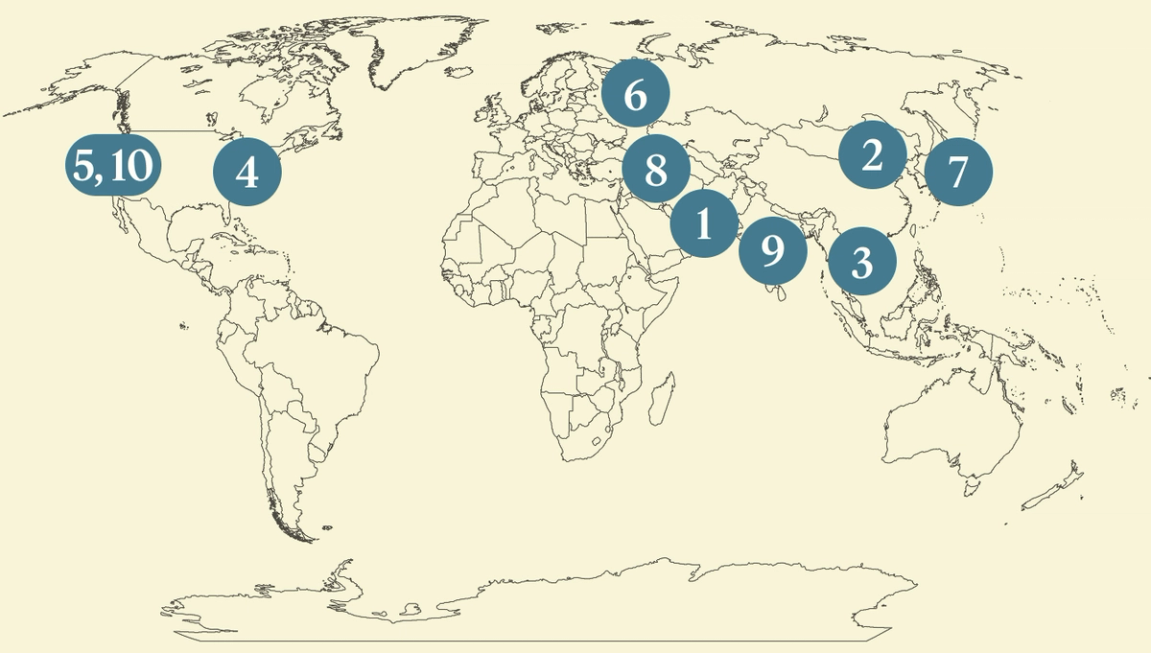 - Middle East truce in peril
- US-China sanctions fight
- SE Asia diversifies oil supply
- ‘Watershed’ Amazon move
- AI enterprise push ramps up
- Putin fears assassination
- Japan’s cardboard drones
- Starlink smuggling in Iran
- World Cup broadcast deadlock
- Google’s Gemini in cars
 A sprawling account of the deadliest pandemic in history. |
|
Fighting erupts in Strait of Hormuz |
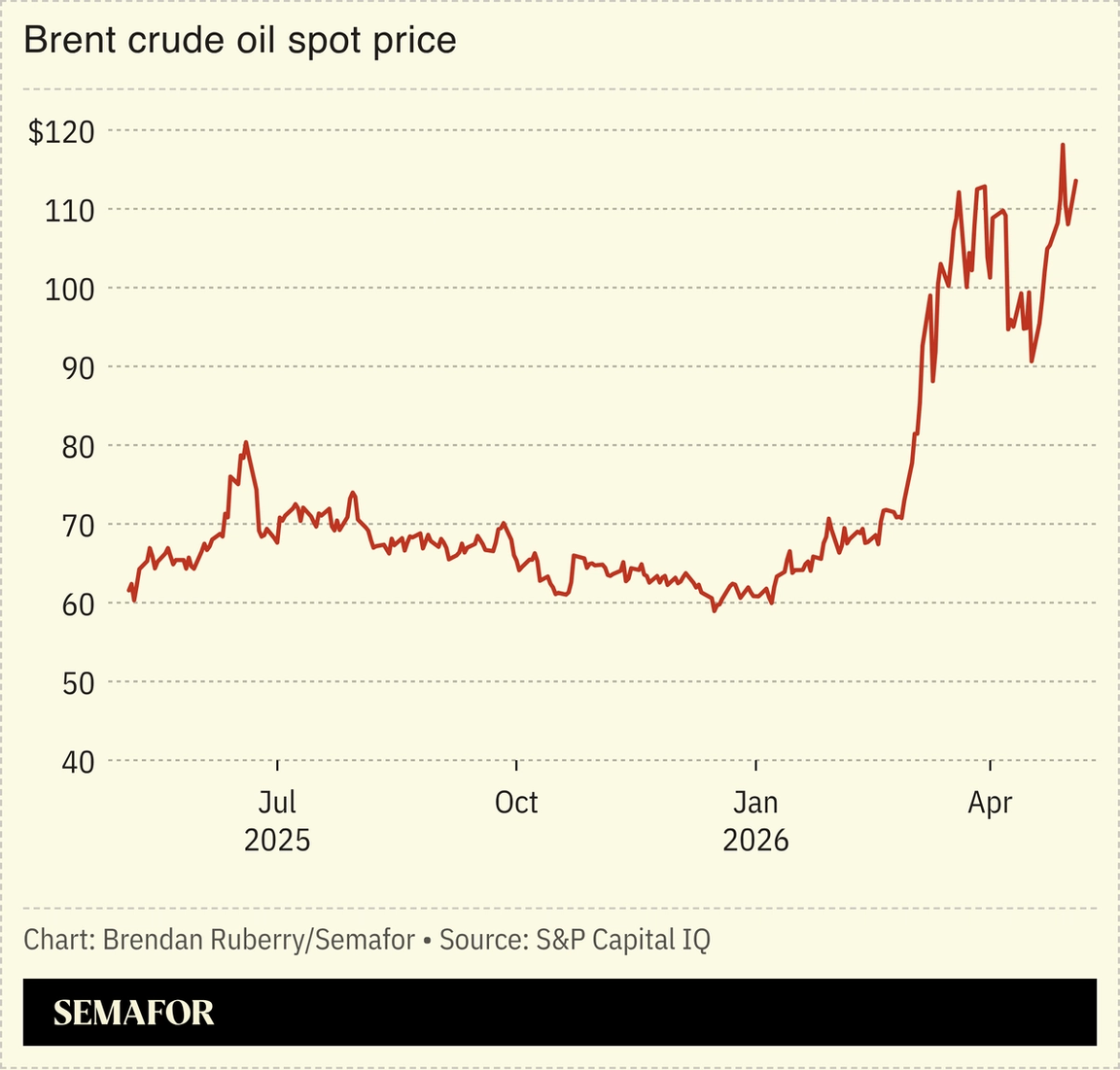 Oil prices jumped and US stocks fell after fighting erupted around the Persian Gulf on Monday, threatening a fragile ceasefire. The US military said it fought off attacks from Iran as it facilitated the passage of two American-flagged ships through the Strait of Hormuz; US President Donald Trump said Washington sank seven Iranian boats. The UAE was drawn into the hostilities, with Abu Dhabi reporting that an Iranian drone damaged a crucial oil hub. Trump is growing impatient over stalled negotiations with Tehran: “He doesn't want to sit still,” a senior US official told Axios. “He wants pressure. He wants a deal.” Some Republican senators are drafting an authorization of military force in case Trump reprises strikes, Semafor reported. |
|
US ramps up pressure on China over Iran |
 Evan Vucci/Reuters Evan Vucci/ReutersThe US on Monday ramped up pressure on China over the Iran war, setting up a showdown between the superpowers days before President Donald Trump’s planned visit to Beijing. Treasury Secretary Scott Bessent said Beijing’s purchases of Iranian crude amount to funding terrorism, after China told its companies to ignore American sanctions targeting private Chinese “teapot” refineries that purchase billions of dollars of Tehran’s oil. Bessent also called on China to help reopen the Strait of Hormuz. Both the US and China have been on the hunt for leverage ahead of their leaders’ summit, with Beijing viewing the Iran war as “having potentially strengthened its negotiating position,” CNN reported. |
|
Oil crisis reshapes energy flows |
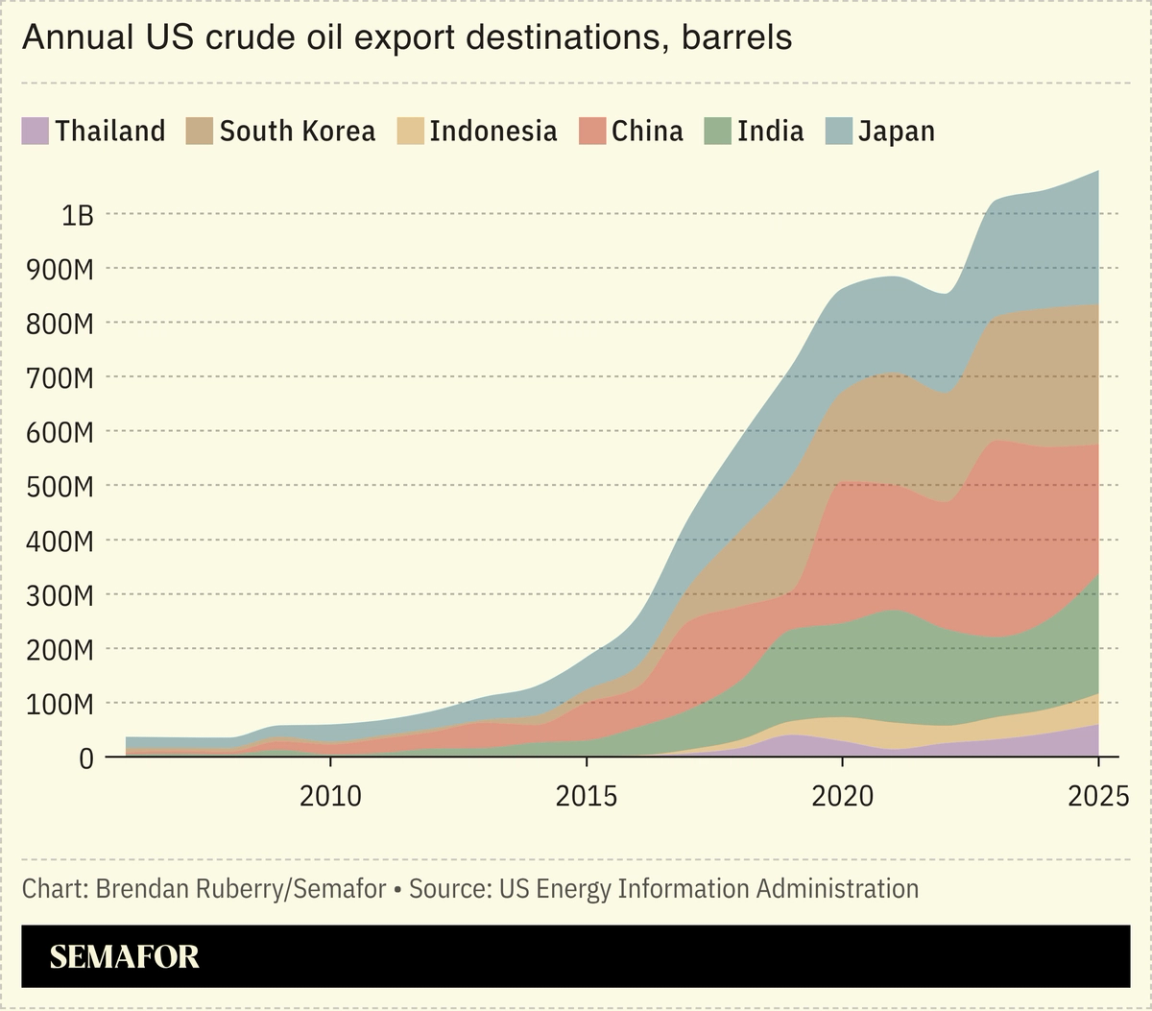 Southeast Asian countries, heavily reliant on Gulf oil imports, are diversifying their suppliers as they feel the crunch from two months of disruptions. Data shows countries like Thailand and Vietnam are tapping Brunei, Libya, and the US for barrels, in the latest sign of how the Iran war is reshaping global energy flows. The war has threatened to blunt the rapid growth of Southeast Asia’s economies, though the region’s exports have so far held up, driven by the tech industry, Nikkei reported. The US, meanwhile, has once again become the world’s top crude exporter, but some experts question whether US producers can keep up and if domestic inventories are depleting too quickly. |
|
Amazon takes on FedEx, UPS |
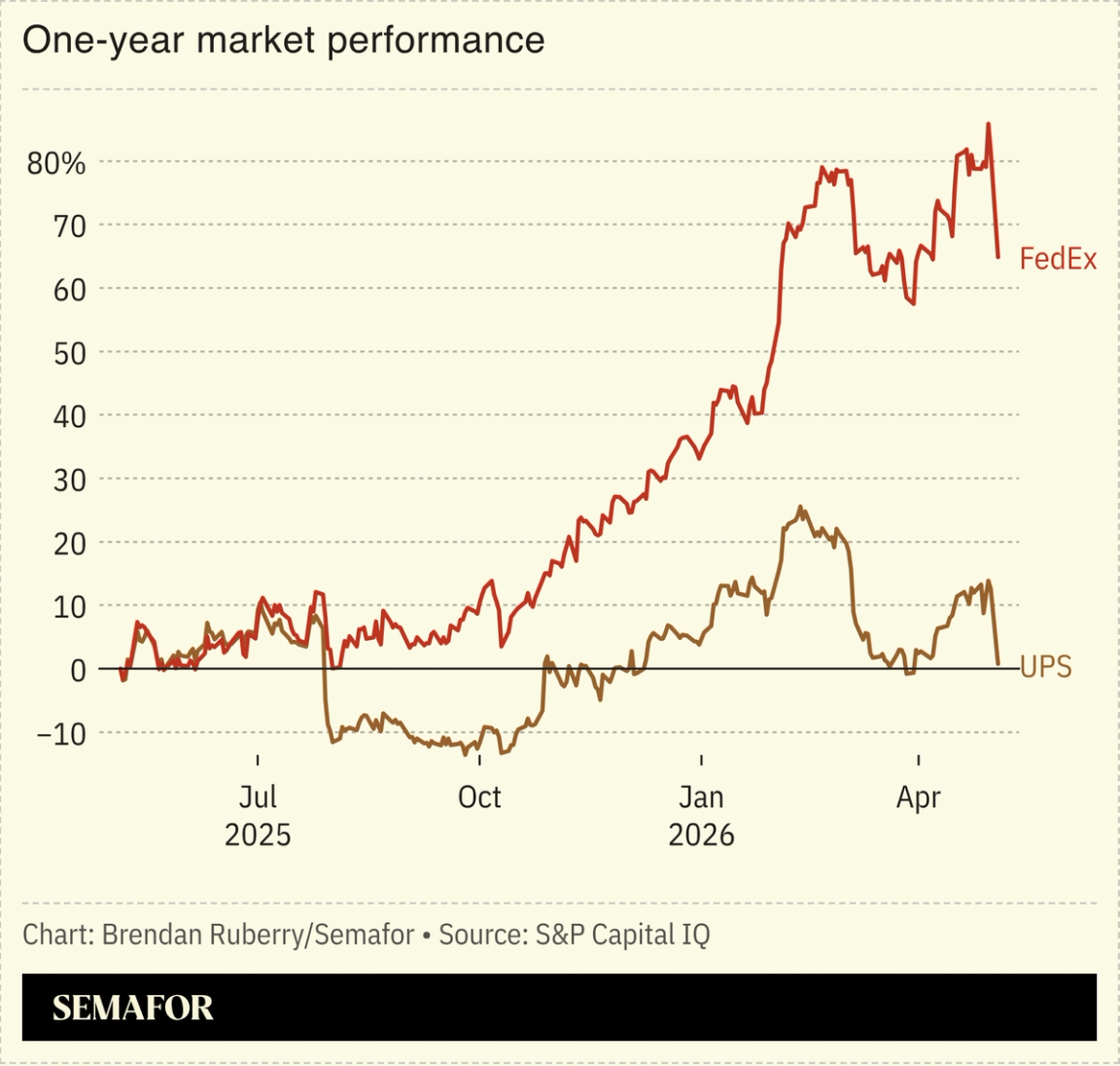 Amazon is deepening its push into logistics, in a massive challenge to incumbent parcel carriers. FedEx and UPS shares fell after Amazon announced it was allowing other businesses to use its extensive supply chain network to move and store goods. It’s “a shot across the bow to the entire transport market,” one analyst said; another called it a “watershed moment” for North American freight. Truckers, railroads, and warehouse operators could all take a hit. The freight industry is already grappling with turmoil stemming from the Iran war. FedEx and UPS have both raised fuel fees as energy supply disruptions make ground and air commerce more expensive. |
|
Rival AI firms ramp up enterprise push |
 Kylie Cooper/Denis Balibouse/Reuters Kylie Cooper/Denis Balibouse/ReutersOpenAI and Anthropic are both partnering with private equity firms in a bid to deploy their AI products to more businesses. OpenAI is forming a $10 billion venture, raising funding from investors including Brookfield and Bain Capital, Bloomberg reported. Anthropic on Monday announced a $1.5 billion joint venture with Wall Street firms that is expected to act as a consulting arm for Anthropic. The rival AI startups are racing to win over more enterprise customers — 20% of US businesses have adopted AI tools, mostly to “supplement a small number of employee work tasks,” Goldman Sachs analysts wrote. Both companies are focusing on a push into sectors like financial services and healthcare. |
|
Putin fearful of assassination |
 Sputnik/Alexander Kazakov/Pool via Reuters Sputnik/Alexander Kazakov/Pool via ReutersRussian President Vladimir Putin is reportedly increasingly fearful of assassination attempts. The Kremlin has enacted new security measures — staffers working around Putin aren’t allowed to use cell phones, and the president and his family have stopped visiting their Moscow residences, according to Russian investigative outlet Important Stories, citing an EU intelligence report. The Financial Times similarly reported that Putin is spending more time in underground bunkers managing the war against Ukraine, for fear of being targeted by drones. The heightened security, and Putin’s isolation, comes as Ukraine’s reach extends far beyond the front lines. Moscow is scaling back its Victory Day parade on Friday amid concerns of strikes; Ukrainian drones have attacked the capital three nights in a row. |
|
Japan deploys cheap cardboard drones |
 Shinjirō Koizumi/X Shinjirō Koizumi/XJapan began deploying ultra-low-cost expendable cardboard drones across its military, the latest move in a drone price war. AirKamuy 150s reportedly cost around $2,000 each, roughly a tenth of the price of even the cheapest Shahed drones used by Russian and Iranian forces, Tom’s Hardware reported; 500 flat-packed units fit in a shipping container and can be assembled within 10 minutes. Inexpensive drones have changed the economics of warfare: Destroying them with million-dollar interceptor missiles is like “throwing Ferraris at frisbees,” a US lawmaker said recently. Japan’s unmanned aircraft can carry a three-pound payload up to 50 miles, and could be deployed in swarms to overwhelm defenses and radar, or intercept other slow-moving drones. |
|
 On Wednesday, May 20, Rep. Tom Emmer, R-Minn., House Majority Whip and Vice Chairman of the House Financial Services Subcommittee, will join Semafor for the Banking on the Future Forum. The global financial landscape is evolving at a pace unseen in previous years, propelled by the adoption of new technologies and rapid innovation. As Washington’s regulatory approach evolves, new opportunities are emerging, but questions remain around how these policy shifts will impact the industry and how consumers access services. Semafor editors will host on-the-record conversations with Jonathan V. Gould, Comptroller of the Currency; Rep. French Hill, R-Ark., Chairman of the House Financial Services Committee; Rep. Bryan Steil, R-Wis.; Sarah Levy, CEO of Betterment; and additional industry leaders, on how policy and technology are steering the industry’s trajectory. Join us as we examine how evolving regulations are shaping innovation and what they signal for the future of financial technology. |
|
Iran cracks down on Starlink use |
 Steve Nesius/Reuters Steve Nesius/ReutersIran has arrested at least 100 people for using Starlink terminals amid the country’s ongoing internet blackout. Authorities cut off internet access more than two months ago following US and Israeli attacks, and Iranians are now limited to a buggy official network that provides banking, delivery, and ride-hailing services, plus state-run media. The blackout is estimated to have cost the economy more than $1.8 billion. There are roughly 50,000 Starlink terminals in Iran, the BBC reported, as an underground network smuggles the unblockable satellite internet terminals into the country. Using, buying, or selling them carries a two-year jail sentence; one businessman reportedly died in police custody after protesting his brother’s detention for using a terminal. |
|
World Cup viewing in jeopardy in India |
 Adnan Abidi/Reuters Adnan Abidi/ReutersThe FIFA World Cup may not be shown in the world’s two most populous countries because of holdups on broadcast rights agreements. In India, FIFA rejected a $20 million offer from a media giant led by Reliance and Disney; the offering was a fraction of what the global soccer body wants, Reuters reported. And there is no confirmed broadcast agreement for China, which is unusual just weeks before the tournament kicks off. In 2022, China accounted for half of all World Cup viewing hours on digital and social platforms. “I won’t call it a stalemate,” an Indian sports media analyst said. “It’s more like we are at the end of a chess game with a couple of moves left.” |
|
Google to upgrade cars with Gemini AI |
 Jonathan Ernst/Reuters Jonathan Ernst/ReutersGoogle will roll out its Gemini AI model to cars that use its software. Built-in Google Assistant has been available since 2020, used in millions of US cars, but the change will allow for more conversational control of the car’s functions. All General Motors cars built since 2022 will get the upgrade. Meanwhile, many car manufacturers are making what may seem like a contradictory move, removing high-tech touchscreens and replacing them with old-school physical buttons. But both are aimed, from different ends of the technology spectrum, at the same goal — of reducing the time and concentration required for drivers to adjust the volume of Don’t Stop Believin’ or press “decline incoming call.” |
|
|


