| | The war in Iran hits US Republicans’ polling, Europe steps up its diplomatic push, and research find͏ ͏ ͏ ͏ ͏ ͏ |
| |  | Flagship |  |
| |
|
The World Today | 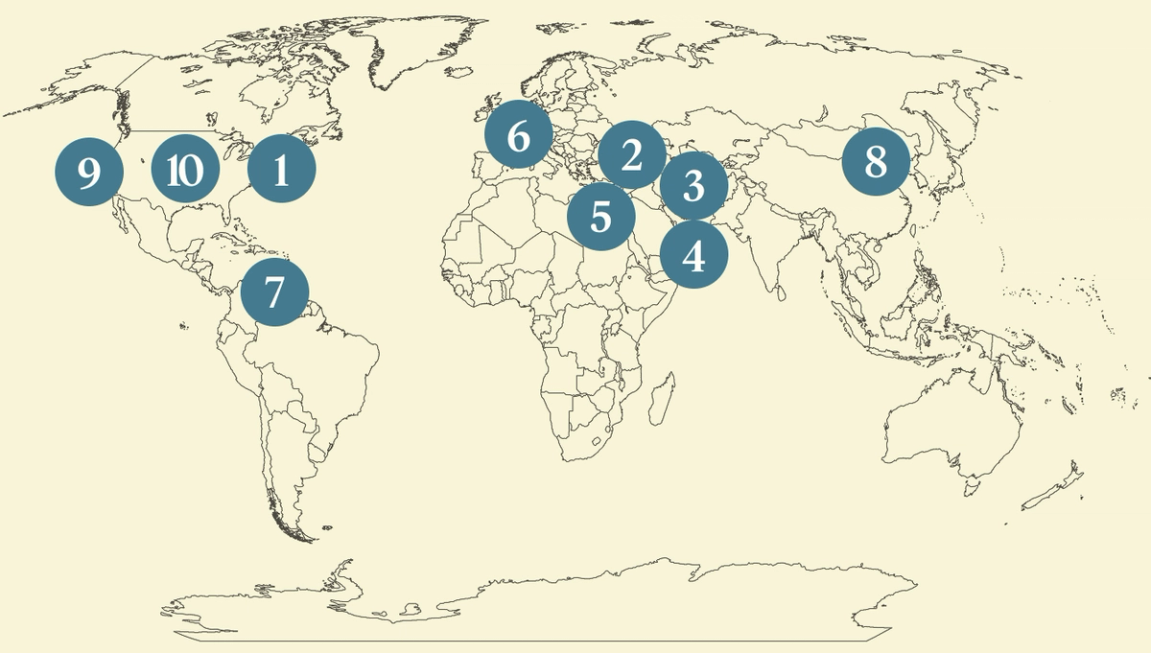 - US support for war wanes
- Europe’s diplomatic push
- Iran’s domestic crackdown
- OPEC+ boosts production
- Egypt increases gas prices
- Heat pump, EV sales rise
- Venezuela’s oil output up
- China focuses on robots
- AI changes artists’ work
- Phone bans’ limited impact
 The London Review of Substacks, and a claustrophobic and slow-moving read from Ann Leckie. |
|
US support for Iran war wanes at home |
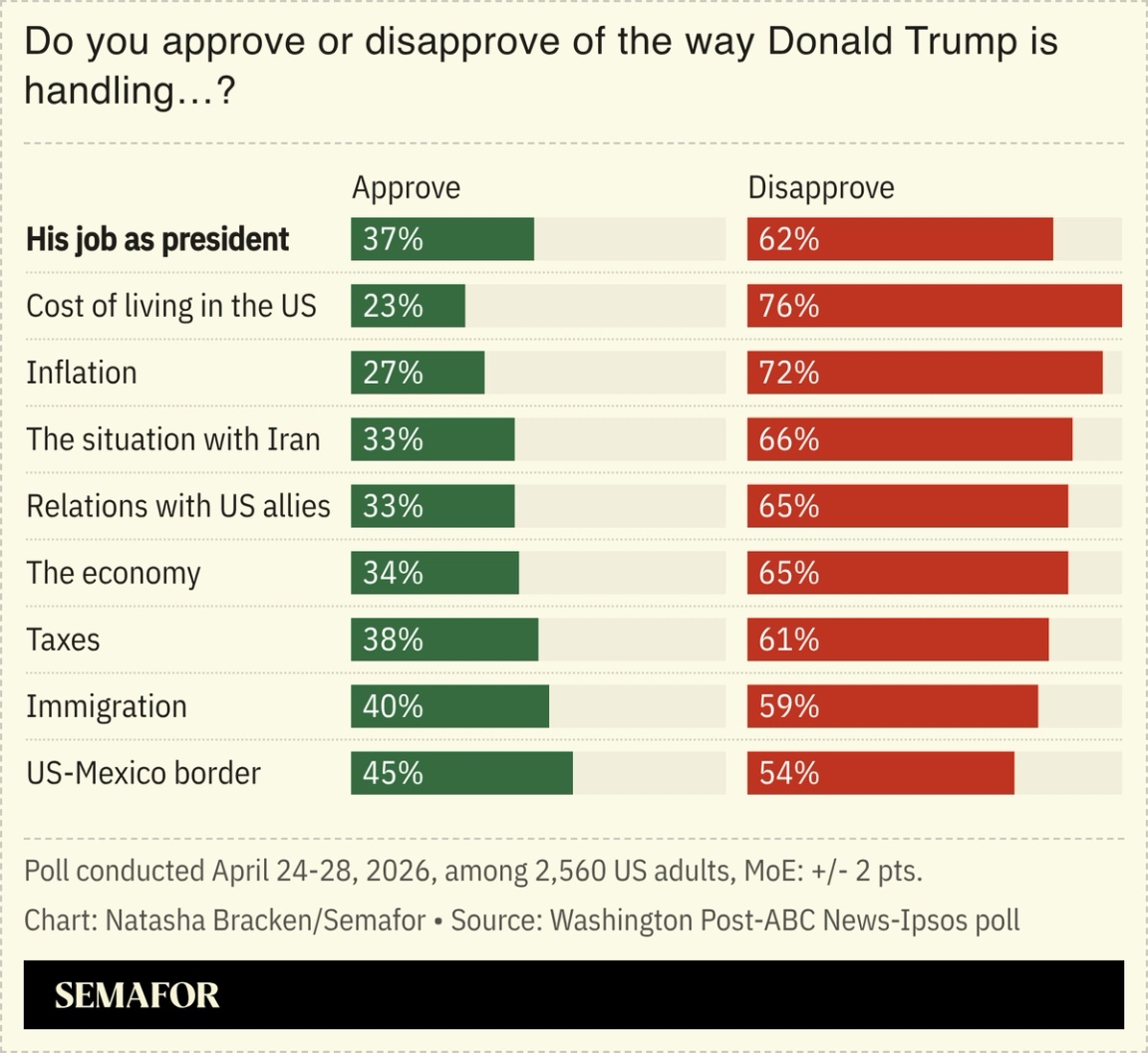 Republican lawmakers are working to allow US President Donald Trump to extend the Iran war. The War Powers Resolution says the president can only wage war for 60 days without Congressional approval. The deadline is up, but some Senate Republicans argue that the ceasefire resets the clock, Semafor reported. Regardless of whether that legal argument stands up, the war is politically toxic for Republicans. A new poll found Trump’s disapproval rating at its highest. Even young men, staunch supporters in 2024, are turning away; just 28% approve. “Virile vibes are all very well,” The Economist reported, “but young men have practical concerns, too.” The war and Trump’s tariffs have pushed up prices, making it harder for them to live independently. |
|
Europe seeks new global allies |
 Stefan Rousseau/Pool via Reuters Stefan Rousseau/Pool via ReutersEurope moved to widen its diplomatic circles, hosting a key summit in traditionally Russian-allied Armenia that Canadian Prime Minister Mark Carney also attended. The European Political Community summit was founded in 2022 after Russia invaded Ukraine. Armenia’s involvement is a sign of its growing independence from Moscow, as Yerevan seeks closer EU ties in the wake of a 2023 attack by Azerbaijan that Russia did nothing to stop. Carney, the first non-European leader to attend, similarly represents defiance of Washington: Carney is “a figurehead” for countries standing up to US President Donald Trump, France 24 reported. Europe is making more concrete moves, too. Germany has ramped up military manufacturing, and now produces more conventional ammunition than the US. |
|
Iran tightens domestic crackdown |
 Majid Asgaripour/WANA via Reuters Majid Asgaripour/WANA via ReutersIran’s hardline regime appears more entrenched than ever, prompting fears that any window for political liberalization in the country is now closed. Though US President Donald Trump had vowed to replace Tehran’s rulers at the start of his war in the country, those promises have quieted as Washington seeks an off-ramp from what is increasingly a military quagmire. Thousands of political dissidents across Iran are believed to have been arrested during the war, while executions have surged to their highest level in 30 years. Many fear Tehran is in a vengeful mood after anti-regime protests following the killing of former supreme leader Ali Khamenei at the outset of the conflict. “I think we’re living on borrowed time,” one dissident told the BBC. |
|
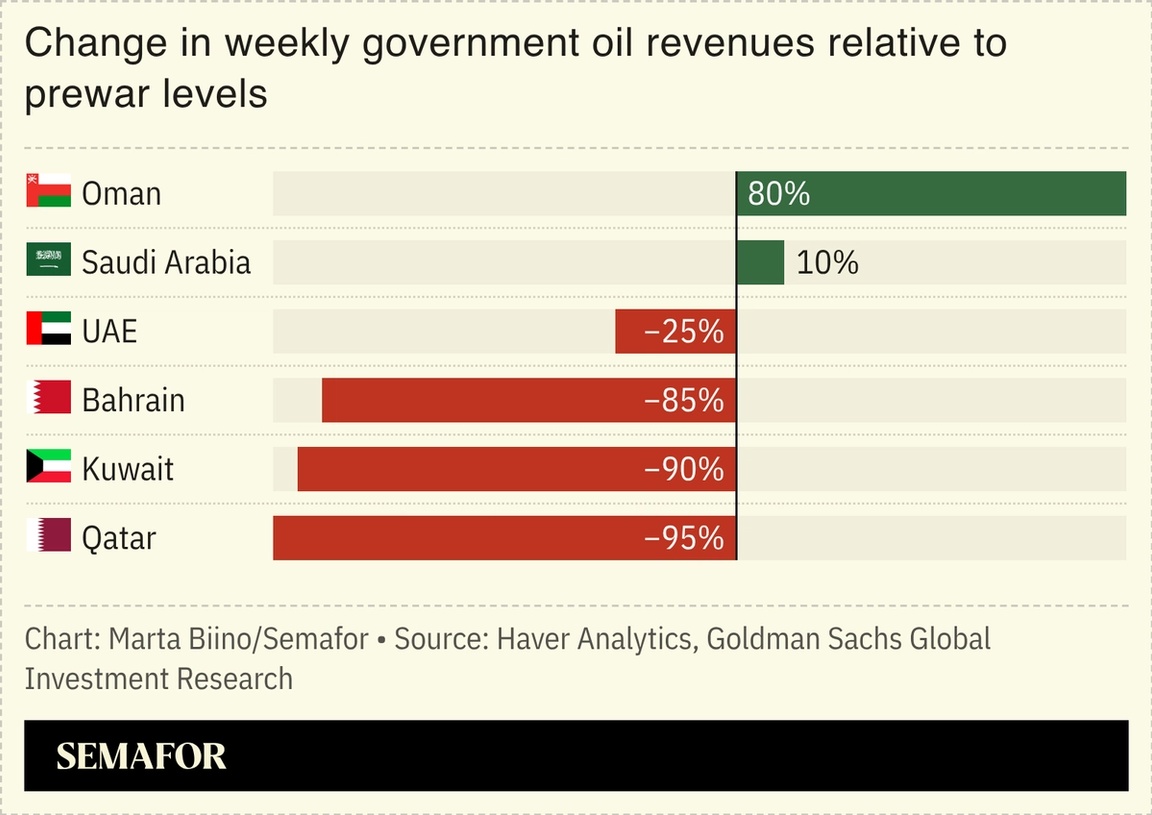 OPEC+ agreed to boost output in June to reassure buyers it is conducting business as usual after a series of setbacks. The move is largely symbolic — the extra 188,000 barrels a day is modest, and the closure of the Strait of Hormuz means little will reach its destination anyway. But the oil cartel is in turmoil, both because of disruption from the Iran war and because the United Arab Emirates, a central member, left last week citing unreasonable interference with production. The Gulf’s economy in general has suffered since the war began; Dubai airport, the world’s busiest international hub, saw a 66% drop in traffic year-on-year last month, Bloomberg reported, as flights divert around the region over safety fears. |
|
Egypt increases industrial gas prices |
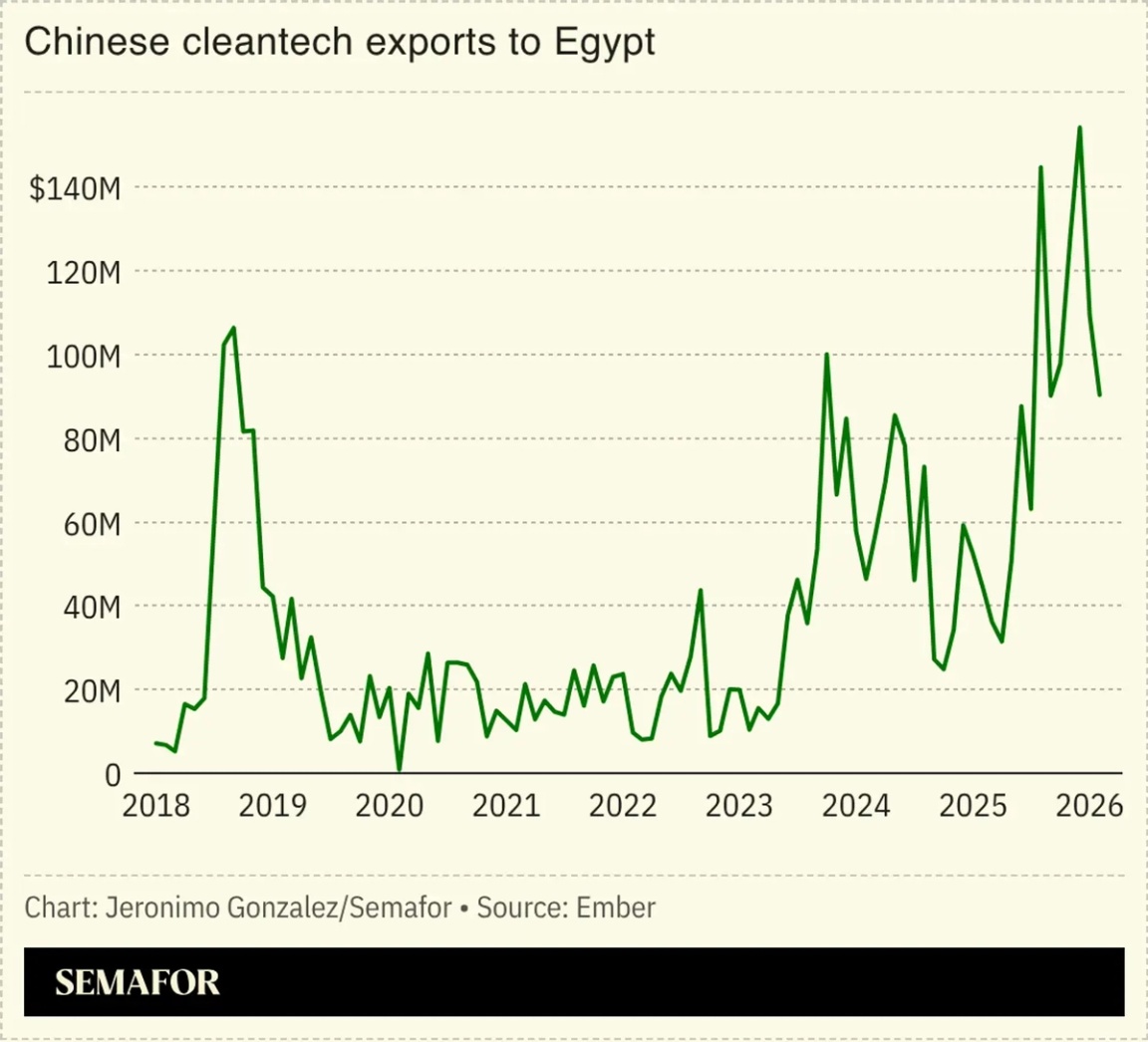 Egypt raised industrial gas prices as it looks to contain the fallout from the Iran war. The Middle East’s most populous nation imports the vast majority of its fuels, and is particularly vulnerable to the energy crisis sparked by the conflict. In response, it has secured an $8 billion emergency lifeline from the International Monetary Fund. Though the financing has eased some of the pressure, analysts have warned that no quick fixes exist for Egypt’s import dependency, forcing Cairo to turn to Chinese green tech to boost long-term renewable energy production and self-reliance. “Egypt’s ability — with Chinese assistance — to reengineer its power sector could provide a template for… dozens of countries,” Semafor’s energy editor wrote. |
|
Global clean tech sales soar |
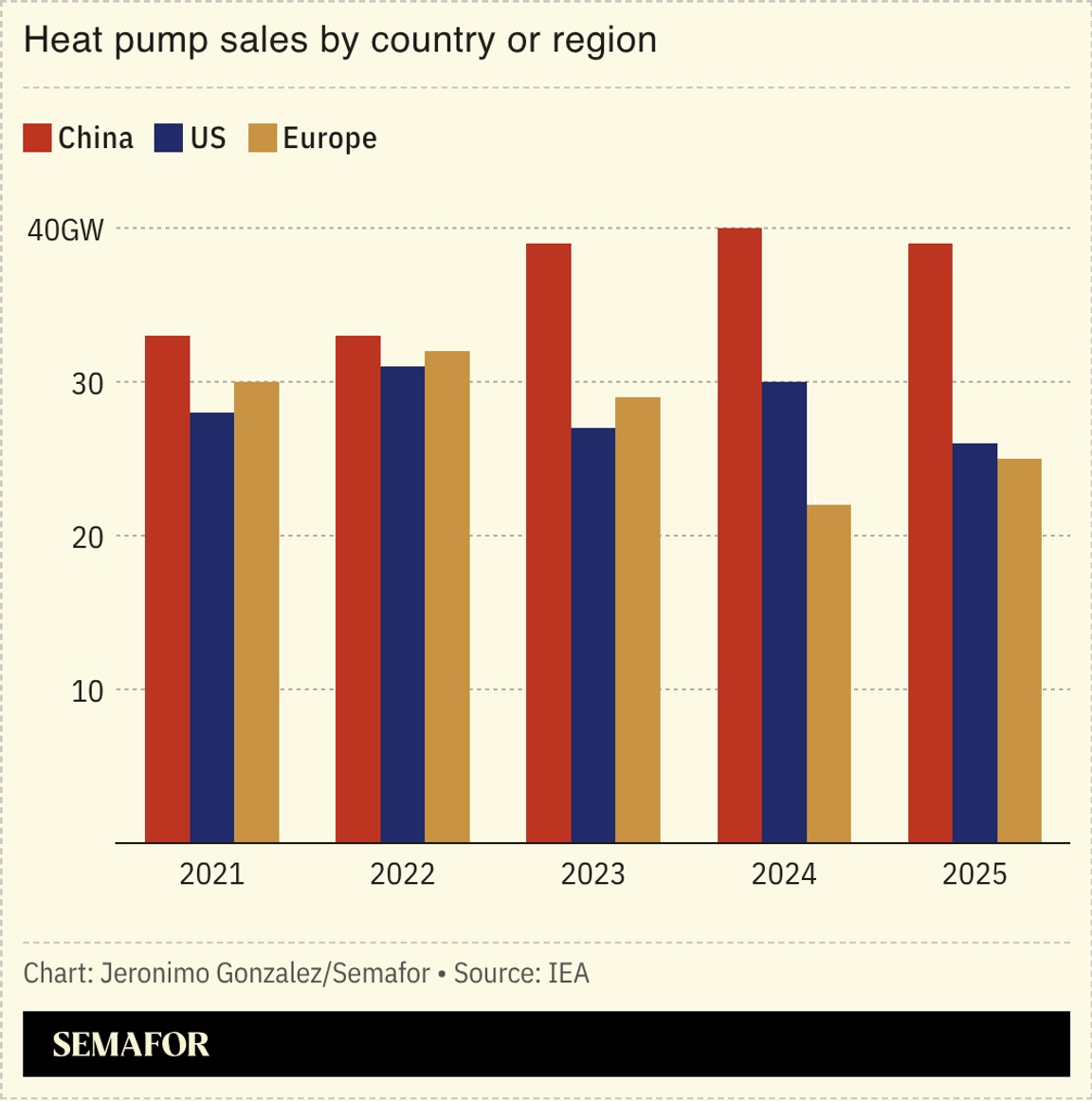 European heat pump sales are up, while African, Asian, and Latin American countries are turning to EVs as the Iran war drives fossil-fuel price hikes. Heat pump sales rose in Europe in 2022 after Russia’s invasion of Ukraine sparked an energy shock, but numbers fell again as some countries removed subsidies. First-quarter sales across the continent are now up 16.5% year-on-year with larger bumps in major markets such as France and Germany. Meanwhile, 18% of cars sold in Costa Rica in the first quarter were electric; one lawmaker cited “energy sovereignty” as a motivator, and Chinese EV sales are booming elsewhere across the developing world. Global investments in clean power have risen too, at their fastest pace in five years. |
|
 He went from selling his own plasma to running a YouTube channel with over 7 million subscribers. Johnny Harris, YouTube creator and Newpress cofounder, joins this week’s Mixed Signals to talk about how he built a sustainable business around difficult topics without chasing the outrage that drives so much attention online, and why millions of people are obsessed with longform video explainers. Listen to the latest episode of Mixed Signals now. |
|
Venezuela oil exports boom |
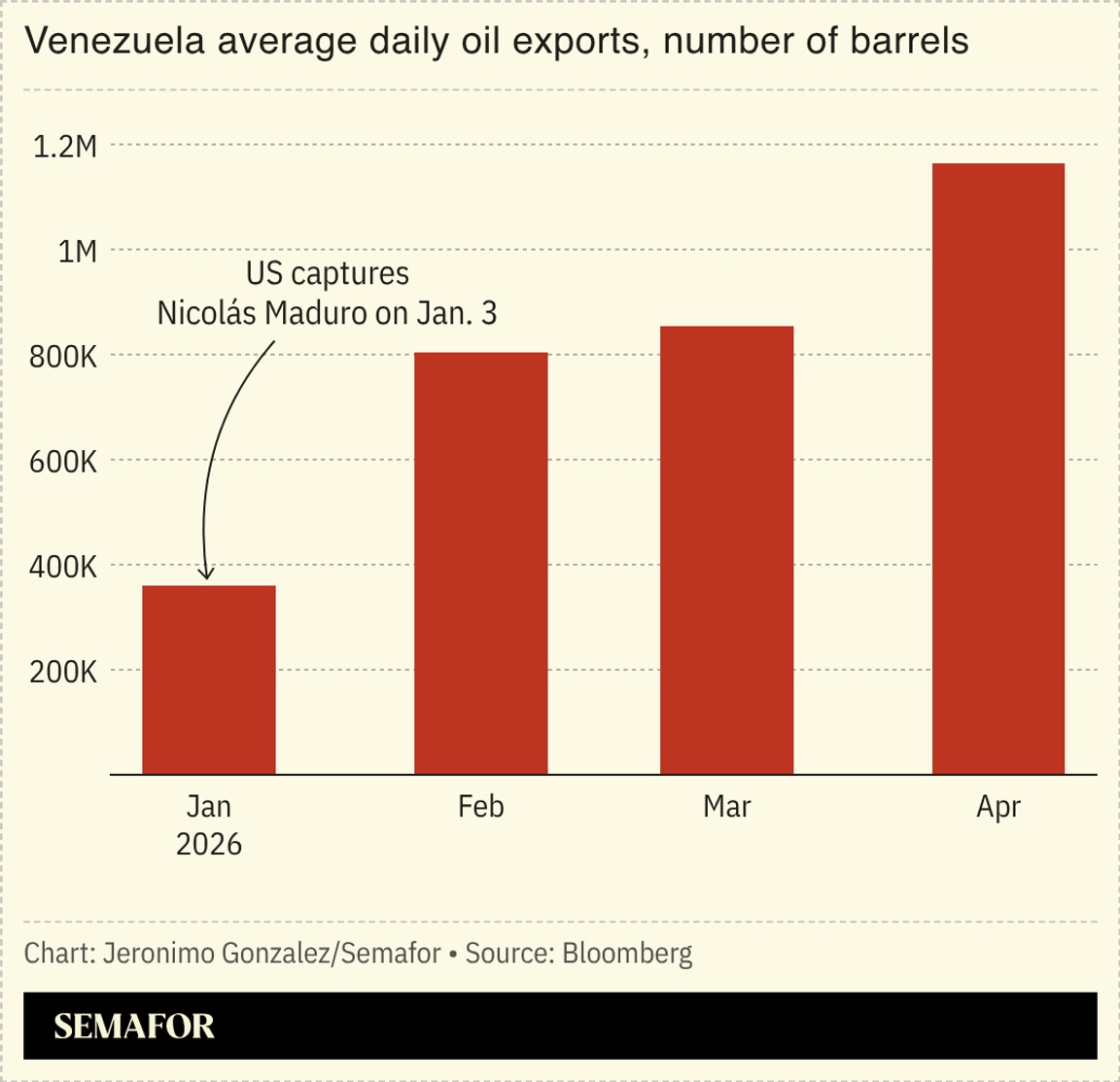 Venezuela’s oil exports reached their highest level since 2018, a surge that could have major downstream geopolitical consequences. Crude production in Venezuela — which holds the world’s largest oil reserves — has surged since the US captured former President Nicolás Maduro and replaced him with a leader who agreed to Washington’s demands to open the oil industry to private investment. The easing of restrictions has swayed some of the world’s biggest firms, including Exxon, whose CEO had previously said Venezuela was “uninvestable.” Venezuelan oil exports to India, one of the biggest buyers of Russian oil, have already risen considerably, weakening the Kremlin’s hand just as Ukraine seeks to reduce its export capacity via attacks on infrastructure. |
|
Investors bullish on humanoid robots |
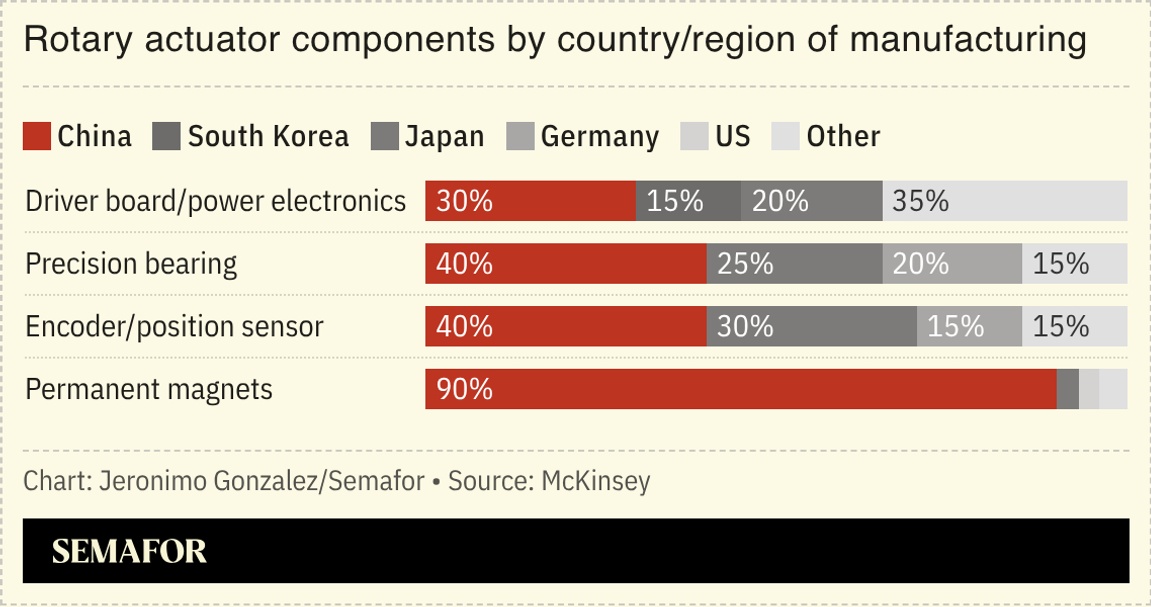 Chinese humanoid robot maker Linkerbot is seeking investment at a $6 billion valuation, double the level it raised money at only last week, highlighting investor appetite to enter the fast-growing industry. Beijing has made dominating the humanoid robot sector a national priority, committing almost $140 billion in state venture capital funds to back it and other high-tech industries. Though some analysts question the commercial viability of humanoid robotics, investors remain bullish. Meanwhile, some experts say China’s second-tier position in AI development compared to the West may lead to a globally bifurcated ecosystem: “China may reach hardware scale and early cost compression,” but US and European dominance in AI could lead to greater deployments there, consultancy McKinsey said. |
|
 A photo of AI-generated art. Brendan McDermid/Reuters A photo of AI-generated art. Brendan McDermid/ReutersAI is not — yet — reducing artists’ employment, but it is changing how they work, research found. Analysis of Gallup polling data established which artistic occupations are most exposed to AI: Outputs from many composers or art directors, for instance, could plausibly be done by AI, while dancers would be far harder to replace. But the research found that even the most AI-exposed creators were putting in slightly more hours in 2024 than in 2022, suggesting AI was not reducing their workload. Instead, artists reported using the technology somewhat more than the national average, often to experiment with ideas, generate drafts, or organize workflow. Technology has changed art before — some predicted gramophones and cameras would replace live music and painting. |
|
|


