Lumina Foundation is working to increase the share of adults in the U.S. labor force with college degrees or other credentials of value leading to economic prosperity.
"Destiny" is 22 years old, caring for her two-year-old son, and working part-time at a grocery store while taking classes at her local community college when her landlord begins the eviction process. She's two months behind on rent after her car broke down, causing her to miss several shifts, a financial shock that parenting students, with little cushion for emergencies, are especially vulnerable to.
Destiny is studying to become a nurse, a job with steady income and career growth. She is, by any measure, doing everything right to care for her family and build a more stable future through higher education. But doing everything right still was not enough to protect her young family from losing their housing. For too many parenting students, Destiny’s experience is not an outlier.
Though the long-term effects of artificial intelligence on the job market remain to be seen, the rapidly developing technology has already begun changing how employers discuss work and hiring. Colleges now face the daunting task of preparing students for occupations that could look radically different in a relatively short timeframe.
For some college leaders, that task entails partnering with local businesses to provide students experience solving real-world problems, simplifying how they obtain credit for internship work, and arming them with durable skills like problem-solving, collaboration, and creativity, as well as character skills like fortitude and ethical judgment.
Numerous studies have indicated that education leads to better outcomes for people getting out of prison—and prevents them from going back. In Illinois, a small percentage of people in custody are allowed to take college classes while they serve time. But when they do get out and want to continue their education, there’s another barrier to face.
That barrier is a criminal history review, a process universities say is about campus safety. For applicants with a record, however, it can feel like the door to higher ed was never really open.
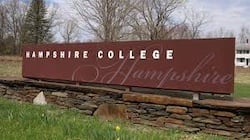
Hampshire College in Western Massachusetts says it will close after the fall semester due to declining enrollment. The college's mission was to radically reimagine liberal arts education. It has no majors, and students design their own curriculum. The news of Hampshire's closing is part of a trend. A new estimate projects that more than a quarter of private, nonprofit, four-year colleges and universities are at risk of closing in the next decade.
When students in the second-ever class at Hampshire arrived on campus in the fall of 1971, among them was Ken Burns, not yet the prolific documentary filmmaker he would become. In this interview, Burns reflects on the closing of his alma mater, as well as the broader declines in college enrollment, universities cutting their humanities programs, and the government canceling grants for the arts.
When artificial intelligence is everywhere, today’s students might think that the technology has made the liberal arts irrelevant. Yet this centuries-old educational tradition is precisely what they will need to thrive, personally and professionally, in the age of AI.
True, AI’s remarkable capacity is mesmerizing, from passing the bar exam and analyzing medical records to writing music or literary analysis. Such outputs may resemble creativity and reasoning. But the human advantage, which liberal arts education still cultivates, remains the ability to scrutinize those outputs: to assess their originality, the rigor of their analysis, and their quality.
Across the country—from Idaho to Florida—state governments are cutting budgets, weakening or eliminating tenure, and intervening in decisions about what can be taught. In the process, state governments are chipping away at long-standing ideas about academic freedom.
If the strain on healthcare workers during the “Great Resignation” felt severe, or if the politicization of public schools seemed troubling, something similar is now unfolding in higher education. Over the past year, states have made it easier to fire faculty, proposed or passed tenure bans, restricted course content, and, in some cases, limited hiring from abroad.