|
 |


There is an enormous amount of misinformation circulating about former Special Counsel Bob Mueller’s investigation into Russian attempts to influence the 2016 U.S. election and the effort to obstruct that investigation following his death. Tweets honoring Mueller’s life of service to his country are now knee-deep in trolls and MAGA comments that have no relationship to the well-documented facts.
So, let’s go back to contemporary sources and make sure we have a clear picture of what investigators found and what the Report said about Donald Trump. We’ll also look at why Mueller, nonetheless, didn’t indict Trump or even weigh in on whether he should be indicted. That decision drew a lot of criticism.
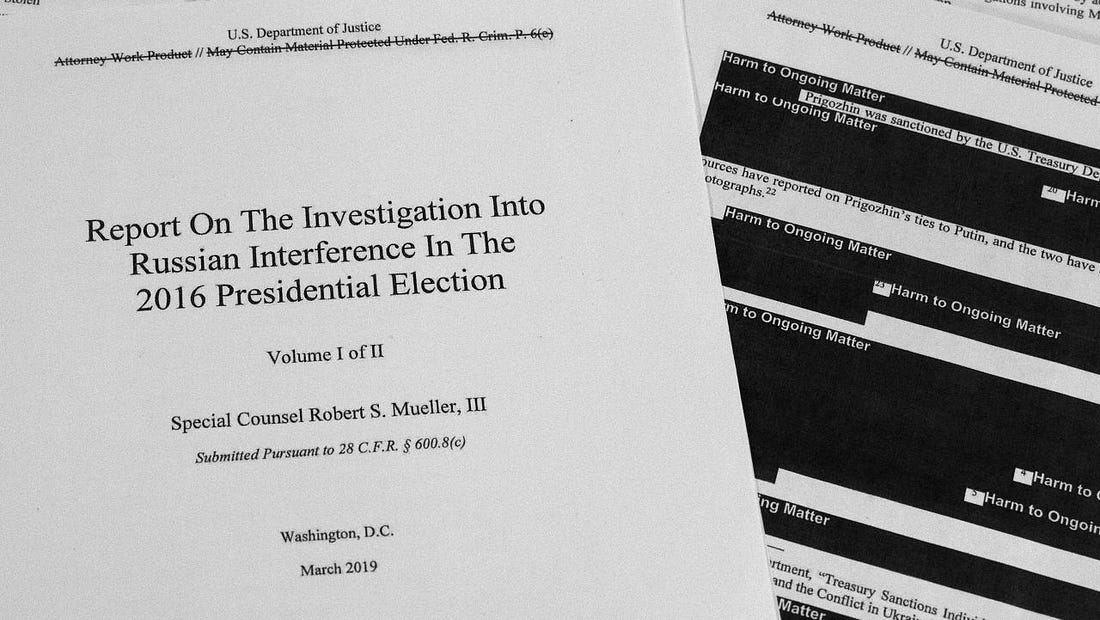 |
Some of the key results of the Special Counsel investigation:
Thirty-seven indictments, including six former Trump advisers, 26 Russian nationals, a California man, a London-based lawyer, and three Russian companies. Seven were convicted. And perhaps most significantly, Mueller developed compelling evidence that Trump obstructed justice. Repeatedly. Mueller said publicly that the investigation did not exonerate Trump.
Among the specifics: Trump associates repeatedly lied to investigators about their contacts with Russians, and President Trump refused to answer questions about his efforts to impede federal proceedings and influence the testimony of witnesses.
A statement signed by over 1,000 former federal prosecutors, including me, concluded that any other person who engaged in the obstructive conduct attributed to Trump would have been indicted.
Barb McQuade and I wrote a summary of the part of the investigation that delved into obstruction. You can read it here. “Attorney General William Barr did the country a disservice,” we wrote, “when he withheld the Mueller report from public view for weeks, while claiming Mueller concluded there was ‘no collusion, no obstruction.’ That is not what the report says.” We noted, “We start by acknowledging Mueller’s decision that he was bound by DOJ policy that prohibits indictment of a sitting president. Whether that policy is correct or not, prosecutors must follow the rules. Mueller did.”
We also laid out some of Trump’s most significant obstructive conduct per the Report:
Trump asked his White House counsel, Don McGahn, to arrange for Mueller to be fired in June, after he started work. Trump denied he’d done this when a reporter broke the story about the requested firing in 2018.
Trump tried to get McGahn to deny reporting about his conduct as it surfaced, and once threatened to fire McGahn if he wouldn’t. McGahn refused. Trump summoned McGahn to the Oval Office and ordered him to create a false record that denied that Trump ordered him to fire Mueller, which would be a federal felony if proven.
After Attorney General Jeff Sessions recused from overseeing the investigation, Trump repeatedly tried to compel him to “unrecuse” (no such thing exists) and tried to get Corey Lewandowski to threaten Sessions that he would be fired if he wouldn’t. Trump wanted Sessions to limit the Special Counsel to investigating future elections. That would have meant no investigation into Russian interference in 2016, an information gap that would have left the country vulnerable to future attacks.
The president engaged in witness tampering, with one of the worst examples being dangling the prospect of a pardon to keep Paul Manafort from cooperating with the Special Counsel’s investigation.
Of course, the fact that Mueller was able to investigate and uncover much of this means Trump didn’t succeed with his efforts to obstruct. Some people suggested that means what Trump did wasn’t all that bad. As Barb and I wrote at the time, “Nothing could be further from the truth. To protect the integrity of our criminal justice system, prosecutors are able to hold accountable people who attempt to interfere with an investigation, not just people who have the luck to be successful. Allowing an individual to avoid accountability because they weren’t successful or because investigators were unable to develop proof of underlying crimes would ensure that the most successful obstructors avoid justice.”
It’s especially important to remember, as Trump, today, launches attack after attack against the investigation into the 2016 election and the people who conducted it, that the Mueller investigation confirmed the intelligence community’s conclusion that Russia was behind the attack on the DNC’s computers and developed important and specific information about the full nature of the attack Russia launched. Mueller’s charges included computer hacking, conspiracy, and financial crimes. Given that context, it’s shocking that in order to try to protect himself, Trump was willing to put national security at risk, attempting to derail the investigation into Russia in order to save himself.
If you want more, there is a detailed analysis of the Mueller investigation from Just Security, which I participated in along with some very skillful lawyers. It’s divided out by topic, so you can dig in deeper on anything of interest.
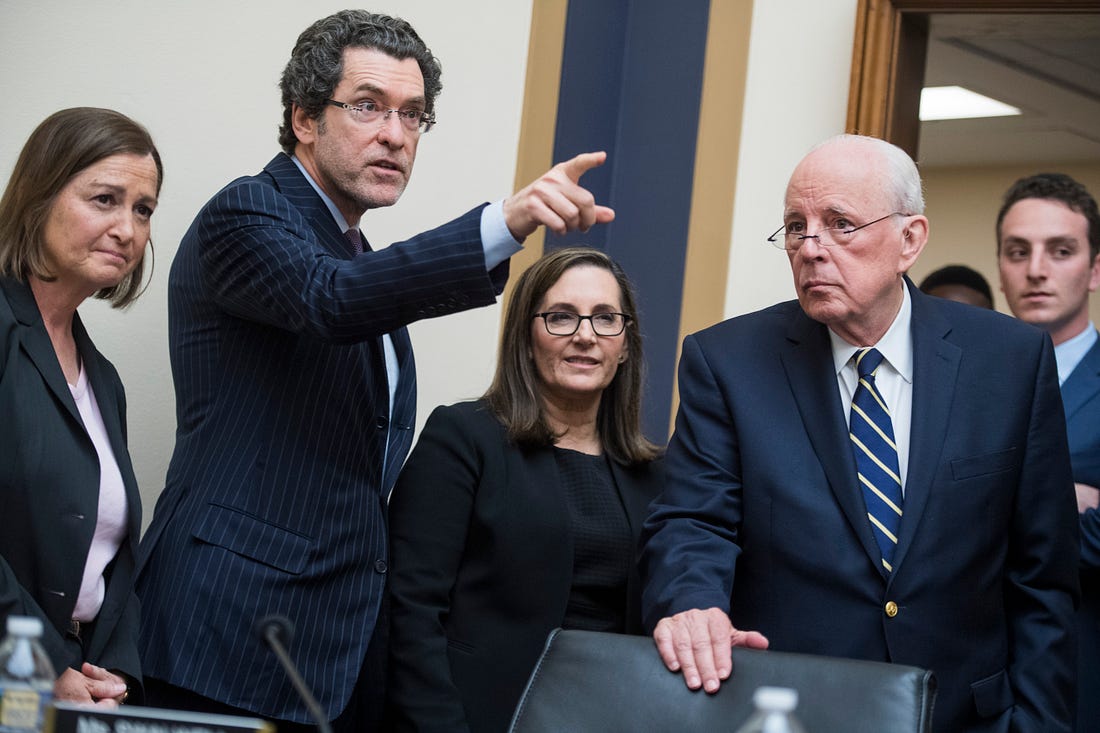 |
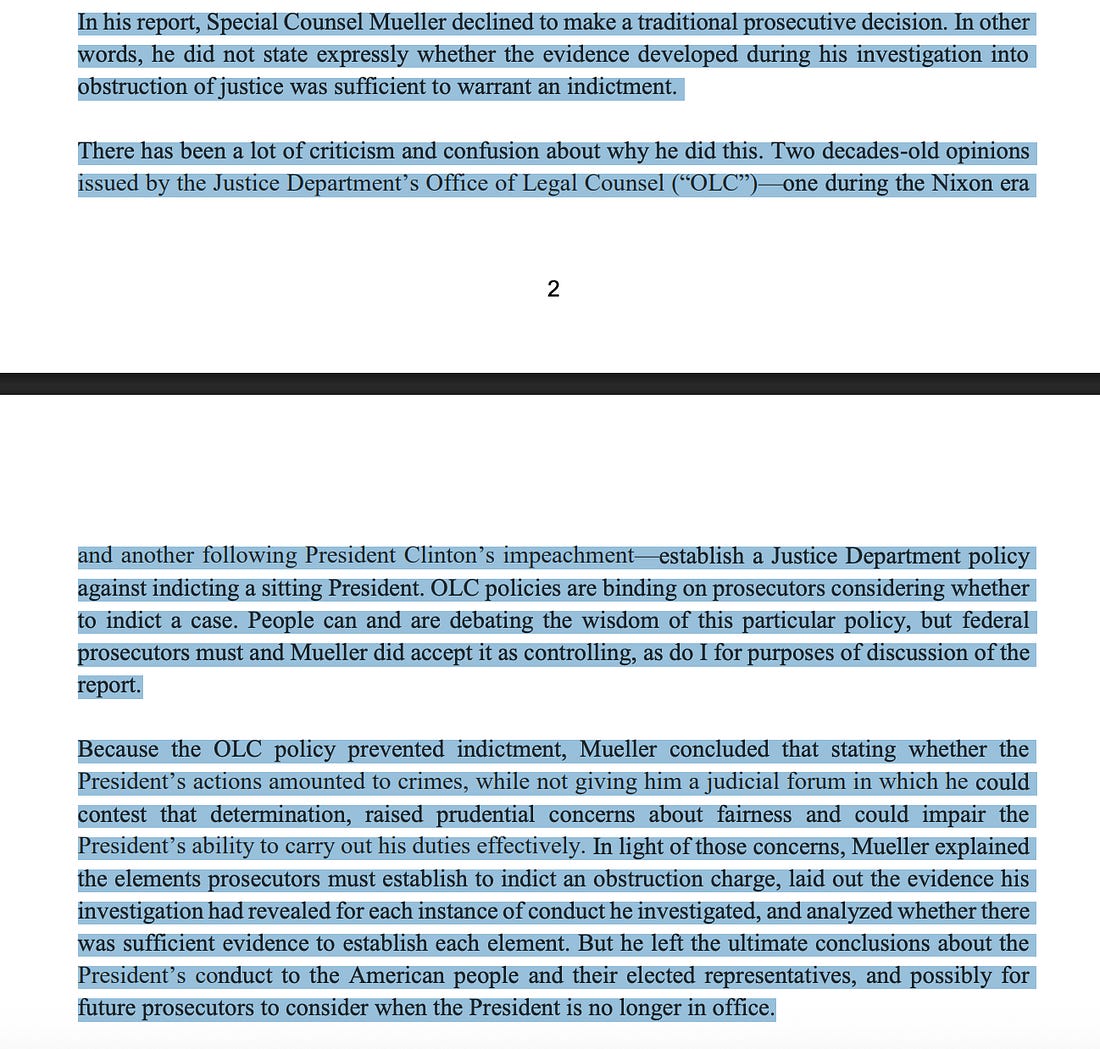
In June 2019, I testified before the House Judiciary Committee, alongside Barb and John Dean (yes, that John Dean), about the Report. In my opening statement, I explained why Mueller had adhered to DOJ policy when he declined to make a prosecutorial decision on whether to indict Trump.
 |
I asked Barb tonight what has stuck with her all these years later, and this was her response: “Mueller indicted 38 individuals and entities, including Russian agents who hacked into computers and stole email messages and who posed as Americans on social media to influence voters. And far from exonerating the Trump campaign, Mueller found that its members met with Russians at Trump Tower, shared polling data with a Russian intelligence officer, and coordinated messaging with the WikiLeaks release of stolen emails. This case was always less about Donald Trump and more about Russia, but rather than report Russia’s overtures to the FBI, Trump welcomed the help.”
It was and still is “Russia, Russia, Russia.”