|
 |
10 Years of Trump, and the Alarm Keeps Going Off
Every day of the past decade has felt like Groundhog Day.
|


| |||||||||||||||


Marjorie Taylor Greene’s populist insurgency against Donald Trump continues! The former congresswoman told a radio interviewer yesterday that the president’s “Make America Great Again” slogan was “all a lie”: “What MAGA is really serving in this administration, who they’re serving, is their big donors,” she said. “The big, big donors that donated all the money and continue to donate to the president’s PAC and donate to the 250th anniversary and are donating to the big ballroom.”
As we keep finding reason to say: When she’s right, she’s right. Happy Tuesday.
 |
The Era of Trump
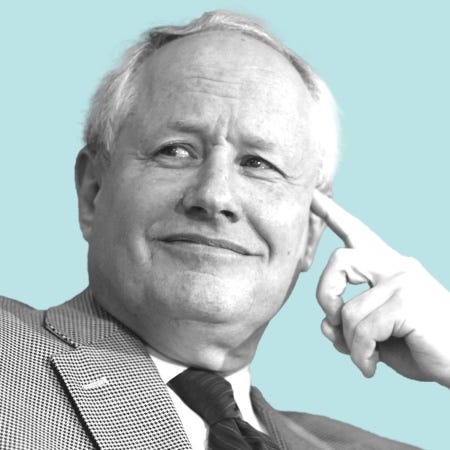
by William Kristol
At the beginning of yesterday’s Bulwark Podcast, Tim pointed out that it was February 2, aka Groundhog Day. We then had a brief colloquy on our sense that every day in the era of Trump seems like Groundhog Day. It did cross my mind that I might take this moment to pay tribute to former New York City Mayor Bill de Blasio, whose one impressive deed in office occurred on Groundhog Day 2014, when he dropped New York’s designated seasonal oracle from his grasp and watched her tumble to the ground and to an untimely demise.
Tim and I moved on to discuss the Epstein files, Trump’s threats to subvert the 2026 elections (about which more below), and other weighty matters. But somehow the distressing notion that Tim and I had mentioned in passing had lodged itself in my mind: that we live in what could be called the era of Donald Trump, and that we’ve done so for quite a while.
I know that we’ve referred to the “Trump era” many times. But for some reason it struck me anew how long and how historically important this era is. It’s not a blip, a fever that breaks, or a temporary aberration. It’s part of American history—a sizable part.
Ten years ago, in early February 2016, it was still unclear that Trump would be that year’s Republican nominee. On February 1, he placed second in the Iowa caucuses. But the rest of February featured Trump victories in New Hampshire, South Carolina, and Nevada. And then on March 1, Super Tuesday, Trump won seven of the eleven contests and was well on his way to the nomination. And then the general election. And then so on, for the next ten long years.
It’s sad but true: Trump has been the dominant figure in American political life for a decade. The only presidents of comparable historical heft in the past century have been Franklin D. Roosevelt, elected four times to the presidency and then succeeded by his vice president, Harry Truman, and Ronald Reagan, elected twice and then succeeded by his vice president, George H.W. Bush.
FDR and Reagan are surely the figures around whom historians will organize their accounts of America in the twentieth century. FDR led us out of the Depression and to victory in World War II. Reagan took us out of the malaise of the 1970s and to victory in the Cold War. Without getting into a million historical debates, I think it would be hard to quarrel with the claim that they are the dominant figures of American politics in the twentieth century.
And Trump? I’m afraid it’s hard to deny that he is by far the most consequential figure of American politics in the twenty-first century so far. His legacy will be negative. He’ll be known for inspiring a riot at the Capitol, not for legislation passed in the Capitol. His legacy would be a destructive one—ending the American-led world order abroad, and destroying the guardrails that have heretofore protected, however uncertainly and awkwardly at times, constitutional government at home. But he may turn out to be as important a historical figure as FDR or Reagan.
Our era—Trump’s era—is an unfortunate one in the history of the American republic. It’s a dangerous one. And let’s be honest, it’s a disgraceful one.
In his great 1838 speech “On The Perpetuation of Our Political Institutions,” Lincoln entertained the possibility that our system of self-government would face a threat from someone who would belong “to the family of the lion, or the tribe of the eagle,” from “an Alexander, a Caesar, or a Napoleon.” Lincoln asked, “Is it unreasonable then to expect that some man possessed of the loftiest genius, coupled with ambition sufficient to push it to its utmost stretch, will at some time, spring up among us?” And he feared that we wouldn’t be strong enough to resist the assault of such a figure on our institutions.
One thing that’s so disgraceful about the present moment is that we don’t face some kind of world-historical or formidable foe of the sort Lincoln imagined. We have been unable to defeat the designs of a second-rate demagogue and grifter, aided by third-rate bigots and authoritarians, and surrounded by fourth-rate opportunists and conspiracists.
And all of this is happening not after the great shocks of a depression or a world war, not at a time when the country was reeling from earth-shattering events and was unprepared to deal with new threats. The rise of Trump came at a time of relative peace and prosperity. We have no excuse for having succumbed to the degree we already have.
What Lincoln said back in 1838 remains the case today. We found ourselves
under the government of a system of political institutions, conducing more essentially to the ends of civil and religious liberty, than any of which the history of former times tells us. We, when mounting the stage of existence, found ourselves the legal inheritors of . . . a political edifice of liberty and equal rights.
All we had to do, as Lincoln put it, was to transmit this noble edifice “undecayed by the lapse of time and untorn by usurpation, to the latest generation that fate shall permit the world to know.”
It would be a dreadful thing to be the generation that failed in this task. To this terrible failure would be added the humiliation of defeat by such unworthy and unimpressive opponents.
So if fighting the good fight for this republic means having to spend another three years—or more—feeling like we’re enduring one Groundhog Day after another, so be it. We can’t expect a magical Bill de Blasio–like moment of dramatic relief. But fighting such a fight is a small price to pay for what’s at stake. And one day, we hope and trust, we will prevail, and the era of Trump will be no more.
As Sarah always remind us, the authoritarians want us tired, doubtful, and demoralized. How do we stay happy warriors for the next ten years, if that’s what it takes?