|
 |
Hi, everyone. In addition to mocking the affordability crisis—and the excessive number of dolls and pencils Americans apparently own—Donald Trump is laying the groundwork to make the cost of living worse. A lot worse.
How? By seizing control of the Federal Reserve and pumping more money into the economy whether or not the economy needs it.
This week’s edition of Receipts digs into why Fed independence is important, the overt and subtle ways Trump is trying to undermine it, and what that all means for the prices you pay. If you have thoughts on other ways Trump is sabotaging our economic institutions that you think I should pay attention to, please drop me a line in the comments.
In the meantime, please consider subscribing to Bulwark+. Your support gives us the resources to track under-the-radar stories like this. Sign up today and your first 30 days will be free:
–Catherine
The Sleeper Issue That Could Destroy the Economy
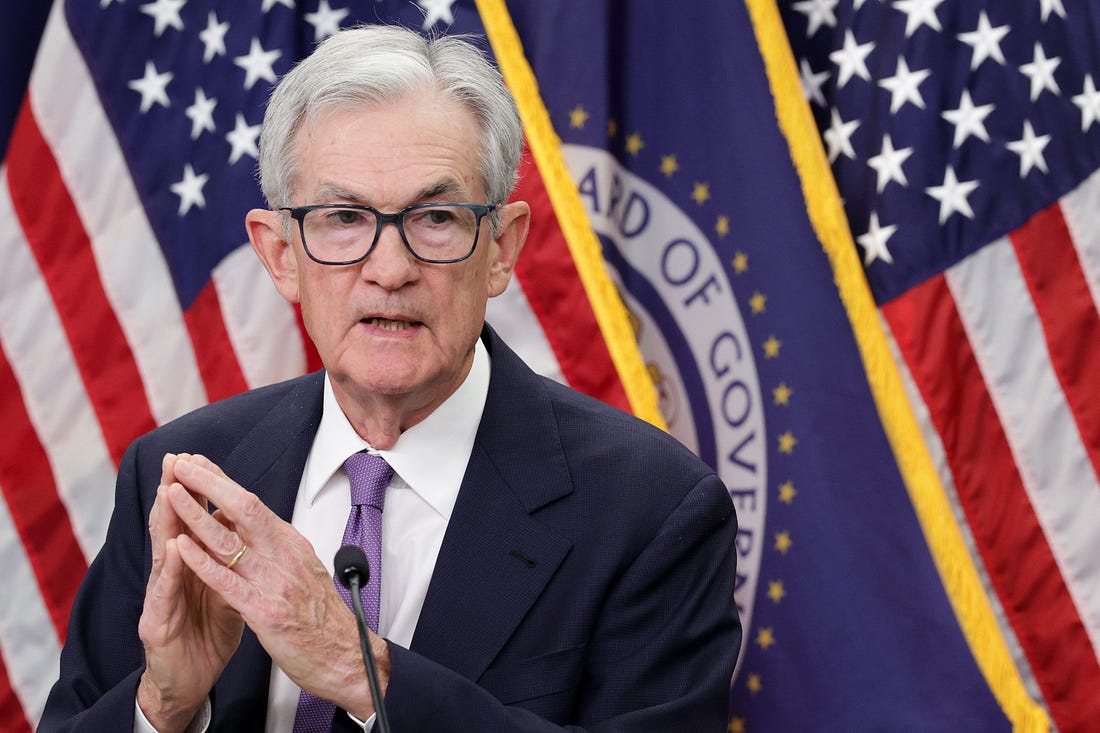
Trump may have stopped threatening Jerome Powell—but he’s still got designs to control the Fed.
|

| |||||||||||||||


 |
THERE ARE MANY ITEMS on President Trump’s agenda that are hurting the U.S. economy: the pointless trade wars, the socialization of the private sector, the mass deportations, and much more.
But in the long run, the most damaging policy of all might be one that’s gotten scant attention, at least from non-finance-nerds: Trump’s quest to crush the Federal Reserve. If Trump succeeds, he may doom the United States to high inflation for years, if not decades, to come.
Bullying the Fed has long been one of Trump’s favorite pastimes. Way back in 2019, he called Jerome Powell, the Fed chair whom he had appointed the year before, an “enemy.” He’s continued the broadsides during his second term, repeatedly musing about firing Powell—including earlier this year. It got press coverage at the time, due to the resulting market wobbles—and a truly awkward visit Trump made to the Fed headquarters as some sort of intimidation tactic. But the firing never came. And when the threats stopped, most of the media moved on.
They shouldn’t have.
The threats to Fed independence have continued, and got darker this week. We may now be at an inflection point, as the Trump administration tacitly threatens to purge not Powell but other officials who set interest-rate policy. If he’s successful, Trump could seize direct control of the money supply and turn America into Venezuela.
LET’S START WITH THE BASICS. Why does the central bank need to be politically independent in the first place?
The answer has to do with political incentives. If politicians control interest rates—and therefore the supply of money sloshing around the economy—they will always have an incentive to reduce them. That’s because doing so would stimulate the economy. If borrowing is cheap, that helps consumers and businesses feel richer, which encourages them to spend more. This creates a sugar rush, which in the near term can feel good. Especially if you’re the sitting president.
In the long run, though, overstimulating the economy can be dangerous. It fuels inflation. And the medicine necessary to cure that high inflation (higher interest rates) is painful. Voters hate it. So politicians are reluctant to administer it, which can lead to more and more price growth.
That’s why you want the people in charge of setting interest rates to be insulated from near-term political pressures. If they’re focused on the long-term health of the economy, rather than the next election, they’ll be more willing to play bad cop and “take the punch bowl away” before the collective party gets out of hand.
There’s a lot of empirical evidence bearing this out. Countries with more independent central banks tend to have much better (i.e., lower) inflation outcomes. Likewise, there are plenty of examples of countries where politicians seized control of the money supply and decided to keep that delicious punch flowing. Venezuela, Argentina, Turkey, and pre-Euro Italy come to mind.
But you don’t need to venture very far geographically for a cautionary tale. This same thing happened right here in the United States, when, in turn, Lyndon Johnson and Richard Nixon each leaned on the Fed to keep interest rates low. You may recall the painful stagflation that resulted in the 1970s. But if you’re too young, ask your parents about it.¹
Powell certainly remembers it.
At a public event in Texas last year, a week after the 2024 election, I interviewed Powell and asked some awkward questions about Fed independence. One of my questions was wheth