| | Zelenskyy says he is prepared to hold wartime elections, France delays its budget reform but avoids ͏ ͏ ͏ ͏ ͏ ͏ |
| |  Paris Paris | Cape Canaveral |  Pompeii Pompeii |
 | Flagship |  |
| |
|
The World Today |  - Zelenskyy vows vote
- EU’s frozen Russian funds
- Fed faces questions
- China’s good data news
- France delays budget reform
- Trump’s LatAm targets
- Sudan war sanctions
- SpaceX seeks IPO
- Push for Mars travel
- Pompeii’s curious concrete
 The BBC’s From Our Own Correspondent marks 70 years of ‘personal and memorable’ tales. |
|
Zelenskyy vows to hold elections |
 Valentyn Ogirenko/File Photo/Reuters Valentyn Ogirenko/File Photo/ReutersUkraine’s Volodymyr Zelenskyy said he was ready for his country to go to the polls if the US and Europe provided support for such a vote, after US President Donlad Trump accused the country of “using war not to hold an election.” Zelenskyy’s five-year term expired in 2024 but the country’s constitution forbids wartime elections; he said he was ready for a vote within 90 days with “help” from allies. Washington has pressured Kyiv to accept a Trump-backed peace proposal, which would involve Ukraine handing over large tracts of land to Russia, and Trump’s son has suggested that the US might “walk away” from Ukraine. Zelenskyy, meanwhile, has been on a diplomatic tour of Europe to try to maintain support for his war effort. |
|
EU seeks to unlock frozen Russian assets |
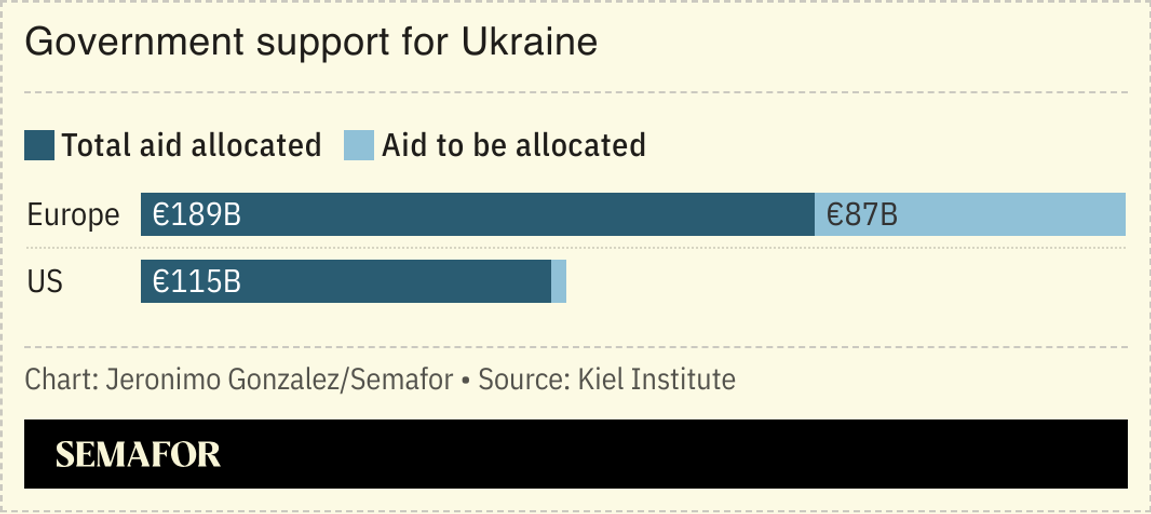 The European Union will indefinitely immobilize almost $250 billion in frozen Russian assets, a move aimed at bypassing opposition from some bloc members in order to lend funds to Ukraine. European Council President António Costa said the EU was very close to a solution to loan money to help finance Ukraine for two years, a lifeline for Kyiv in its war against Russia as US support dries up. But some EU members have pushed back: Hungary, the most pro-Russian of the group’s states, has repeatedly blocked more aid to Ukraine, while Belgium has rejected the borrowing plan, arguing that it could leave the country exposed to retaliation from Moscow, given the majority of the assets are held in Brussels. |
|
Long-term questions loom over the Fed |
 Elizabeth Frantz/File Photo/Reuters Elizabeth Frantz/File Photo/ReutersInvestors are largely looking past an expected interest rate cut by the Federal Reserve today to longer-term questions about monetary policy in the coming year, stubbornly above-target inflation, and the central bank’s independence. The likely quarter-percentage-point reduction is largely driven by unease over a weak labor market, but nevertheless comes with the Fed’s preferred inflation measure at 2.8% — solidly above policymakers’ 2% target. Analysts are concerned that if the central bank falls under the political sway of the White House, it could unnecessarily ease monetary policy and allow price rises to accelerate out of control; a decision to lower borrowing costs today could reinforce those fears. Some economists have suggested the bank is already “quiet quitting” its inflation mandate. |
|
IMF revises China growth forecast |
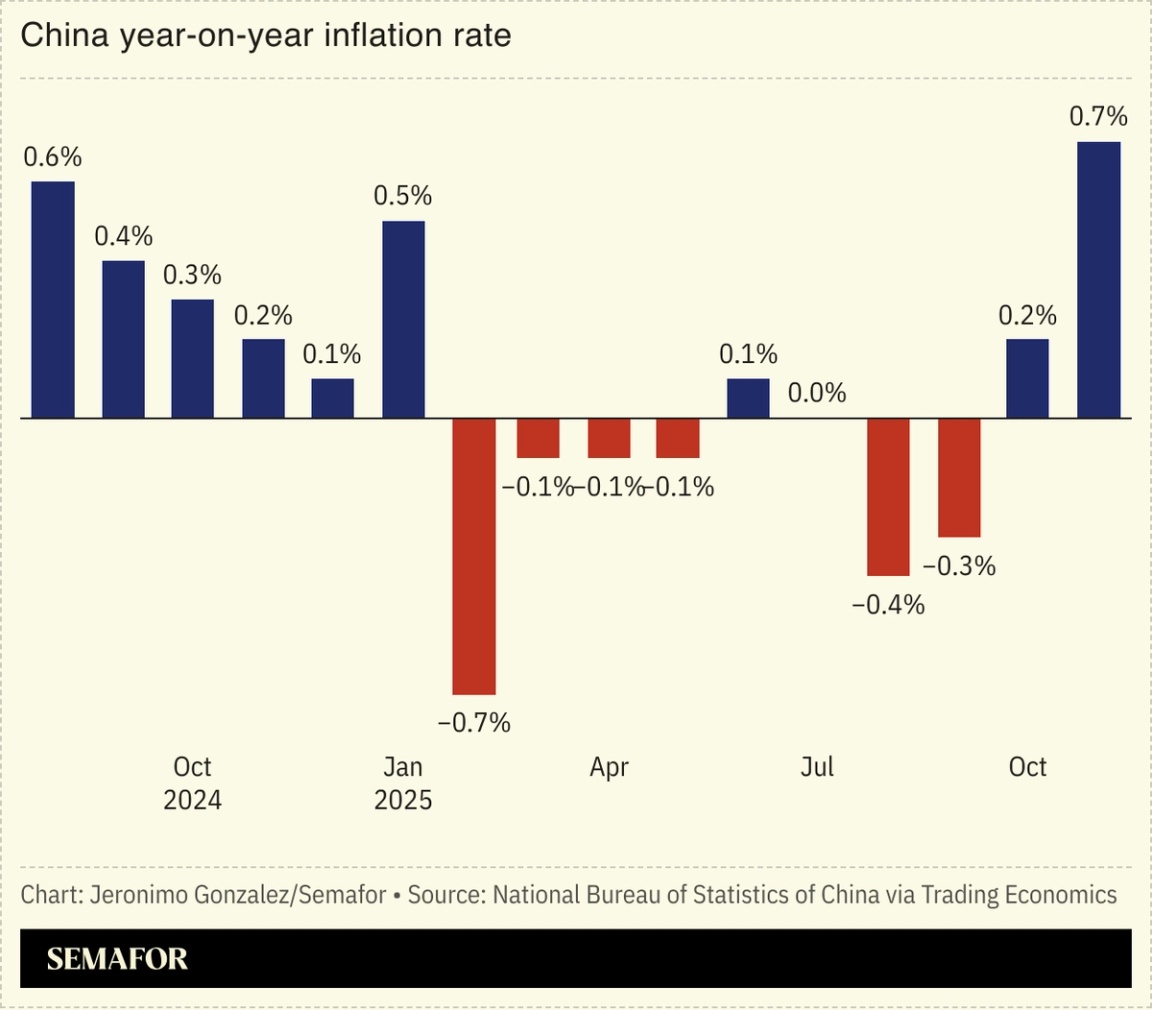 A raft of new data provided good news for China’s economy despite pressure from the US and Europe, its biggest trading partners. China’s consumer inflation rate rose more than expected in November, hitting its highest level in 21 months and easing deflationary worries. The figure also signals that the Communist Party’s goal of boosting domestic consumption may be paying off. Meanwhile, the International Monetary Fund revised China’s growth forecast upward, estimating the world’s second-biggest economy will expand by 5% this year, a figure that would meet Beijing’s goal. The IMF said Beijing’s resilience despite trade tensions led to the revision. However, some worries persist, including over excessive competition in certain industries. |
|
France’s pension reform delayed |
 French Prime Minister Sébastien Lecornu. Sarah Meyssonnier/Reuters French Prime Minister Sébastien Lecornu. Sarah Meyssonnier/ReutersFrench lawmakers approved a social security budget, a major win for Prime Minister Sébastien Lecornu that may stave off political chaos, albeit without addressing the country’s spiraling debt problem. The battle over French pensions has forced three prime ministerial resignations this year. President Emmanuel Macron wants to raise the retirement age to 64, the EU average, but the move is staggeringly unpopular despite France’s deficit being the worst in western Europe. Lecornu agreed to delay the reform until 2027, after the next presidential election. The prime minister, who has already resigned and been reappointed once, leads a fragile minority government, and faces another major hurdle with the state budget this month. The social security budget must still pass the upper chamber. |
|
Trump threatens to expand LatAm targets |
 Donald Trump and Pete Hegseth. Brian Snyder/File Photo/Reuters Donald Trump and Pete Hegseth. Brian Snyder/File Photo/ReutersUS President Donald Trump suggested he could extend his anti-drug military campaign in Venezuela to include targets in Colombia and Mexico, raising tensions across Latin America. The threats come as Washington looks to assert its dominance in the region in what the White House says is Trump’s version of the Monroe Doctrine. Critics, including members of the Republican Party, have questioned the legality of the strikes, with some saying they could amount to war crimes. Trump’s threats came shortly before senior administration officials, including the secretaries of state and defense, briefed members of Congress on their military campaign, a meeting that left many lawmakers dissatisfied with the government’s strategy. |
|
US imposes sanctions over Sudan war |
 A camp for Sudanese refugees. Mohamed Jamal/File Photo/Reuters A camp for Sudanese refugees. Mohamed Jamal/File Photo/ReutersThe US imposed sanctions on several individuals and firms it accused of fueling the war in Sudan, which has led to one of the world’s gravest humanitarian crises. According to the Treasury department, the sanctioned companies enlisted Colombian mercenaries to fight for and train the Rapid Support Forces, a Sudanese paramilitary group that Human Rights Watch says has carried out an ethnic cleansing campaign against Darfur’s Black population. Colombian outlet La Silla Vacía reported last year that more than 300 mercenaries had taken part. Despite several international attempts to reach a ceasefire, hostilities continue to worsen in Sudan, where nearly 13 million people have been displaced since the start of the conflict in 2023. |
|
 In Washington, economic power no longer follows party lines. The old frameworks — left vs. right, House vs. Senate, Republican vs. Democrat — are not fully applicable today. Influence now moves through a wide network, from traditional power brokers to ideological outliers, dealmakers, and policy entrepreneurs. Join us on Dec. 10 for one-on-one conversations with leaders including White House Deputy Chief of Staff James Blair, Sen. Josh Hawley (R–Mo.), Rep. Suzan DelBene (D-Wash.), and Sen. Mark Warner (D–Va.), as we map the people moving capital, shaping policy, and redrawing the blueprint of economic power. Dec. 10 | Washington, DC | Request Invitation |
|
SpaceX eyes $1 trillion IPO |
 Steve Nesius/Reuters Steve Nesius/ReutersSpaceX will reportedly go public next year, aiming for a valuation of over $1 trillion. The Elon Musk-led company was the first to successfully reuse rockets, bringing the cost of space travel down by around 90%; it accounted for more than half of global launches in 2024. Its broadband arm Starlink also represents most active satellites. It is expected to make $15 billion in revenue in 2025, rising to perhaps $26 billion next year. A $1 trillion valuation on those figures would be extremely high: The only IPO at that figure was Saudi Aramco in 2019, and it had revenues of $300 billion. But SpaceX hopes Starlink, its near-monopoly on reusable rockets, and its many government contracts will justify a premium. |
|
|


