Stop Upholding Poor Leadership. When bad leadership is elevated, supported, and left in place, organizations suffer. Distrust, fear, disengagement, and turnover spike; self-preservation replaces ownership and problem-solving; productivity plummets; and ethical lapses become more commonplace. Octopus Organizations treat leadership as a behavior, not a role. They develop leaders who create conditions where people willingly claim ownership, and they promote the ones who model empathy, humility, and curiosity. Here’s how to uphold this kind of leadership—and model it yourself.

Read online 

Manage email preferences

Harvard Business Review | The Management Tip of the Day
 

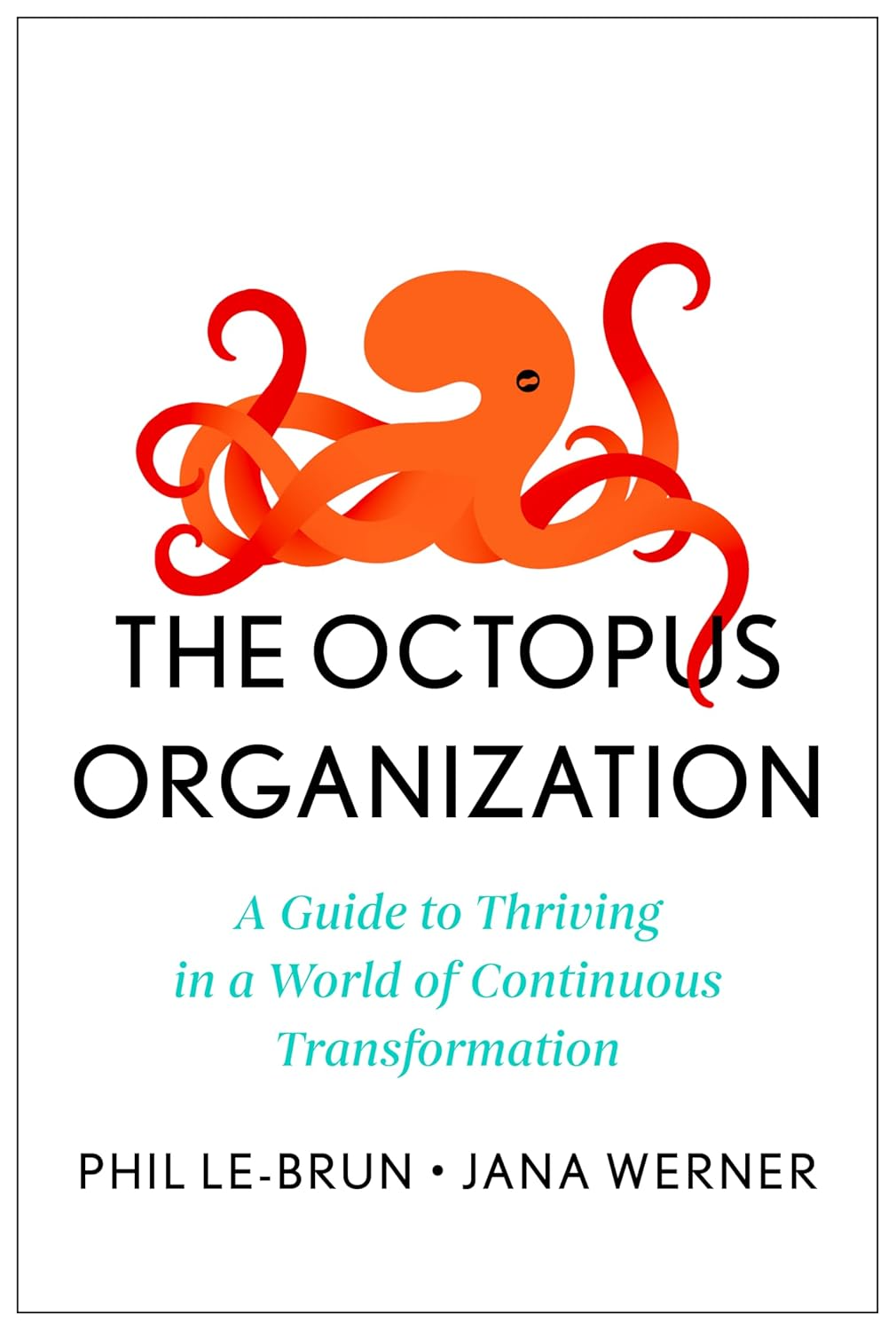
This week’s tips are adapted from Phil Le-Brun and Jana Werner’s new book, The Octopus Organization: A Guide to Thriving in a World of Continuous Transformation (HBR Press). An “Octopus Organization” is flexible, decentralized, and built for change. The journey to becoming one begins with identifying “antipatterns”: formulaic responses to complex challenges that can set organizations back. This week, we’re outlining five of these antipatterns—and how to overcome them.  

Today’s Tip

Stop Upholding Poor Leadership 

When bad leadership is elevated, supported, and left in place, organizations suffer. Distrust, fear, disengagement, and turnover spike; self-preservation replaces ownership and problem-solving; productivity plummets; and ethical lapses become more commonplace. Octopus Organizations treat leadership as a behavior, not a role. They develop leaders who create conditions where people willingly claim ownership, and they promote the ones who model empathy, humility, and curiosity. Here’s how to uphold this kind of leadership—and model it yourself. 

Speak last. Hold your opinions until others have shared their points of view. Invite people to speak, then actively listen. This prevents you and other leaders from dominating discussions. 

Build a shadow cabinet. Cultivate a group of trusted colleagues known for different perspectives—outside of leaders’ direct report lines. Explicitly ask them to assess leadership styles, challenge assumptions, and point out blind spots. 

Connect through shared experience. Occasionally immerse yourself and other leaders in hands-on work alongside teams. Approach these moments as a learner and a contributor, not a director.  

Build multiple feedback mechanisms. Include 360-degree reviews, exit interviews, skip-level meetings, and regular team retrospectives that focus on how your team works together. If psychological safety is a concern, consider anonymous feedback channels. 

Stop one thing. Focus on stopping at least one specific behavior identified in the feedback, such as interrupting, having a dismissive tone, checking your phone in meetings, using sarcasm dismissively, or rolling your eyes. Track progress by seeking follow-up feedback. 

Cultivate self-awareness. Understand your own triggers and patterns. Keep a journal over several weeks, noting when your leadership slips, why, and how you might avoid it next time.  

Model empathy and vulnerability. Show courage by acknowledging you don’t have all the answers. Share relevant struggles or learnings. The best leaders lead with humility. 

 
Book cover for The Octopus Organization: A Guide to Thriving in a World of Continuous Transformation.

Adapted from

The Octopus Organization: A Guide to Thriving in a World of Continuous Transformation

by Phil Le-Brun and Jana Werner

Book cover for The Octopus Organization: A Guide to Thriving in a World of Continuous Transformation.

Adapted from

The Octopus Organization: A Guide to Thriving in a World of Continuous Transformation

by Phil Le-Brun and Jana Werner


ADVERTISEMENT


A person holding a tablet displaying the HBR subscriptions webpage.

Stay ahead of the issues shaping modern leadership

An HBR subscription gives leaders steady insight when priorities shift fast.

Choose your plan

 
Coaching Real Leaders with Muriel Wilkins

Podcast

Do I Really Want to Be CEO?

A leader struggles with defining what she can do, versus what she wants to do.

Listen now
 

The HBR App:
Get the best in leadership thinking on-the-go.

Download on the App Store.
Get it on Google Play
 
X Icon Facebook IconInstagram Icon

You are receiving this because you registered at hbr.org to receive The Management Tip of the Day emails, or you provided us with your email address.

If you prefer not to receive The Management Tip of the Day emails, please unsubscribe.

You may also Manage Email Preferences, view our Privacy Policy, or Contact Us.

To ensure email delivery, add emailteam@emails.hbr.org to your address book, contacts, or safe sender list.


Harvard Business Publishing, 20 Guest St, Suite 400, Brighton, MA 02135  

Copyright © 2025 Harvard Business School Publishing. All rights reserved.