And, health risks for preteen smartphone owners.

Get full access to Reuters.com for just $1/week. Subscribe now.


Health Rounds

Health Rounds

By Nancy Lapid, Health Science Editor

Hello Health Rounds readers! Today we bring some welcome news for multiple myeloma patients from a major meeting of blood cancer specialists. We also report on a large study that suggests popular GLP-1 weight-loss drugs likely do not impact cancer risks, and on a cautionary survey on pre-teen smartphone use.

See these breaking news stories from our Reuters team: US Food and Drug Administration launches fresh safety scrutiny of approved RSV therapies for infants and meanwhile delays abortion pill safety study; FDA also "qualifies" an AI tool to speed liver disease drug development. 

Also: Women with PCOS seek relief in weight-loss drugs; US Senate to vote on Republican healthcare plan; Congo battles worst cholera outbreak in 25 years; and global leaders commit $1.9 billion to eradicate polio amid funding cuts.


Industry Updates

  • Pfizer partners with YaoPharma on weight management drug.
  • Alcon lifts bid for rival Staar.
  • Structure obesity pill shows up to 11% weight loss in trial.
  • L'Oreal to increase stake in skin care firm Galderma to 20%.
  • Florida hospitals' opioid case vs Walmart, CVS, Walgreens ends in mistrial.
  • CVS forecasts 2026 profit above estimates.
  • Dr Reddy's signs licensing pact to sell Immutep's cancer drug.
  • Mirum to buy Bluejay for up to $820 million in bet on liver drug.
  • Recursion Pharma therapy improves familial polyp disease.
  • Teleflex to divest three units for $2.03 billion.
  • W. Virginia sues United HealthGroup’s pharmacy benefit manager.
  • Medline targets $55 billion valuation in blockbuster IPO.


Kennedy vaccine advisers 'turned back the clock,' experts say

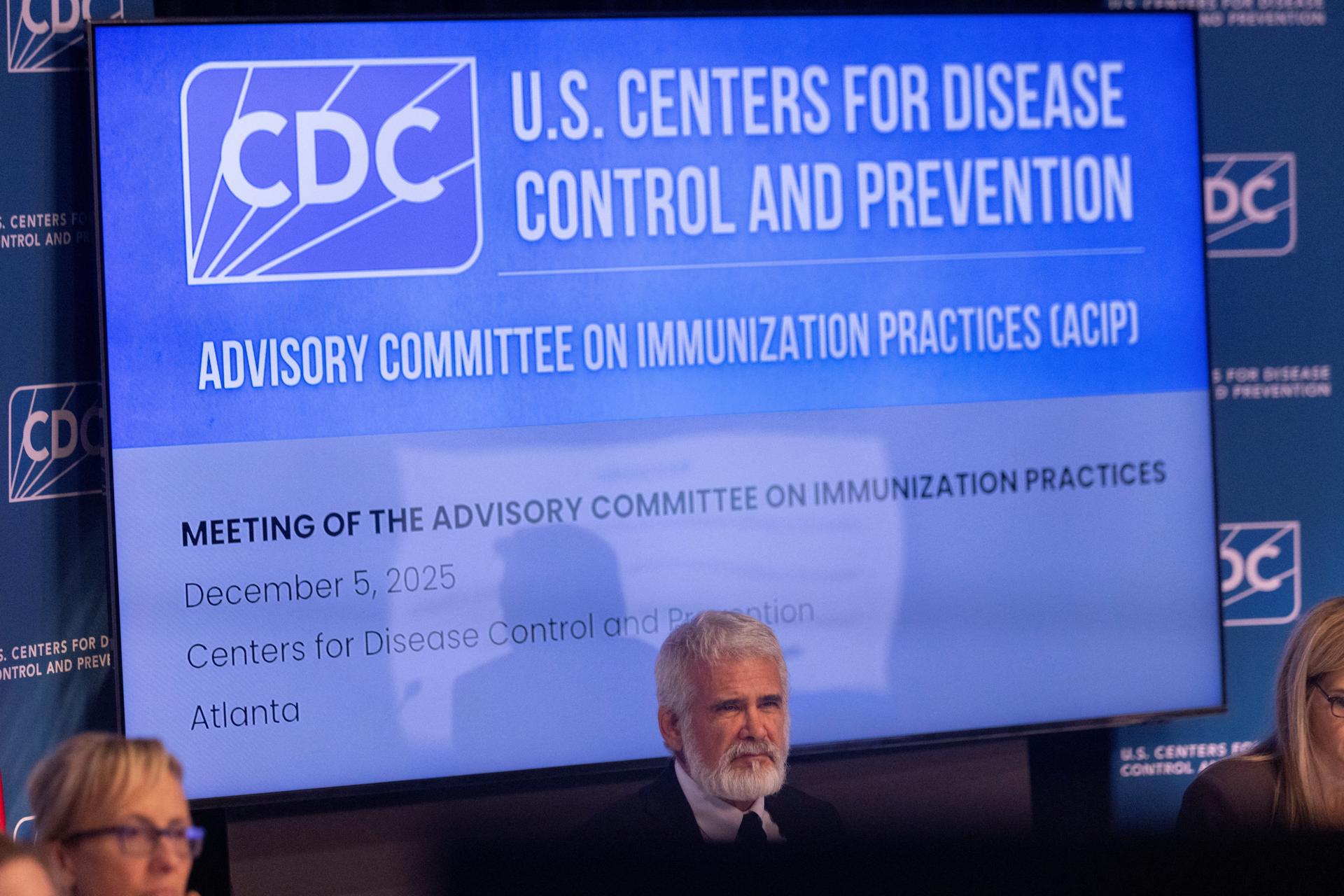
REUTERS/Alyssa Pointer. Advisory Committee on Immunization Practices chairman Dr. Robert Malone listens during a meeting on December 5, 2025

U.S. vaccine advisers' decision to scrap longstanding guidance on hepatitis B shots will expose more children to the harmful virus and may signal how other evidence-based vaccine policies can be undermined, doctors and disease experts said.


Study Rounds

Antibody eradicates traces of multiple myeloma


A recently approved antibody drug from Regeneron Pharmaceuticals eradicates residual traces of multiple myeloma after initial treatments, potentially allowing patients to avoid grueling bone marrow transplants, preliminary data from a small mid-stage trial suggest.

Patients in the trial had received initial treatments that eliminated nearly all of their cancer cells. 

Usually, individuals with residual cancer cells, accounting for roughly half of patients treated with modern first-line drugs, would go on to receive high-dose toxic chemotherapy to destroy the remaining cancer cells and a bone marrow transplant to regrow healthy replacements. Study leader Dr. C. Ola Landgren of the University of Miami Miller School of Medicine called the regimen “a brutal treatment.”

Instead, patients in the study received Regeneron’s Lynozyfic, which was approved by the U.S. Food and Drug Administration in July for treatment of recurrent multiple myeloma.

While most therapeutic antibodies attach to a single target, Lynozyfic attaches to two, CD3, a protein on T cells that destroys cancerous cells, and BCMA, a protein on multiple myeloma cells.

None of the 18 trial participants who have so far completed up to six cycles of treatment with Lynozyfic have had detectable residual disease afterward on highly sensitive tests, the researchers reported at the American Society of Hematology annual meeting in Orlando.

Ultimately they plan to enroll a total of 50 patients.

Those who test negative for residual multiple myeloma cells can expect to live years longer without their cancer returning than those positive for it, Landgren said in a statement.

“Based on my experience, I would predict that after having such a good response after such a short time, the disease most likely could stay away for many years,” he said. “Could it never come back in some patients? I would say it's possible.”


Read more from the ASH meeting on Reuters.com

  • Vertex's gene therapy promising in children with blood disorders.
  • Regeneron's experimental therapy combo effective in untreated cancer patients.
 

GLP-1 drugs do not appear to cut cancer risks

Widely used weight-loss medications from the class known as  GLP-1s likely have little or no effect on risk for obesity-related cancers, a large study suggests, although longer follow-up is needed to be certain.

Researchers analyzed data from 48 trials involving 94,245 participants with type 2 diabetes or overweight or obesity who were randomly assigned to receive GLP-1 drugs or a placebo.

Results showed the drugs probably have little or no effect on risk for cancers of the thyroid, pancreas, colon and rectum, stomach, esophagus, liver, gallbladder, breast, ovaries, endometrium, kidneys, or the blood cancer multiple myeloma or the brain cancer meningioma, researchers reported in Annals of Internal Medicine.

Twenty of the trials tested semaglutide, the main ingredient in Novo Nordisk’s Ozempic, Wegovy, and Rybelsus. Ten tested Novo’s liraglutide, sold as Victoza and Saxenda.

Eli Lilly’s tirzepatide, sold as Mounjaro and Zepbound, was tested in eight trials. The remaining 11 trials tested Sanofi’s Adlyxin (sold as Lyxumia outside the U.S.), Lilly’s Trulicity, or AstraZeneca’s Byetta.

Most of the studies were not designed to assess cancer risks or benefits, and for some outcomes the findings were of low certainty, the researchers acknowledged.

Longer-term studies with cancer-specific end points are needed to clarify potential risks or protective effects of the medicines, the researchers said.


Read more about GLP-1 drugs and cancer risks on Reuters.com

  • Health Rounds: GLP-1 drugs linked to lower cancer risks
  • GLP-1 diabetes drugs like Ozempic may modestly reduce cancer risks