| | Donald Trump lashes out at Europe but apparently respects Asia, China plans to limit access to power͏ ͏ ͏ ͏ ͏ ͏ |
| |  TIRANA TIRANA | BENGALURU |  SHENZHEN SHENZHEN |
 | Flagship |  |
| |
|
The World Today |  - Trump bashes Europe…
- … but respects Asia
- China limits Nvidia chips
- AI firms want mass adoption
- Everything is data centers
- Rebuilding Gaza
- India’s IPO gains
- Australia’s teens are mad
- Pen-and-paper testing
- Unexpectedly HIV-free
 The prime minister who has become a breakout artist. |
|
Trump lambasts Europe, again |
 Alexander Drago/Reuters Alexander Drago/ReutersRancor between the US and Europe intensified Tuesday after President Donald Trump said the continent is run by “weak” leaders. His remark to Politico came days after Washington’s new national security strategy excoriated the EU and suggested it is facing civilizational decline. Reactions from the bloc are a mixture of astonishment, concern, and “a reaffirmation of [Europe’s] status as a place of freedom and democratic values, although the latter is somewhat timid,” Spain’s El Mundo wrote. Responding to Trump’s latest attack, the European Council president said “allies behave with each other.” Washington’s allies haven’t yet defected, two experts wrote in Foreign Affairs, but they will inevitably seek other partners to “protect themselves against American irresponsibility.” |
|
 Evelyn Hockstein/Reuters Evelyn Hockstein/ReutersThe US’ new national security manifesto reproaches Europe, and largely spares Asia — though much of the region is approaching Washington warily. Donald Trump treats Asia “with apparent strategic respect,” a Foreign Policy columnist wrote: Unlike the EU’s penchant for bureaucracy and institutions, Asia “looks far more compatible with a Trumpian worldview centered on national sovereignty and transactional cooperation.” But Washington’s strategy softens its criticism of Beijing, a shift some worry will further alarm the US’ regional allies already unsettled by China’s growing influence. The document, however, is clear on “the desire for stability, but not at the expense of undercutting American interests” around Beijing, the author of Trump’s 2017 security doctrine told The Wire China. |
|
China set to limit H200 access |
 Go Nakamura/Reuters Go Nakamura/ReutersChina is reportedly set to allow — but limit — imports of Nvidia’s advanced H200 chips after US President Donald Trump greenlit the sales. Beijing is building up its domestic semiconductor industry and has chafed at previous US concessions on less powerful chips, although the H200 “will be a more tempting import for Beijing,” Trivium China wrote. Chinese buyers may be required to go through an approval process, the Financial Times reported. Trump’s decision amounts to a major shift in Washington’s China policy and waters down “years of US national security safeguards,” Bloomberg wrote. But some argue the move could undermine China’s technological prospects by leaving the country reliant on foreign tech. |
|
AI companies aim for mass adoption |
 Brian Snyder/Reuters Brian Snyder/ReutersLeading US tech companies are increasingly aiming for mass adoption of their AI offerings, rather than flashy breakthroughs. OpenAI’s CEO last week declared a “code red” to beat back competitors like Google, turning the startup’s focus to improving its popular chatbot, ChatGPT, and pausing loftier side projects. And Apple’s perceived hesitancy to go all-in on AI has seen its stock outpace peers’, in part because it is primed to benefit when “when the technology is ready for mass use,” Bloomberg argued. As Big Tech pours more money into data centers globally — Microsoft just announced its biggest Asia investment ever, in India — investors are hungry for signs the spending will translate into revenue. |
|
US supply chain pivots to data centers |
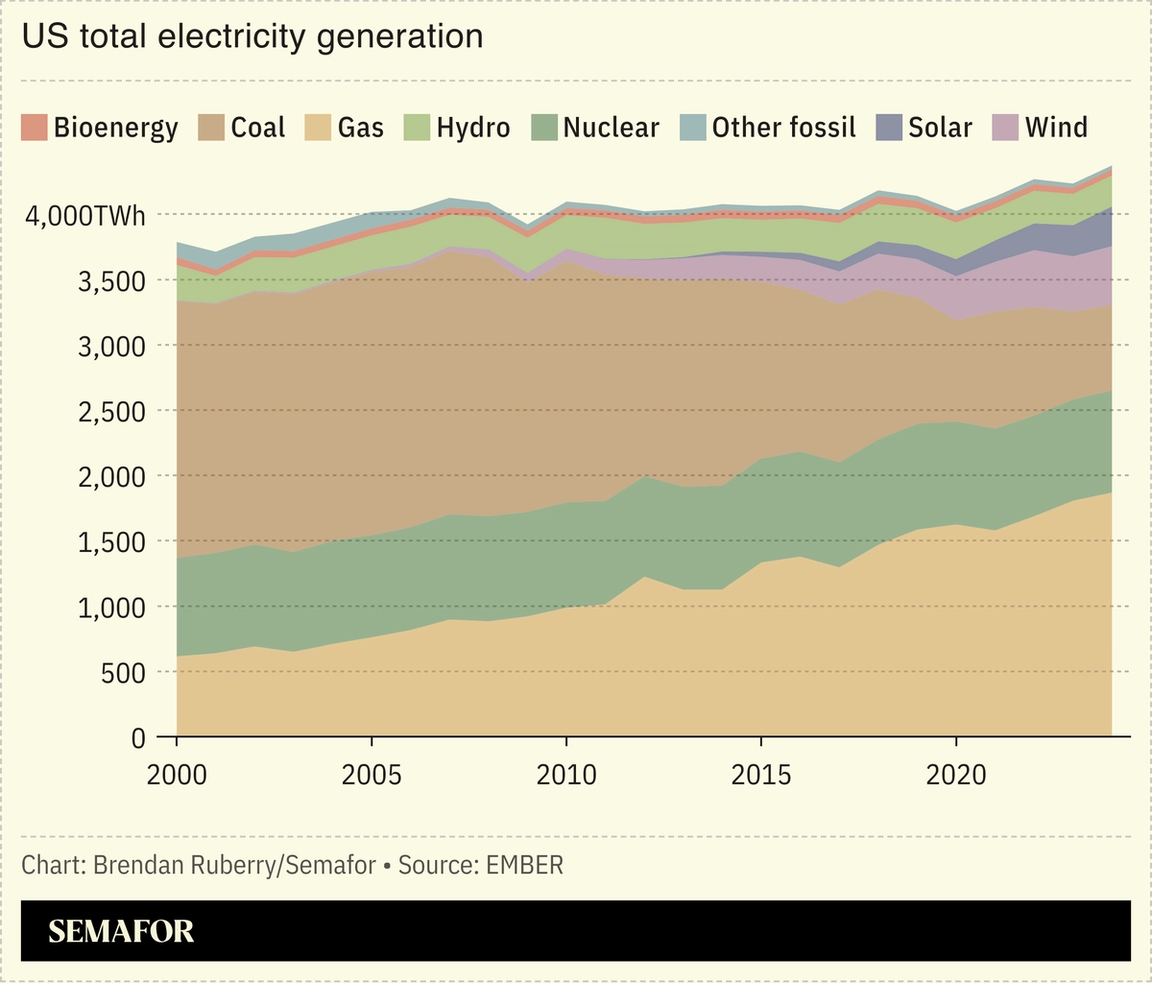 The US needs an additional 44 gigawatts of capacity by 2028 to power new data centers, estimates show, but only about 25 new gigawatts are expected to come online. AI’s huge demand for computing power is driving enormous capital expenditure by Big Tech. But investments in power have not kept pace. Businesses are eager to fill the gap: “Any aspect of the industrial supply chain that can theoretically be re-oriented to serve AI data centers is being re-oriented to serve AI data centers,” Bloomberg’s Joe Weisenthal noted. One company building a supersonic engine, for example, pivoted after realizing its technology could help power data centers — and plans to use the revenue to fund its original idea for a supersonic plane. |
|
Gaza rebuilding hits hurdles |
 Nir Elias/Reuters Nir Elias/ReutersThe second phase of a US-backed peace plan for Gaza is running into hurdles over the enclave’s reconstruction — and who will fund it. Washington’s UN ambassador said “we’re ready to move forward with rebuilding Gaza,” but a Hamas official said the plan cannot proceed, blaming Israel for ceasefire violations. Reconstructing the territory — sitting under 68 million tons of rubble mixed with unexploded ordnance and human remains — is a monumental and expensive task, and it’s unclear who is willing to foot the bill; some Gulf nations have conditioned funding on Israel backing Palestinian statehood. Removing the debris could take seven years in a best-case scenario, but it rests on the political will to keep the peace, The Wall Street Journal wrote. |
|
India IPO boom outshines market lull |
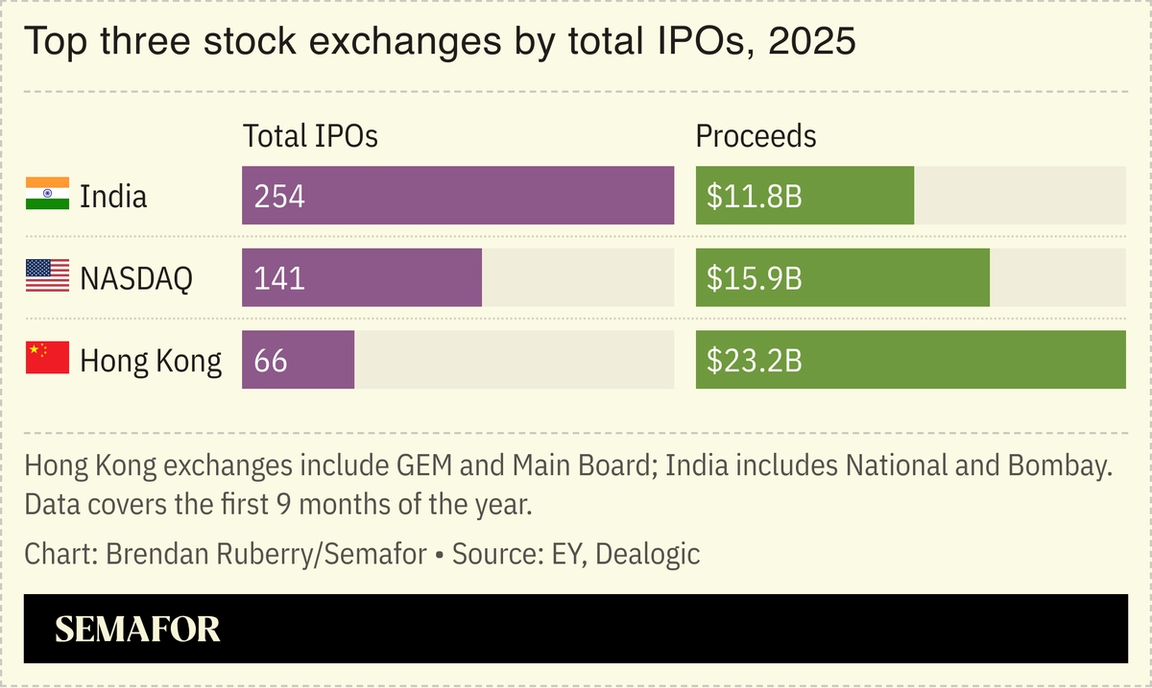 India’s initial public offering ecosystem is thriving despite lackluster market performance and foreign investor retreats. IPOs have hit a record of $19.6 billion this year, surpassing 2024’s blockbuster showing, Bloomberg reported. Companies are bullish in part because there’s room for growth in the country’s retail investing sector: Only 15% to 20% of Indian households invest in equities and mutual funds, compared to 50% to 60% in the US, a recent Bain report found. Foreign investors, meanwhile, have grown more concerned over the rupee’s depreciation and the lack of a US-India trade deal, pulling out a net $17.7 billion this year. |
|
 Hosted by longtime New York Times correspondent Jane Perlez, Face-Off: The U.S. vs China delivers an inside look into the world’s two superpowers and the two men driving their rivalry. A standout episode features Jake Sullivan on Xi Jinping’s ego, tactics, and how a relationship that started with cautious optimism turned hostile. Listen now. |
|
Australia’s social media ban takes effect |
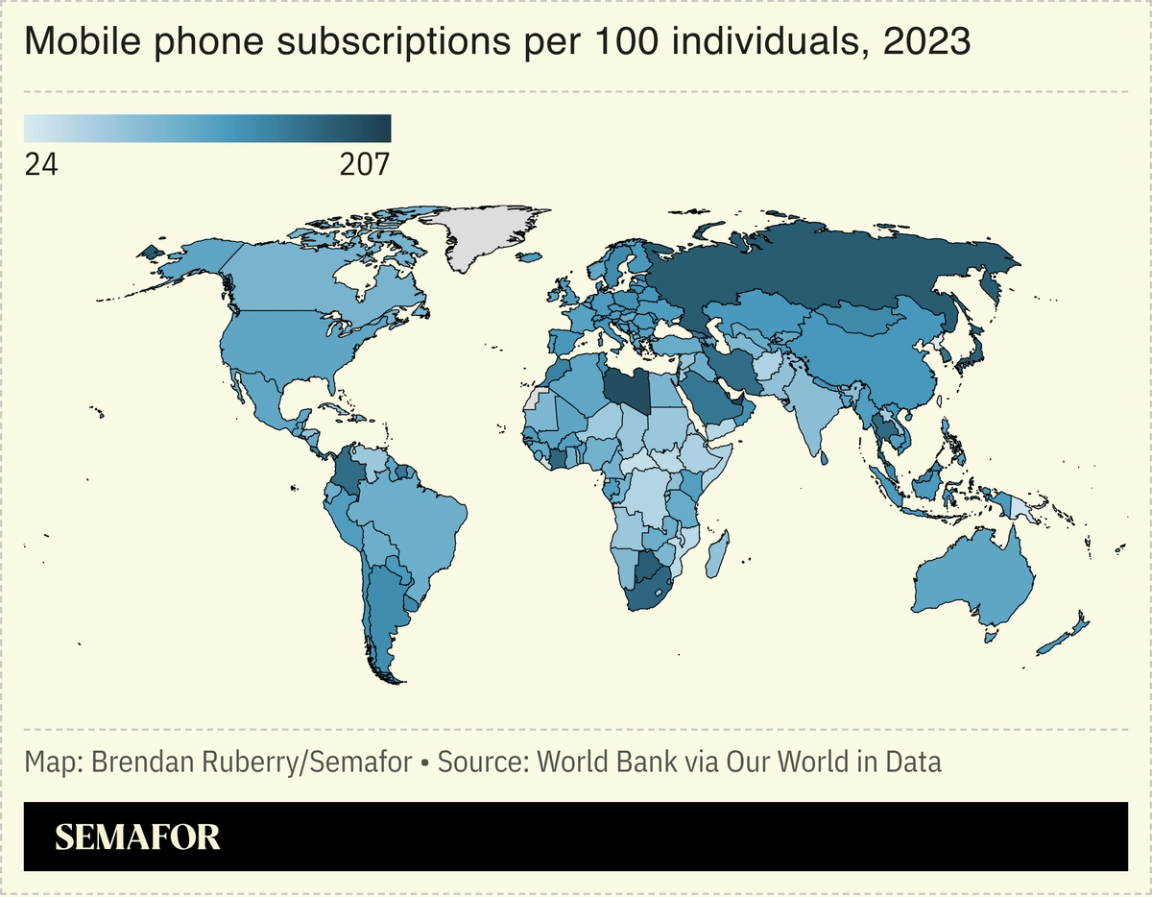 Australia’s youth social media ban came into effect, with governments and Big Tech watching its effects closely. Social media platforms, with X’s exception, said Tuesday they will remove all accounts held by under-16s. The ban is popular — backed by two-thirds of voters — but the age-recognition software hasn’t always worked, and angry kids plan to skirt it. The prime minister, however, argued that teens finding a way to drink doesn’t mean there shouldn’t be a legal drinking age. A regulator called the ban the world’s “first domino”: Denmark, Malaysia, and Norway could soon follow suit, and the EU passed a resolution adopting similar restrictions, worrying tech firms. An industry group said such “blanket censorship” will make children less safe. |
|
AI revives pen-and-paper job tests |
 Tyrone Siu/Reuters Tyrone Siu/ReutersA Japanese video game company has started using pen-and-paper art tests in job interviews to avoid generative AI fraud. A graphic designer at the (unnamed) mid-sized firm told Daily Sincho that previous hires had been found to be unable to draw adequately, and that their portfolios were AI-generated. The company now requires applicants to produce their artwork in person. AI’s ubiquitousness has revived pen-and-paper testing in education, and increasingly, also in the workplace: Google, Cisco, McKinsey and other major firms are conducting more in-person interviews, because in video calls, candidates were using AI to feed them answers. In contrast, AI startup Anthropic reversed its ban on using AI for job applications. |
|
More possible cures for HIV |
|
|


