News you can use from the National Ocean Service
December 9, 2025
Last week, Dec 1-5, 2025, was Corals Week.
This was a time for NOS to join in on the celebration of the beauty and significance of coral reef ecosystems.
Coral reefs are the most diverse habitats on the planet. They serve as homes for thousands of species of marine life and people rely on them for food, coastal protection, and jobs.
From articles, podcasts, and informational videos, NOS has a wealth of information on coral reefs and coral reef conservation.
We've been celebrating corals on our social media channels. Look for #CoralsWeek on Facebook, X, and Instagram.

Check out the National Ocean Service highlighted career this month, Ocean Prediction Coordinator. This position is held by Breanna Vanderplow in the Integrated Ocean Observing System Office (IOOS). IOOS is the Ocean Service's eyes on the ocean, coasts, and Great Lakes. Learn more about the Ocean Prediction Coordinator position and what led Breanna to this career.
|

Thursday, January 29, 2026 | 7-8 p.m. ET
This Science Update celebrates and shares the 20th anniversary Arctic Report Card (ARC), an annual update on the state of the Arctic environment produced by NOAA and national and international partners. In this webinar, ARC contributors will share the latest science headlines and key findings of the 2025 Report which will be released in December of 2025.
Participants will have the opportunity to learn about this annual Report Card and a new Data Dashboard launching alongside the 2025 ARC.
|


Region: California Marine Protected Areas (MPAs)
LiMPETS (Long-term Monitoring Program and Experiential Training for Students) is a community science program for students, educators and volunteer groups. Community scientists monitor the coastal ecosystems of California’s national marine sanctuaries, increasing awareness and stewardship of these important areas. The statewide program connects over 6,000 citizens annually to the ocean, involves them directly in an immersive scientific endeavor and increases their knowledge of the marine environment, creating a new generation of informed and engaged ocean stewards.
Teachers are required to participate in training prior to class participation. Computer access will be needed to upload data. LiMPETS coordinators provide additional field testing equipment
|
 |
Webinar Date: December 11, 2025
Audience: Middle and high school educators
Join Center for Education, Engagement and Evaluation’s free monthly virtual webinar series, Midweek Momentum, designed to cultivate teaching strategies such as data sensemaking, place-based teaching, and action frameworks to increase climate resilience.
Each session is designed to focus on practical teaching strategies that can be implemented in classrooms immediately, giving you tools and ideas you can put into practice the next day. With an emphasis on instructional moves and resources that exemplify research-based pedagogy, the series highlights approaches that are both effective and adaptable across grade levels and subject areas. Whether you are looking to refine your current methods or discover new strategies, this series offers actionable support to enhance teaching and learning in meaningful ways.
|
Workshop Dates: July 28-30, 2026
Pre-registration is now open for the 2026 Resilient Futures Teacher Workshop!
Middle school and high school educators are invited to a three-day in-person teacher workshop. Engage with sessions on education resources, including scientist talks, lab tours, and networking sessions by CEEE, NOAA, and friends. This session will cover topics such as climate science, natural hazards, water resources, data literacy, and more. Graduate credits available.
Participants will leave with a variety of classroom-ready lessons/activities and can receive a 20-hour PD certificate OR 1-2 Continuing Education credits from the University of Colorado Boulder upon course completion.
After pre-registration closes, a small registration fee will be required when the official registration opens. Participants who complete the course will receive a gift card.

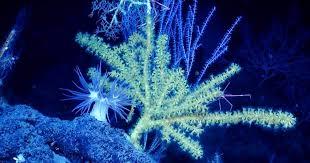
Corals are amazing! Watch this inspiring educational Coral Reef Video Series to learn more. These videos are a brief and fun way for kids to learn about coral reefs.
|

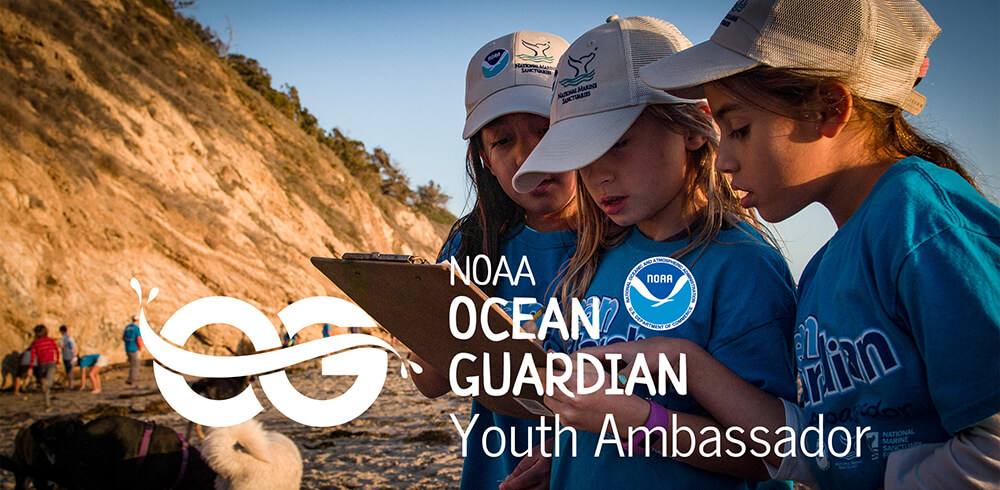 Applications Due: January 4, 2026
The NOAA Ocean Guardian Youth Ambassador program provides a new level of engagement for youth aged 13-18 committed to ocean conservation and stewardship of our blue planet. We are looking for enthusiastic youth with new ideas and a unique perspective to learn more about America’s underwater treasures and to share their passion with others.
What is a NOAA Ocean Guardian Youth Ambassador's role?
- Attend monthly meetings to learn about the National Marine Sanctuary System, threats to the ocean, ocean optimism, NOAA programs and careers, opportunities for engagement, and future leadership programs
- Gain the confidence and skills to lead a project or event at your school or in your local community that supports ocean conservation and stewardship
- Track progress on your school or community project or event
- Actively engage in discussions with other Ambassadors, post-webinar surveys, and evaluation of program content
- Check and respond to emails in a timely manner
- Complete the Climate Resilience in Your Community Activity Book over the course of the program
- Share your knowledge, passion, and skills with your school or community as an official NOAA Ocean Guardian Youth Ambassador
Applications Due: Monday, December 15, 2025
The National Earth Science Teachers Association (NESTA) is committed to continuing the efforts of the NOAA Planet
Stewards Education Project (PSEP), supporting educators in building a more sustainable future. PSEP will award funding opportunities of up to $5000 for 10 hands-on, action-based stewardship projects for elementary through college age students, as well as the general public.
NESTA Planet Stewards funds are only allocated to a school, a school district, a not-for-profit organization, or
institution affiliated with the educator applicants.
Focus areas include:
Carbon Footprint Reduction
Carbon Sequestration
Community Resilience
Habitat Conservation and Restoration
Marine Debris and Waste Reduction
Grant eligibility, resources, examples of past projects, the rubric, a checklist, and the application, are available for your support.
Applications Due: Saturday, January 31, 2026
NOAA is now accepting applications from undergraduate students, providing funding, a stipend, and hands-on internship experience.
Do you have an item you'd like to share
in future issues of The Watch?
|
|