
|
 |
What Stanford Thinks Leaders Need To Know About AI, And Why Tech Writers Should Care
The next AI opportunity for tech writers may have less to do with writing and more to do with managing knowledge
|

| |||||||||||||||


Looking Beyond AI Tools
I recently looked through a Stanford Online program about AI leadership expecting to see material about prompts, large language models, and the latest tools.
Instead, much of the curriculum focuses on organizations. The instructors spend considerable time discussing data quality, workflow design, adoption challenges, governance, evaluation, and management. Those subjects may sound familiar to people who work with technical documentation.
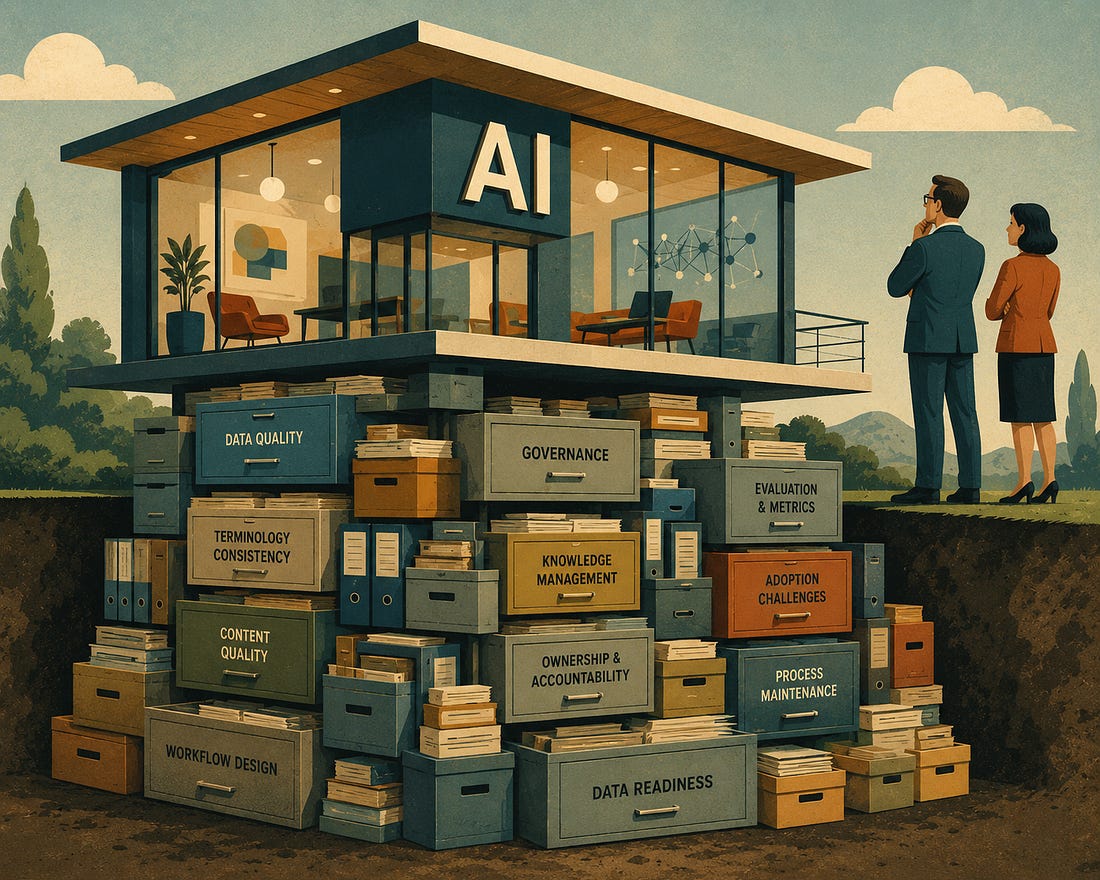 |
One section discusses the need to create what the program calls a culture of data excellence. Organizations are encouraged to examine their information quality, terminology consistency, data condition, and maintenance processes.
Documentation teams have spent years dealing with duplicate information, conflicting terminology, outdated procedures, missing context, and unclear ownership. In doc shops these issues are usually discussed as content quality problems. In AI initiatives they often appear under labels such as data readiness, knowledge management, or governance.
Stanford’s AI curriculum spends surprisingly little time on prompting and much more time discussing information quality, governance, and workflow design, topics many tech writers already know well.
Workflow And Information Design
The curriculum also spends considerable time on workflow design. Organizations adopting AI need to understand where information originates, who maintains it, how quality is evaluated, and where human review belongs.
Those responsibilities overlap with work that already exists in many documentation groups.
People who understand structured content, metadata, taxonomy, terminology, governance, and information architecture already spend much of their time organizing information so that other people can find it, reuse it, and trust it. AI systems depend on many of the same conditions.
How The Work May Change
The Stanford material also examines how management changes when AI becomes part of everyday work. Documentation teams may find it useful to ask a similar question about their own responsibilities.
Drafting assistance will continue to improve. Summaries, first drafts, content audits, and some forms of analysis are becoming easier to automate. At the same time, organizations still need people who understand content models, terminology, ownership, information quality, and evaluation.
For many writers, the work may shift more than it disappears.
Choosing Useful Applications
One practical theme running through the program is the importance of identifying useful applications instead of adopting AI simply because the technology is available.
Documentation teams can ask fairly ordinary questions. Where are customers struggling to find answers? Which information generates support calls? Where does terminology create confusion? Which content no longer matches the product? What information exists inside the company but never reaches customers?
Most of those problems existed long before generative AI appeared.
 |
Skills Worth Developing
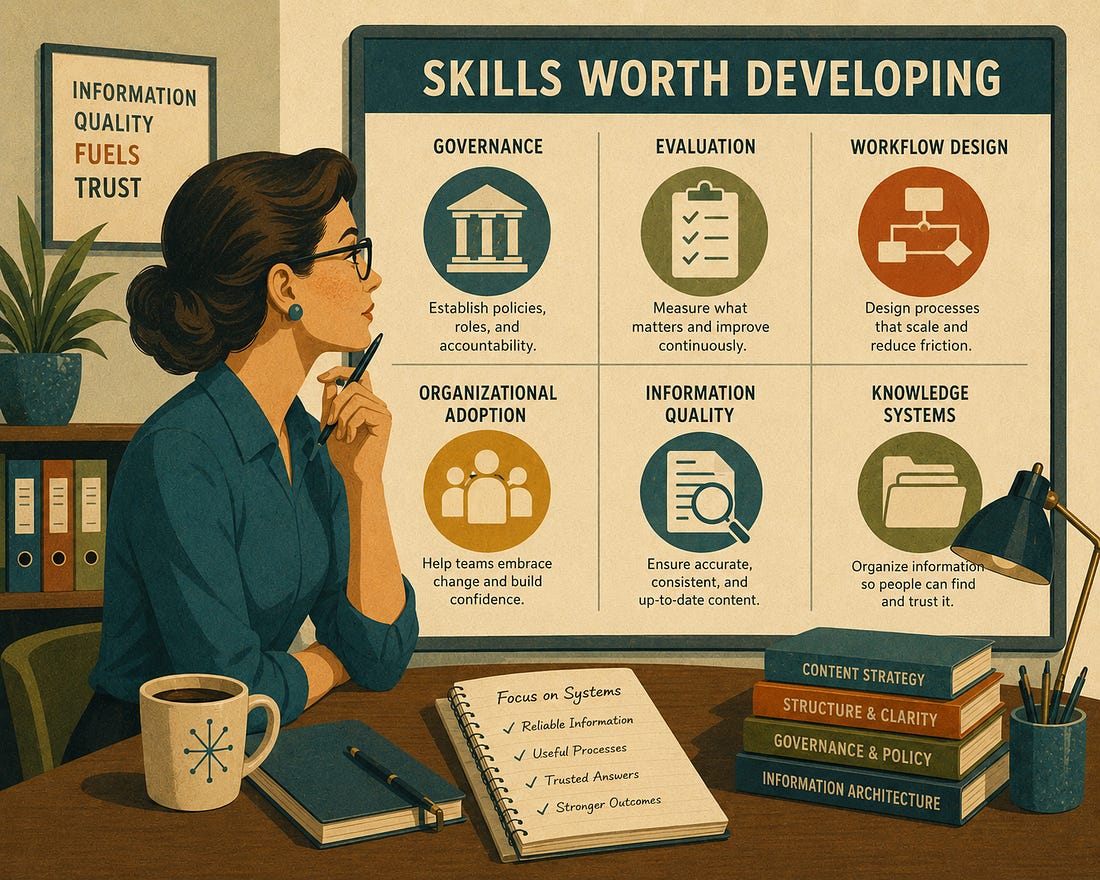
One thing that stood out in the Stanford curriculum was how little attention it gives to prompts and individual AI tools. Governance, evaluation, workflow design, organizational adoption, and information quality receive far more attention than prompt engineering.
For tech writers, that shift may be worth us paying attention to. Much of the discussion centers on work that tech pubs teams already know well: maintaining information quality, reducing ambiguity, and helping people find trustworthy answers.
We’ve been doing this work for years, even if the labels attached to our work keep changing. 🤠