|
|
|
|
Good morning. A long-standing story about Canadian innovation is that the country excels at invention – but not so much at scaling up breakthroughs. In focus today, we look at the lack of financing for growth-stage startups and more importantly, what might be done to help Canadian companies survive. But first: |
|
|
|
|
|
|
|
|
|
|
|
|
|
|
|
|
Housing: The federal and B.C. governments are spending up to $3.2-billion in an effort to reduce homebuilding costs by cutting development charges, and unveiled a plan to help developers get rid of unsold condos. |
|
|
|
|
Alberta Health Services: A veteran Ontario-based prosecutor is now involved in the criminal probe of alleged procurement irregularities at Alberta’s health authority. |
|
|
|
|
Health care: The Liberal government is launching a review of the federally funded non-profit Canada Health Infoway after the failure of its $300-million PrescribeIT program. |
|
|
|
|
|
|
|
|
|
|
|
|
|
|
|
Hamid Arabzadeh is the CEO of Ottawa-based Ranovus, a company that develops technology for AI infrastructure. He is among a growing chorus of Canadian entrepreneurs urging Ottawa to help startups access growth capital. Ashley Fraser/The Globe and Mail
|
|
|
|
|
|
|
|
|
|
|
|
|
|
|
|
|
Hi, I’m Jameson Berkow, capital markets reporter at The Globe and Mail, and I’m here to tell you about the “valley of death.” |
|
|
|
|
Don’t let that term get you down. This story is actually, optimistically, about efforts to close the funding gap facing Canadian businesses in the precarious growth stage, known not-so-affectionately as the valley of death. The hope is that no more of our promising young startups will ever again perish from lack of financing alone. |
|
|
|
|
|
|
|
|
It all sounds awfully biblical, but the gravitas is justified. As any entrepreneur will tell you, the stakes don’t get any more existential than when you’re trying to grow a business beyond proof-of-concept into something that can scale. |
|
|
|
|
The Canadian startup struggle |
|
|
|
|
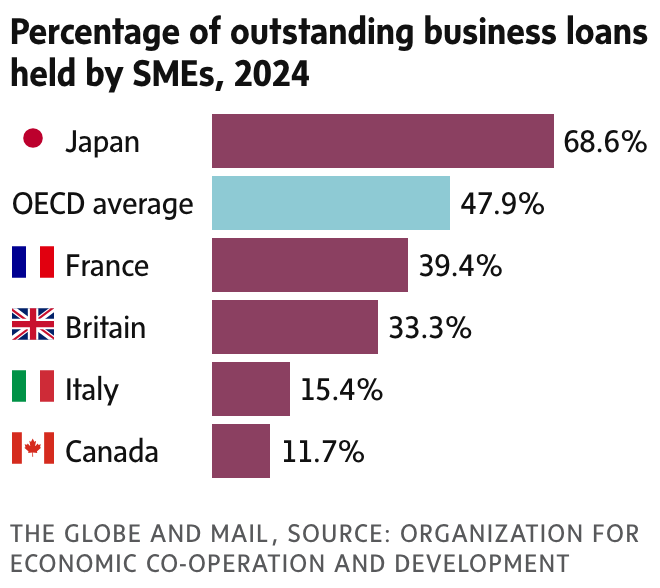
Proportionately fewer Canadian startups survive the crossing than those in other countries. Plenty of data confirms this: Growth-stage businesses in Canada have far less access to capital than comparable companies elsewhere. And the money that is available to them comes with more strings attached (read: interest rates) relative to those abroad. |
|
|
|
|
|
|
Not that Canadians need proof. We see it constantly. Our inability to hold onto innovative ideas is so deeply ingrained in the national consciousness that the notion of “selling out to the Americans” has become an accepted strategy in the Canadian entrepreneurial playbook. |
|
|
|
|
That is why our country’s corporate success stories – the Shopifys, the BlackBerrys and the Wealthsimples – stand out. They bucked the trend. They survived. |
|
|
|
|
So, what do we do about it? |
|
|
|
|
I did promise not to dwell on the dark side, so let’s talk about solutions and how the Senate of Canada is riding to our collective rescue! (Pause for laughter.) |
|
|
|
|
Okay, okay, calm down. It’s true. The chamber of sober second thought has spent the past several months thinking about this problem and listening to dozens of experts and entrepreneurs sharing the benefit of their experience. |
|
|
|
|
The result has been a plethora of clever ideas, any one of which would at least shrink the valley of death. The Standing Senate Committee on Banking, Commerce and the Economy is in the process of compiling that advice into a report. |
|
|
|
|
What ideas are on the table? |
|
|
|
|
Unleashing the considerable resources of this country’s multitrillion-dollar pension funds is among them. And while the idea of getting our famously foreign-focused pensions to invest more domestically is far from new, the proposal that pensions could contribute to a fund for growth-stage financing is novel. |
|
|
|
|
Equally bold is a pitch from famed former BlackBerry exec Jim Balsillie to build a whole bunch of new banks geared specifically towards serving the small and medium-sized business community. Other countries already do this (check out Allica Bank in the U.K. for one of many, many, examples) but in Canada, it is still largely the Big Six or bust. |
|
|
|
|
Most of the ideas, however, are much simpler and easier to implement quickly (and as the country seeks to bolster its economic sovereignty in the wake of rising protectionism around the world, time is indeed of the essence). They generally revolve around tax breaks for founders and investors that support Canadian startups and reducing the regulatory burden for businesses facing growth barriers. |
|
|
|
|
The Senate report is due to be released in a matter of weeks. If Prime Minister Mark Carney is interested in closing Canada’s valley of death, hopefully he will give it a close read. Or he can get a head start by reading my full story here. |
|
|
|
|
|
|
|
|
|
|
|
|
|
|
|
|
|
|
|
|
|
|
|
|
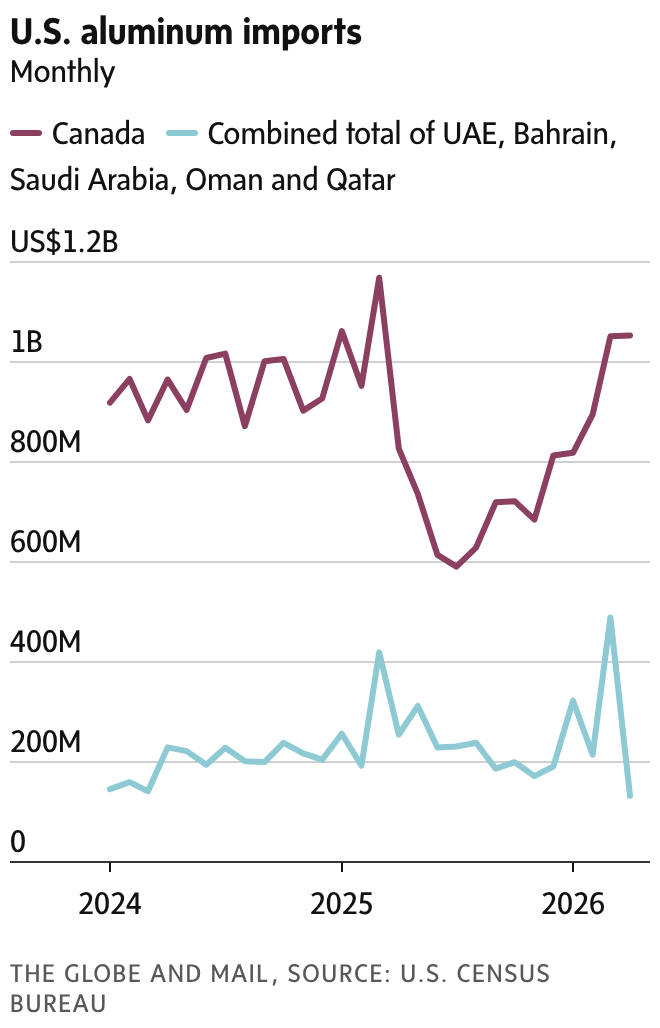
Canada’s aluminum industry is set to benefit from high prices and global production uncertainty caused by the war in the Middle East. |
|
|
|
|
|
|
|
|
|
< |