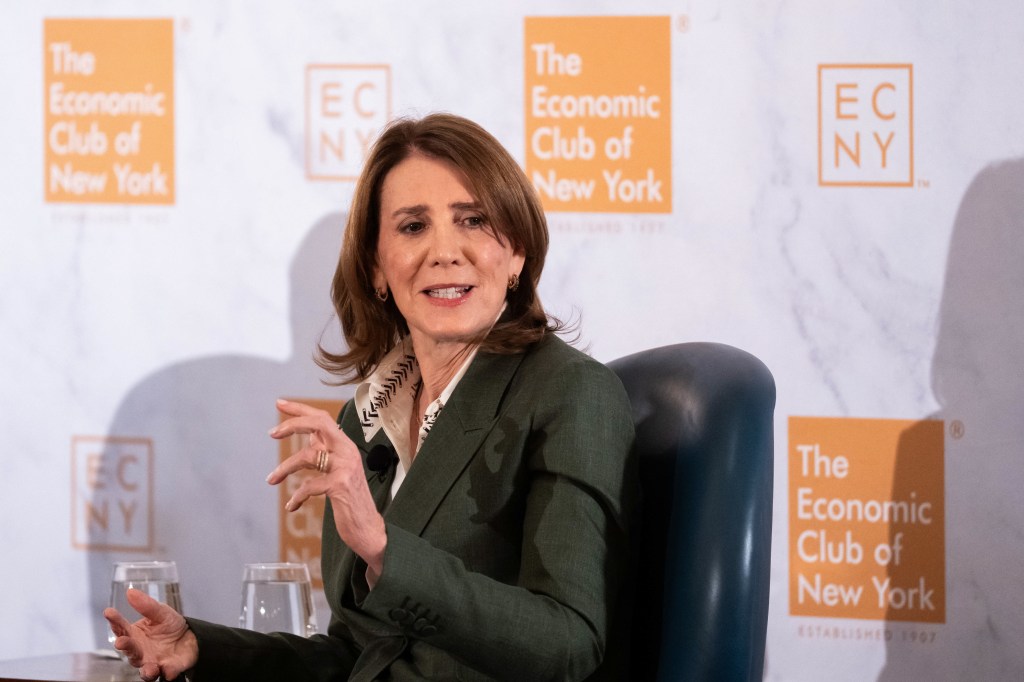
Yesterday afternoon, I stopped by the Economic Club of New York for lunch. The featured speaker was Ruth Porat—Alphabet’s former CFO, current president and chief investment officer, and
No. 11 on the 2026 Most Powerful Women list.
I wanted to hear Porat’s thoughts on the state of AI and the economy. At Google, she leads decision-making about AI’s physical infrastructure and is a key face of the company’s relationships with governments determining AI regulation and communities affected by the rapid building of data centers. Google is projecting capital commitments as high as $190 billion in 2026, the largest infrastructure bet in its history. Earlier this month, Alphabet revealed plans for an $80 billion sale of equity to fund spending on AI infrastructure—expected to become
the largest equity capital markets transaction of all time, per Bloomberg. Porat is behind much of that work.
Yesterday, she painted a pretty rosy picture of AI’s impact. She was in conversation with IBM CEO Arvind Krishna, who asked her about the upside and downside of AI. “If the upside is worth fighting for, then we have a responsibility to protect against the downside,” she said.
But she mostly emphasized the upside of many of the much-maligned aspects of AI. Energy costs? Data centers have helped enterprises fix costs over a larger base, keeping energy prices growing at a slower rate through 2024, she argued. And she places the blame for any lack of capacity not on the rapid investment in AI, but on years of under-investment in the United States’ energy infrastructure.
Impact on communities? Data centers are a “job creator,” she says. “This is a secure job, it’s a career, and enabling people to stay in their communities,” she argues. For every job a company like Google creates at its own data centers, third parties create nine additional jobs, she adds.
These points are probably similar to the ones Porat is making in meetings with policymakers around the world. But consumers still have concerns—just take a look at Erin Brockovich’s campaign for more transparency from companies building data centers, which I
wrote about earlier this week. Earlier this year, Porat signed the Ratepayer Protection Pledge at the White House, promising that Google would foot the bill for any energy price hikes rather than passing those on to consumers. Whatever your take on her POV, she is making decisions that influence the future of the global economy and Americans’ day-to-day lives. That’s why she ranked so highly on this year’s Most Powerful Women list.
Emma Hinchliffeemma.hinchliffe@fortune.comThe Most Powerful Women Daily newsletter is Fortune’
s daily briefing for and about the women leading the business world. Subscribe here.