| | In today’s edition: Qatar LNG ships on the move, Emirates boosts insurance to lure tourists, and sle͏ ͏ ͏ ͏ ͏ ͏ |
| |  | Gulf |  |
| |
|
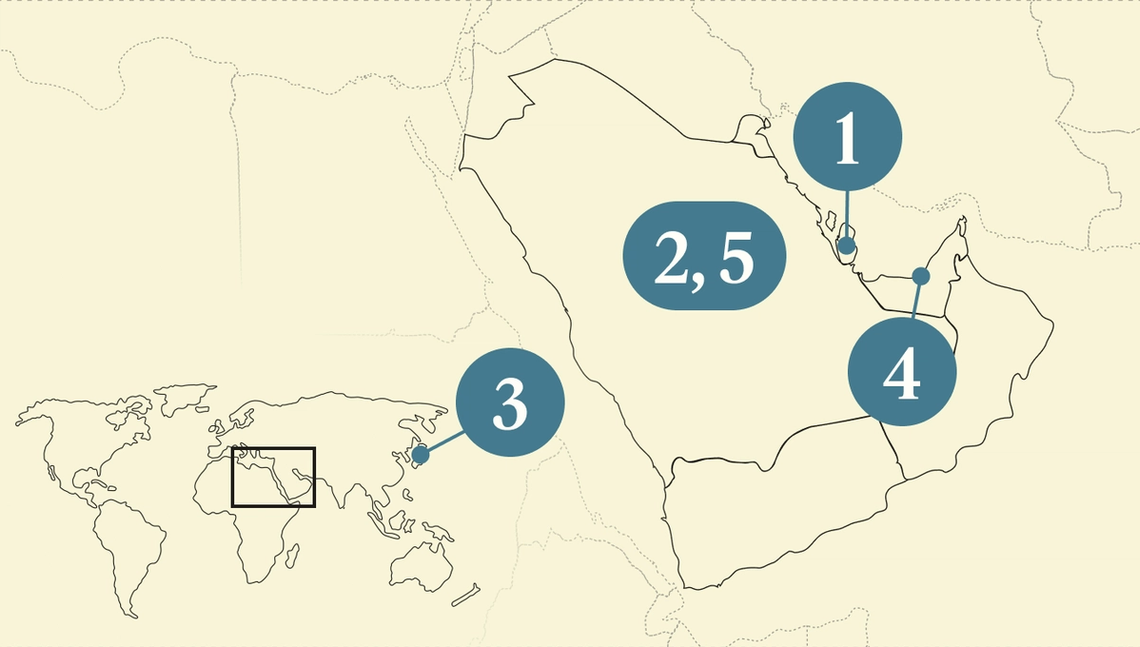 - Qatar’s LNG revival
- Saudi mining for Iran
- The rise of electrostates
- Emirates ups insurance
- Trading sleep for soccer
 The IRGC commander calling the shots in Tehran, and other weekend reads. |
|
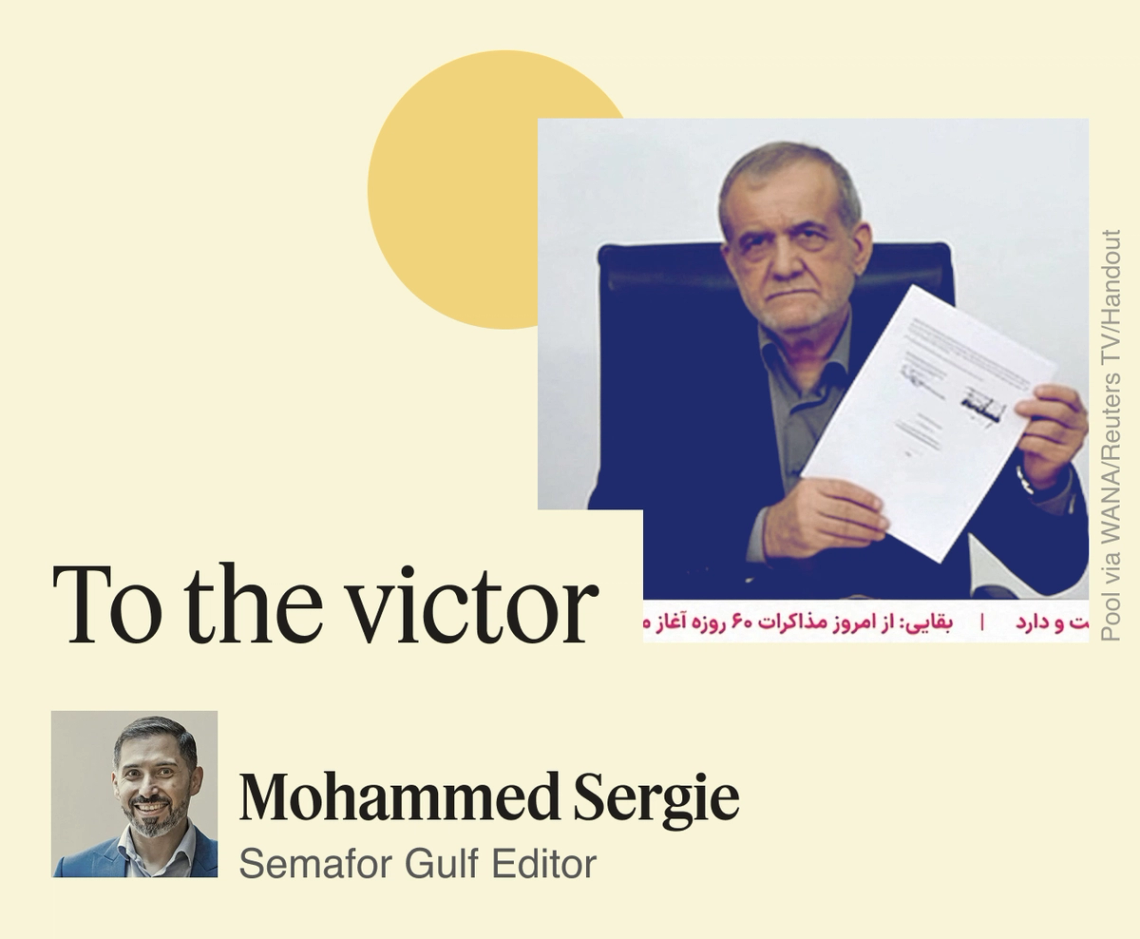 The Gulf got what it wanted most: no war and an open Strait of Hormuz. After more than 100 days of conflict, the agreement signed by US President Donald Trump in Versailles — with world leaders looking on, and reciprocated remotely by Iran’s president — is viewed by many analysts as strongly favoring Tehran. But it may be the best of a bad set of potential outcomes for the US. The Islamic Republic remains in place. Its right to a peaceful nuclear program is still under negotiation, billions of dollars of its assets could be unfrozen, and even its missile program appears to have been endorsed by Trump. Iran made concessions, but the balance sheet appears to tilt firmly in its favor. Gulf monarchies played a meaningful role as mediators. That marks a notable departure from the 2015 nuclear deal between Washington and Tehran, when regional powers largely watched from the sidelines as their interests were overlooked. But the lessons of this conflict will not be forgotten. Iran had planned all along to target Gulf civilians and infrastructure, killing dozens and threatening the region’s prized energy assets. Governments here aren’t going to have much faith in an MoU that may embolden rather than limit Tehran: They are fortifying critical infrastructure, developing alternative trade routes, and increasing defense spending. Gulf states welcomed the agreement to end a war they didn’t want, and everyone wants to get back to business — diversifying economies, investing globally, and competing to become a global AI hub. While they pursue those goals, they will keep one eye fixed on the next crisis. |
|
Qatar eyes return of gas exports |
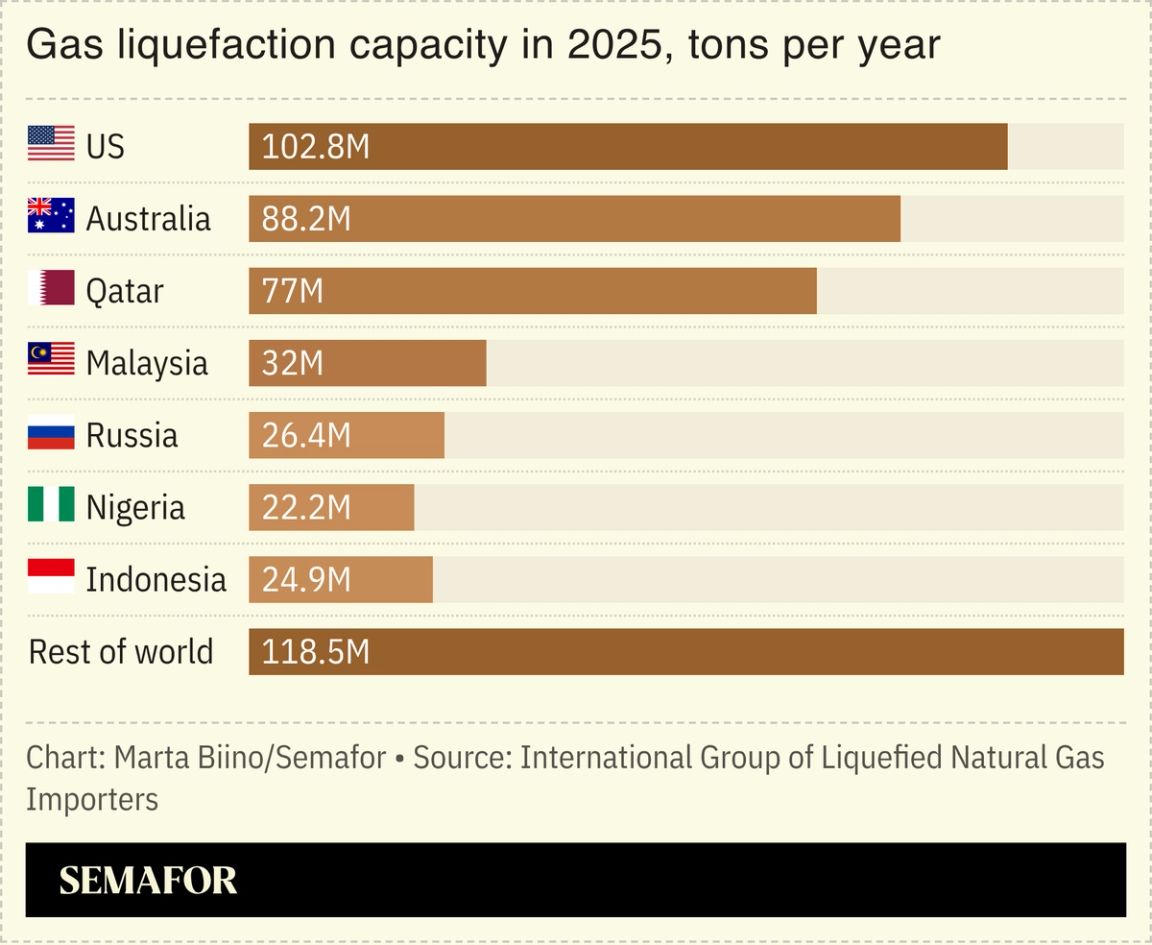 A Qatari LNG tanker sailed through the Strait of Hormuz on Thursday — one of the few transits made since the Iran war began and a hopeful sign for Doha as it looks to revive its gas exports and wider economy. The state-owned QatarEnergy has told buyers it could reach about 50% of output capacity within a month of the strait fully reopening, Bloomberg reported. That could rise to 80% a month later, but restoring full production will take much longer: Two of the energy giant’s LNG plants were hit by Iran early in the war. At the time, the company said it could take up to five years and $26 billion to repair them. The interim deal between the US and Iran includes provisions for Tehran to use “its best efforts” to allow commercial vessels to pass safely through the strait, but there has been no surge in traffic yet. Gas exports underpin the Qatari economy and the IMF reckons GDP will contract by 8.6% this year, making it the worst-hit of the Gulf countries. |
|
Saudi-US mining JV turns to Iran rebuild |
 Steve Marcus/Reuters Steve Marcus/ReutersA major US-Saudi mining investment program is shifting its focus to Iran’s reconstruction. During Trump’s visit to Riyadh last year, US investment firm Burkhan World signed $9 billion in MoUs with Saudi Arabia’s Grand Mines, aimed at strengthening the kingdom’s access to critical minerals. The intent was to acquire mines in sub-Saharan Africa and send their output to Saudi refineries for processing. But the fund has now turned its gaze to Central Asia — specifically to mineral supplies from Kazakhstan and Pakistan that could be useful for the postwar reconstruction of Iran, Burkhan CEO Shahal Khan told Semafor. The deal “completely changed into something much larger because of the war,” he said, adding that the Saudi government “wants to give Iran the ability to fully function outside of sanctions and be able to rebuild its economy.” The pivot is well-timed, coming as the US-Iran interim deal introduces a $300 billion fund to support Iran’s reconstruction. “The Saudi deal we have is now geopolitically even more important,” Khan said, adding that it “allowed us to negotiate with other parties for minerals that we didn’t plan for originally.” Bandar Alkhorayef, the Saudi mining minister, touted the prospects for joint ventures with Kazakhstan during a visit there this week. — Tim McDonnell |
|
Petrostates vs. electrostates |
 Nobuo Tanaka. Michael Buholzer/Reuters Nobuo Tanaka. Michael Buholzer/ReutersOne consequence of the “third oil shock” caused by the US-Iran war has been to crack open a fault line between “electrostates” and “petrostates,” former International Energy Agency chief Nobuo Tanaka tells Semafor’s Clay Chandler. He warned that CEOs shouldn’t confuse the Strait of Hormuz reopening with a return to normal. Energy consuming countries will accelerate a shift to electrification to reduce dependency on Gulf oil and gas, in a move that will “impact every business, every supply chain,” said Tanaka. “Companies that understand this transformation now are the ones that will be competitive later.” He praised the UAE’s strategy of quitting OPEC and pumping more oil to finance its transformation into an electrostate. Gulf countries have long worried that unstable oil markets will speed up a shift away from the fossil fuels that give them geopolitical influence and economic might. |
|
Insuring Gulf airlines back to health |
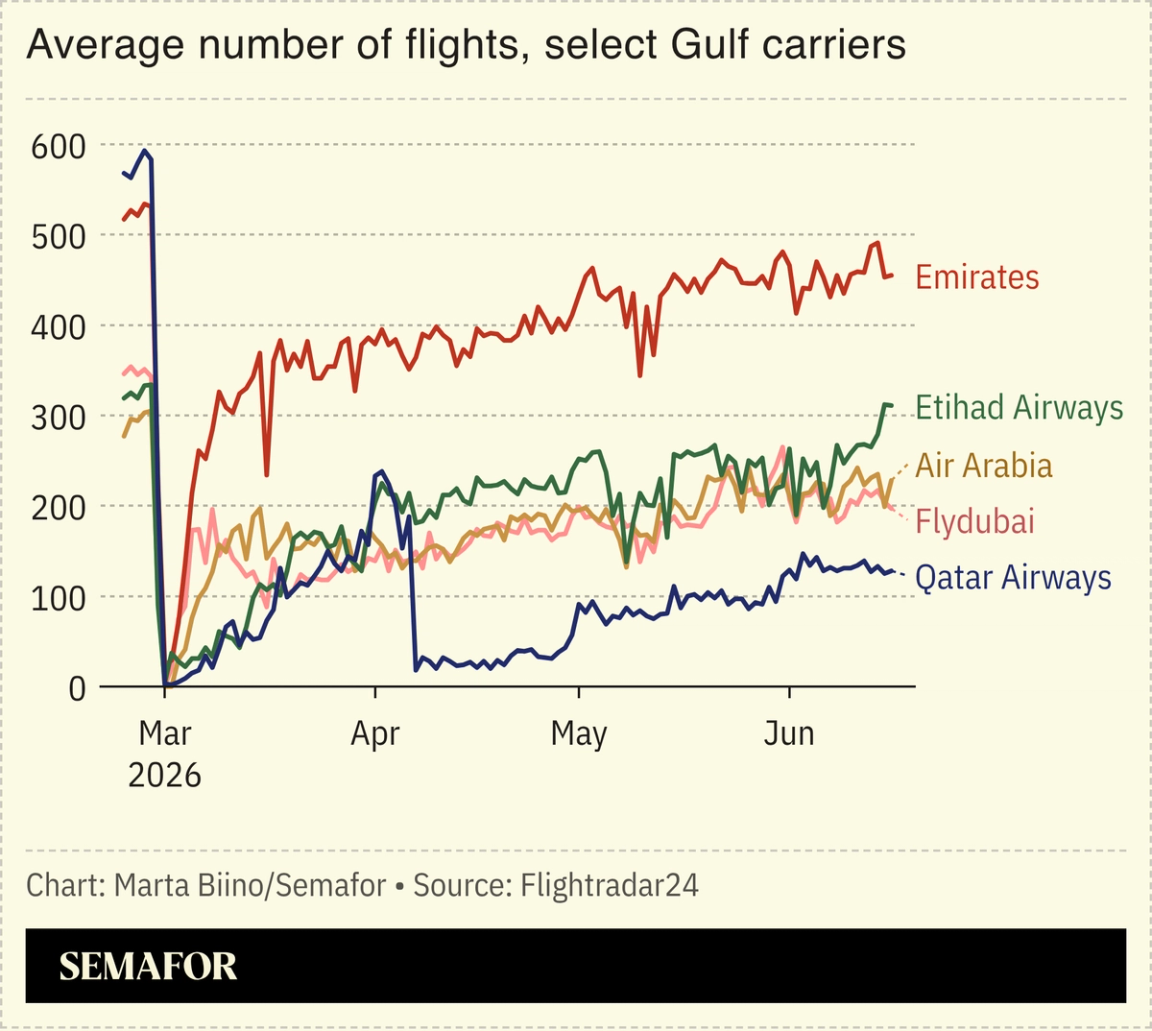 Emirates and Etihad have started offering insurance to travelers, in an effort to lure them back at a time when governments around the world still advise against non-essential travel to the region. International travel advisories invalidate most ordinary policies, leaving the UAE and neighboring countries effectively uninsurable for tourists. Emirates’ new policy covers conflict-related medical costs, flight cancellations, and delays — and, unusually, is not restricted by government travel advice. Etihad is also handing inbound visitors free medical cover from July to December. It is a different take to the discounts and upgrades usually employed by airlines trying to revive ticket sales; Emirates President Tim Clark said the strategy was based on “incentives other than price.” Both UAE airlines are nearing their prewar capacity levels and still expanding, launching around 15 new routes this year, including Calgary, Helsinki, and Zanzibar. With their networks all but restored, they are counting on peace of mind to win back wary tourists and carry the recovery over the line. — Manal Albarakati |
|
How to balance work and the World Cup |
 Hamad I Mohammed/Reuters Hamad I Mohammed/ReutersIn the Gulf, football is less pastime than civic obsession — and this summer it is spilling into the workday. Every World Cup match airs overnight, so the cost lands the next morning. Companies around the region are giving employees flexible hours after their respective national teams play. In Saudi Arabia, some financial institutions and ministries allowed staff a noon start after the Green Falcons’ opening match against Uruguay; when Saudi Arabia beat Argentina at the 2022 tournament, the king declared a national holiday. In Tehran, Qatari mediators brokering an end to the US-Iran war paused their discussions to watch a match, the Financial Times reported. So far, the squads have rewarded the late nights: Saudi Arabia held two-time champions Uruguay to a draw, and Qatar also drew their opener against Switzerland. Qatar next take on co-hosts Canada, while the Saudis face Spain on Sunday. For Saudi Arabia — a kingdom that has made sport an economic pillar and is gearing up to host the 2034 World Cup — a few groggy mornings are easily absorbed. — Manal Albarakati |
|
 Deals- Bahrain-based Investcorp acquired a stake in the UAE’s Metra, an IT distributor that crossed $1 billion in sales last year. Metra said the deal was a precursor to an IPO.
Finance- The UAE is still attracting financial firms: Asset manager Franklin Templeton secured regulatory approval to offer more investment services onshore in Abu Dhabi, while hedge fund Oak Hill Advisors has expanded in Dubai International Financial Center.
- Aramco is selling stakes in infrastructure assets to raise tens of billions of dollars, with sulphur storage and export terminals in its sights. A deal could happen as soon as next year and yield $7 billion. — Reuters
- Revolut, the London-based digital bank, received licenses in the UAE to launch its services. The firm plans to build out its operations locally before going live. — Bloomberg
Logistics- Dubai port operator DP World is negotiating a long-term lease to develop and run a container terminal at the Port of Corpus Christi, Texas. If an agreement is reached, it would mark a rare US foray by DP World, which handles about 10% of global container traffic. It was forced to divest assets there in 2006 following a political backlash over Arab ownership of critical infrastructure.
|
|
 - Ahmad Vahidi — the Islamic Revolutionary Guard Corps’ commander wanted for orchestrating the deadly bombing of a Jewish community center in Argentina in 1994 — won’t attend any peace deal signings. But the 67-year-old has emerged as the man calling the shots in Tehran, according to this profile in The Wall Street Journal.
- Political Islam, much like the related militant version, is seen to be in decline in the Middle East after decades of ascendancy. Iran’s predicament has sparked “discussion among experts about whether political Islam has crested and what that means” for the region, The New York Times reports.
- Dubai’s property market has largely held steady after more than 100 days of war. Although transactions are down, prices have held up, while banks and developers have built buffers that made the sector more resilient than during previous crises in 2009, 2014, and 2020, according to Bloomberg’s Zainab Fattah.
|
|
|


