|
| |
|
| |
|
|
|


presented by

What can we learn from the Golden Globes nominations? Plus, what does TheWrap's Awards Tracker tell us about awards season comedies?
Golden Globes Nomination Round-Up: International Soars, Presenter Stumbles
Pleasant Surprises
The Golden Globes nomination list brought some nice surprises Monday morning, mixing the expected with the exciting.
One highlight was the addition of Sorry, Baby's Eva Victor to the Best Actress (Drama) lineup, bringing the writer/director their first major acting nomination of the season. It’s a performance I advocated for in TheWrap's "The Race Begins" magazine earlier this awards season, with Victor mastering tonal control just as well in front of the camera as they do behind it.
Another surprise was the presence Kangding Ray's techno-spiritual work on Sirāt in Best Original Score. In general, it was nice to see international features strongly represented across all categories, with five non-English movies (It Was Just An Accident, No Other Choice, Nouvelle Vague, The Secret Agent, Sentimental Value) featured among the 12 Best Motion Picture nominees.
With these films selected over what could be considered more traditional players (Avatar: Fire and Ash, Song Sung Blue, Wicked: For Good), it seems like the evolution that was needed to revive the scandal-plagued Globes is indeed taking place. Crowdpleasers these international films are not, yet they are each excellent and much deserving of awards recognition.
What Exactly is a "Cinematic and Box Office Achievement"?
If one category clings to the old ways of the Golden Globes, it's the recently-added Cinematic and Box Office Achievement award. The category, added in 2023 after Dick Clark Productions owners Eldridge Industries and Penske Media acquired the Globes in the wake of a studio and network boycott in 2022, seeks to recognize "the year’s most acclaimed, highest-earning and/or most viewed films that have garnered extensive global audience support and attained cinematic excellence, as determined by Golden Globes voters," according to Globes rules.
To be eligible in this category, films must gross at least $150 million at the worldwide box office in the nomination year, with $100 million coming from the U.S. Streaming films ("KPop Demon Hunters") are eligible if "trusted industry sources" believe they received digital viewership proportionate to the $150 million threshold, while films released after Nov. 22 ("Avatar: Fire and Ash," "Zootopia 2") can qualify based off of box office projections alone.
Awards shows have been tripped up before by attempts to add special branches for "popular" films and high earners. In the past, these efforts have come off as offensive to other nominees (see: the Oscars' Outstanding Achievement in Popular Film category, which was announced in August 2018 and killed 29 days later) or have produced laughable results (like when Zack Snyder devotees crowned "Army of the Dead" the fan-favorite movie of the year and made "The Flash Enters the Speed Force" the first and last Oscars Cheer Moment).
While there are some exceptional blockbusters recognized in this category every year, I must be candid in saying that the Cinematic and Box Office Achievement lineups aren't my favorite part of the Golden Globes — as Don Draper once said, "That's what the money is for." If a box office prize must serve as a counter-balance to the Globes' greater platforming of small and international cinema, however, I'll happily accept that trade.
A Letter to Awards Season Presenters
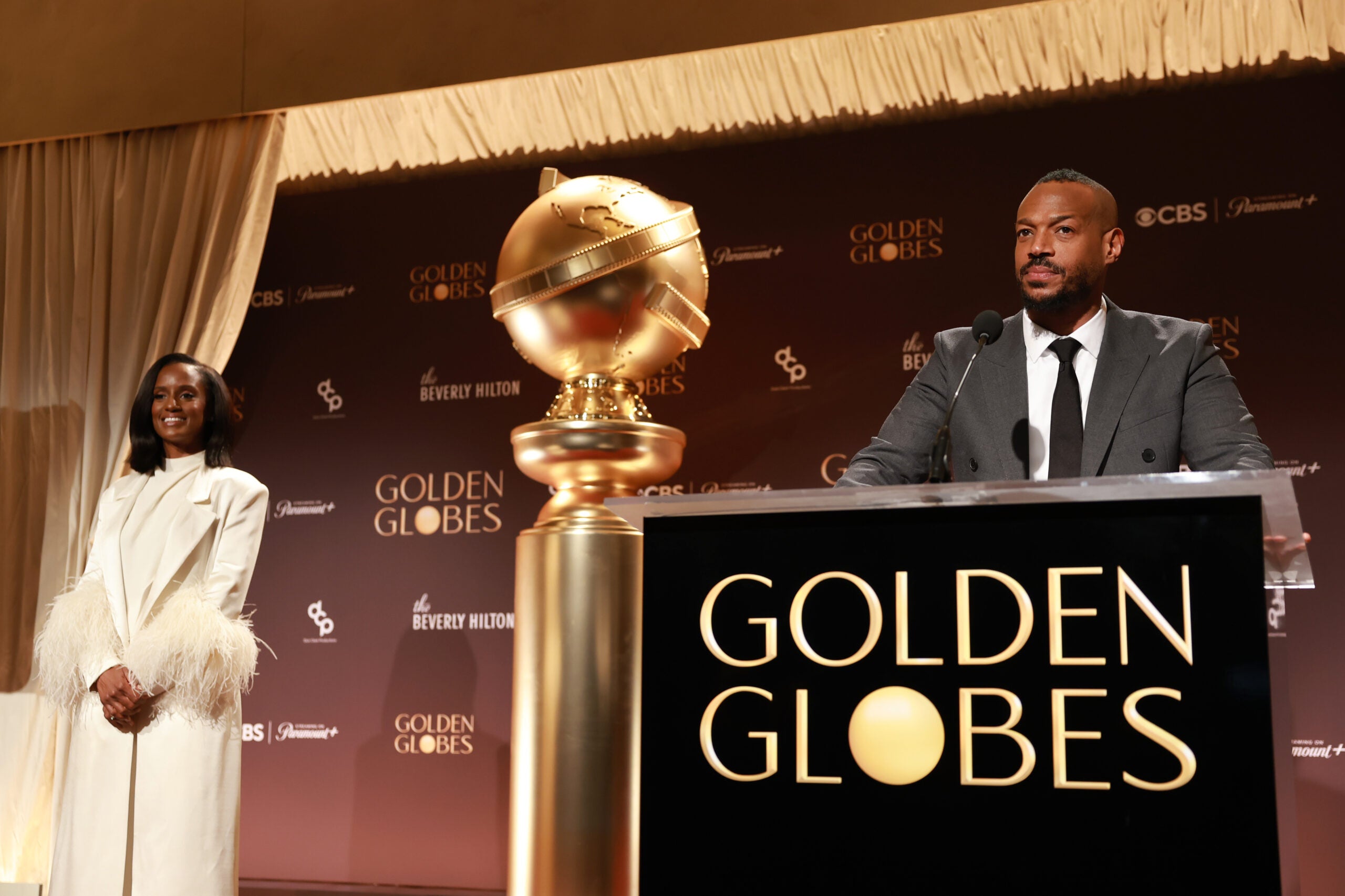
We see this every year — a presenter approaches the mic to read a list of nominees or winners, and it quickly becomes clear that they've never seen these names before. The phenomenon was present in full force Monday, as presenter Marlon Wayans stumbled through pronouncing a litany of names, film titles and, in one case, a country.
"Thank you, after you perfectly read all those names," Wayans joked at the beginning after co-presenter Skye P. Marshall (who had no such troubles) gave him the floor. Wayans then began presenting the Best Original Song category, where he struggled to name nominees such as the "KPop Demon Hunters" team (Joong Gyu Kwak, Yu Han Lee, Hee Dong Nam, Jeong Hoon Seo, Park Hong Jun, Kim Eun-jae (Ejae) and Mark Sonnenblick) and "Sinners" composer Ludwig Göransson.

When Wayans arrived at "Wicked: For Good" songwriter Stephen Schwartz's nomination, he quipped, "Let's hope all names are like that one." While the butchering of international names should not be excused, it should also be noted that individuals like Ayo Edebiri, Hannah Einbinder and Elle Fanning received similar mispronunciations.
You might think, "Well, presenters don't know what names they'll read ahead of time," and it's a fair thought. But it's no surprise that "Golden" (a Grammy nominee for Song of the Year) or the folks behind "Sentimental Value" (a frontrunner in several races) would find their way among the nomination list. Some awards ceremonies have also historically given presenters the opportunity to rehearse pronunciations ahead of time — a safe practice to avoid situations like Monday's.
This instance is far from an outlier, but rather an illustration of an annual awards season occurrence: Presenters come in unprepared, and nominees (particularly international ones) suffer the consequences. Just as it is an honor to be nominated for an award, it is an honor to bestow said nominations, to share the spotlight in a moment when a deserving artist gets recognized on an international stage.
The least a presenter can do is learn their names.

Awards Tracker Spotlight: Comedy Bias Makes Frontrunners Lag Behind

Something interesting happened on our Awards Tracker this week.
Once Golden Globes nominations rolled in, I noticed that some films and individuals hardly saw a percentage jump after getting their Monday morning nods. In fact, some people actually lost percentage points on the tracker after they got nominated.
At first, this might seem a bit nonsensical. Things start to get clearer, however, when you consider the common denominator among those films: they all received nominations in the Globes’ comedy/musical division.
It’s no secret that the Oscars don’t traditionally go for full-fledged comedies. There are, of course, exceptions (in recent history, Best Picture nominees like “Barbie” and “The Holdovers,” and winners like “Anora” and “Everything Everywhere All At Once” spring to mind), but even these outliers traditionally have some dramatic edge or radical approach.

Because the Globes has to fill out several categories with a slate of nominees from comedies and musicals (not the most frequently released film genre), you often find those categories including candidates that don’t cross over. At the very least, they need strong critical success to make the leap.
Once the Awards Tracker sees that something like “One Battle After Another” has been nominated in the Comedy/Musical branch, it “learns” that the movie is comedy, giving it a lower success rate than dramas. Keep in mind, the Tracker is only looking at data. It can’t tell that a movie like “One Battle” defies typical drama/comedy category placement.
Nominees like Jesse Plemons saw an even stranger hit, going “down” in our tracker's odds specifically because they got the Globes nod. These individuals, however, joined a list of people who got nominated for the Comedy/Musical Globes division after missing out on Critics Choice — a list filled with far more people who didn’t get an Oscar nod than people who did.
Moral of the story: Don’t get too worried that films like “One Battle After Another” and “Marty Supreme” slid down after Globes nods. Movies like these defy genre and often perform well with the Academy. Still, once you are classified as a comedy at the Globes, you have a harder road to Oscar glory — mathematically speaking.